


In today’s interconnected world, organizations of all sizes are increasingly reliant on robust digital infrastructures to store, process, and manage vast amounts of sensitive data. As this reliance grows, so does the landscape of potential cyber threats. A fundamental concept for any organization aiming to fortify its digital defenses is the “attack surface.” But what precisely does this term mean in the realm of cybersecurity, and why is its comprehension and management absolutely critical for business continuity and data protection? This comprehensive article will delve into the core principles of the attack surface, exploring its various components, identifying common breach points, and outlining effective strategies for its management to mitigate potential risks and bolster overall security posture.
Understanding the Attack Surface in Cybersecurity
The attack surface of a system, network, or an entire organization represents the aggregate sum of all potential points where unauthorized users, often referred to as malicious actors or hackers, could attempt to infiltrate, compromise, or extract data. Conceptually, it can be visualized as every potential entry point, every “door” and “window” in a complex digital and physical infrastructure that requires vigilant safeguarding against intrusion. The larger and more complex an organization’s attack surface, the more avenues and opportunities an attacker has to discover and exploit vulnerabilities, making it a critical area of focus for cybersecurity teams.
Effectively managing cybersecurity risks begins with a thorough understanding of the attack surface. This comprehensive view helps organizations identify weaknesses before they can be exploited. Attack surfaces are dynamic and constantly evolving, expanding with every new application, device, or service introduced into an environment. Therefore, continuous monitoring and assessment are paramount.
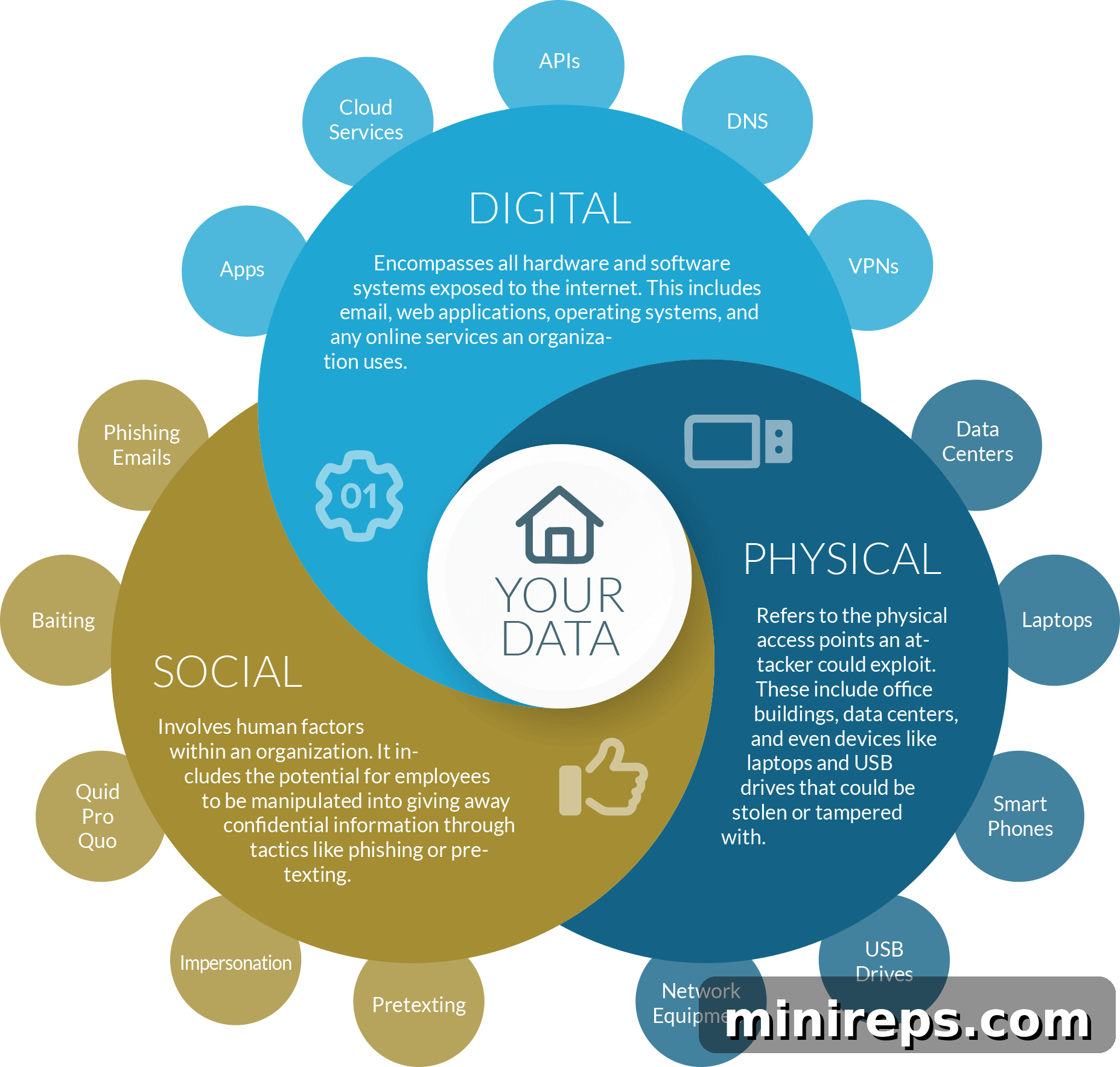
Generally, attack surfaces are categorized into three distinct, yet often interconnected, types:
- Digital Attack Surface: This category encompasses all hardware, software, and services that are exposed to or accessible via the internet or internal networks. It includes every element that forms an organization’s digital footprint.
- Physical Attack Surface: This refers to the tangible access points and physical assets that an attacker could exploit to gain unauthorized entry, steal data, or disrupt operations. It deals with the real-world infrastructure.
- Social Attack Surface: This involves the human element within an organization, recognizing that people can often be the weakest link in the security chain. It refers to the susceptibility of employees to manipulation through various social engineering tactics.
Identifying Potential Breach Points
Even when data is predominantly stored digitally, access to this critical information can originate from a multitude of entry points spanning across the three attack surface types. A granular understanding of where vulnerabilities reside is absolutely critical for developing a robust and resilient defense strategy. Here’s a detailed breakdown of various potential breach points within each category, highlighting the specific areas that require attention and protective measures:
Digital Attack Surface Vulnerabilities
- Web Applications: These are frequent targets, often harboring vulnerabilities such as SQL injection, cross-site scripting (XSS), and inadequate input validation, allowing attackers to manipulate databases or inject malicious scripts.
- Cloud Services: Misconfigured storage buckets, insufficient access controls, or weak identity management in cloud environments can expose vast amounts of sensitive data to unauthorized parties.
- Mobile Applications: Common weaknesses include insecure data storage on devices, poor authentication mechanisms, and insecure communication protocols, making them susceptible to data interception or app tampering.
- APIs (Application Programming Interfaces): A lack of robust authentication, improper permissions, and insufficient data validation within APIs can create critical entry points for data exfiltration or system manipulation.
- Email Systems: Constantly under siege from phishing attacks, malware-laden attachments, and spam, email remains a primary vector for initial compromise and credential theft.
- Network Protocols: Unsecured or outdated network protocols can be exploited for data interception, unauthorized access, denial-of-service attacks, or to gain a foothold within the network infrastructure.
- Operating Systems: Outdated software with known vulnerabilities, unpatched security flaws, and misconfigured system settings present easy targets for exploits that can lead to full system compromise.
- IoT (Internet of Things) Devices: Often deployed with weak default passwords, unsecured connections, and outdated or unpatchable firmware, IoT devices can serve as backdoors into an organization’s network.
- DNS (Domain Name System) Infrastructure: Vulnerabilities to attacks such as DNS spoofing or poisoning can redirect users to malicious sites, facilitating phishing or man-in-the-middle attacks.
- Remote Access Points: Unsecured Virtual Private Networks (VPNs), poorly managed remote desktop protocols (RDP), or vulnerabilities within remote workers’ home networks can provide direct access to corporate resources.
Physical Attack Surface Vulnerabilities
- Data Centers: Unsecured or inadequately protected facilities, lacking robust access controls, surveillance, or environmental monitoring, can allow direct physical access to critical servers and networking equipment.
- Office Buildings: Physical break-ins due to poor access controls (e.g., unlocked doors, easily bypassed security systems) or insufficient surveillance can lead to theft of devices or direct network access.
- Hardware Devices: The theft or loss of laptops, smartphones, USB drives, and other portable devices can result in direct data loss or provide attackers with a physical entry point to network access if not properly encrypted and secured.
- Network Equipment: Routers, switches, and other network components that are not physically secured in locked cabinets or restricted areas can be tampered with or replaced.
- Supply Chain: Security weaknesses with third-party vendors or partners, including their physical security practices, can indirectly impact an organization’s own physical security posture.
- Public Spaces: Company devices used in public areas where screens may be visible to unauthorized persons (shoulder surfing) or devices left unattended can expose sensitive information.
- Shared Workspaces: Areas shared with other entities where confidential discussions may be overheard or displays seen, leading to inadvertent information leakage.
Social Attack Surface Vulnerabilities
- Phishing Emails: These fraudulent communications are designed to trick users into divulging confidential information like login credentials, credit card details, or sensitive company data.
- Spear Phishing: A more insidious form of phishing, these are highly targeted attacks tailored to specific individuals, often C-suite executives, to increase success rates by appearing highly legitimate.
- Pretexting: Involves creating a believable, yet false, scenario (a “pretext”) to obtain personal or sensitive information, often by impersonating a trusted authority figure.
- Baiting: Luring victims with promises of enticing goods (e.g., free music, movies, or even a branded USB drive found in a parking lot) to gain access to their systems or data.
- Quid Pro Quo: Offering a service or benefit (e.g., “technical support” or a survey reward) in exchange for information or access.
- Impersonation: Pretending to be a trusted entity, a colleague, or a vendor to extract information or gain access to restricted areas or systems.
- Vishing (Voice Phishing): Utilizing phone calls to trick individuals into revealing personal information or taking actions detrimental to security, often by spoofing caller IDs.
- Conferences and Events: Malicious actors may engage attendees under the guise of networking or business discussions to subtly extract sensitive organizational information.
Why Is Understanding Your Attack Surface Indispensable for Cybersecurity?
A comprehensive and continuously updated understanding of your organization’s attack surface is not merely beneficial; it is absolutely vital for developing and maintaining a robust cybersecurity posture. Neglecting this crucial aspect can leave significant blind spots, making an organization an easy target for sophisticated cyber threats. The importance of this understanding can be broken down into several key reasons:
- Proactive Security and Risk Mitigation: By meticulously identifying all potential vulnerabilities across digital, physical, and social vectors, organizations can take proactive steps to secure them *before* they are exploited. This shift from reactive defense to proactive prevention significantly reduces the likelihood and impact of successful attacks. It enables robust risk assessments, allowing security teams to prioritize and address the most critical weaknesses first.
- Effective Resource Allocation: Knowing which entry points present the greatest risk and potential for exploitation allows IT and security teams to allocate their often-limited resources — including budget, personnel, and technological tools — most effectively. This ensures that efforts are focused on the most vulnerable and high-impact areas, optimizing the return on security investment.
- Ensuring Regulatory Compliance: Many industries operate under stringent regulations concerning data security and privacy, such as GDPR, HIPAA, PCI DSS, and SOX. A comprehensive understanding of the attack surface is essential for demonstrating compliance with these mandates. It provides the necessary visibility to implement required controls, conduct audits, and avoid hefty fines, legal repercussions, and reputational damage associated with non-compliance.
- Faster and More Effective Incident Response: In the unfortunate event of a security breach, a well-documented and understood attack surface enables much quicker and more effective incident response. Security teams can rapidly identify the compromised entry point, contain the damage, eradicate the threat, and recover systems more efficiently, thereby minimizing business disruption and recovery time. This detailed knowledge aids in forensic analysis and preventing future similar attacks.
- Building a Stronger Security Culture: Understanding the social attack surface emphasizes the importance of human factors in cybersecurity. It highlights the need for continuous employee training and awareness programs, turning employees into a strong line of defense rather than a weak link.
- Protecting Brand Reputation and Customer Trust: Data breaches can severely damage an organization’s reputation and erode customer trust. Proactively managing the attack surface demonstrates a commitment to security, helping to safeguard the brand and maintain customer confidence.
Strategies for Effective Attack Surface Management (ASM)
Given the dynamic and ever-expanding nature of an organization’s attack surface, a continuous and strategic approach to Attack Surface Management (ASM) is crucial. Effective ASM involves a combination of processes, technologies, and human vigilance. Here are key strategies:
- Comprehensive Asset Discovery and Inventory: The first step in ASM is to know what you need to protect. This involves continuously identifying and cataloging all IT assets, including hardware (servers, workstations, IoT devices), software (applications, operating systems), cloud instances, network devices, and remote access points. Automated tools are essential for maintaining an up-to-date inventory.
- Vulnerability Assessment and Penetration Testing (VAPT): Regularly scheduled vulnerability assessments identify known security weaknesses in systems and applications. Penetration testing goes a step further by simulating real-world attacks to exploit identified vulnerabilities, providing deeper insights into potential breach paths and the effectiveness of existing controls.
- Patch Management: A robust patch management program is fundamental. All operating systems, applications, and firmware must be kept up-to-date with the latest security patches to close known vulnerabilities that attackers frequently target.
- Configuration Management: Enforcing secure configurations across all systems and devices prevents common misconfigurations that can expose services or data. This includes disabling unnecessary services, strong password policies, and proper firewall rules.
- Network Segmentation: Dividing the network into smaller, isolated segments limits the potential lateral movement of an attacker once a perimeter has been breached. This strategy helps contain attacks and protect critical assets.
- Access Control and Least Privilege: Implementing strict access controls based on the principle of least privilege ensures that users and applications only have the minimum necessary access rights required to perform their functions. Regular reviews of access permissions are also vital.
- Employee Security Awareness Training: As humans are a significant part of the social attack surface, ongoing training programs are essential. Educating employees about phishing, social engineering tactics, secure online behavior, and data handling best practices can significantly reduce human-related risks.
- Third-Party Risk Management: Organizations must assess and manage the security posture of their third-party vendors and supply chain partners, as these relationships often extend the attack surface beyond direct control.
- Continuous Monitoring and Threat Detection: Deploying Security Information and Event Management (SIEM) systems, Intrusion Detection/Prevention Systems (IDS/IPS), and Endpoint Detection and Response (EDR) solutions enables real-time monitoring for suspicious activities and rapid threat detection.
- Automated Attack Surface Management Tools: Specialized ASM platforms can automate the discovery, monitoring, and analysis of an organization’s attack surface, providing continuous visibility into external and internal exposures and prioritizing risks.
Conclusion: Fortifying Your Digital Frontier
In the dynamic and often perilous landscape of modern cybersecurity, understanding and diligently managing your attack surface is not merely a best practice; it is an absolutely essential prerequisite for effective defense. By systematically identifying, analyzing, and reducing your attack surface vulnerability, you significantly decrease the chances of a devastating cyber attack. This proactive approach not only safeguards your critical business operations and sensitive data but also meticulously protects the invaluable trust and confidence of your customers, partners, and stakeholders.
As cyber threats continue to evolve in sophistication and frequency, the imperative to be proactive, vigilant, and adaptive in cybersecurity has never been more urgent. Begin by conducting a thorough and honest evaluation of your organization’s current attack surface. Subsequently, implement comprehensive, multi-faceted strategies to minimize risk, continuously monitor for new exposures, and reinforce every aspect of your security posture. This ongoing commitment to attack surface management is the cornerstone of building resilience in the face of an ever-present digital threat.
Need Expert Assistance with Your Attack Surface?

For tailored assistance and in-depth insights into the intricate details surrounding your organization’s specific attack surface, we invite you to connect with one of our seasoned cybersecurity experts. Learn more about how cutting-edge Attack Surface Monitoring solutions can significantly enhance your security posture and proactively protect your digital assets.