
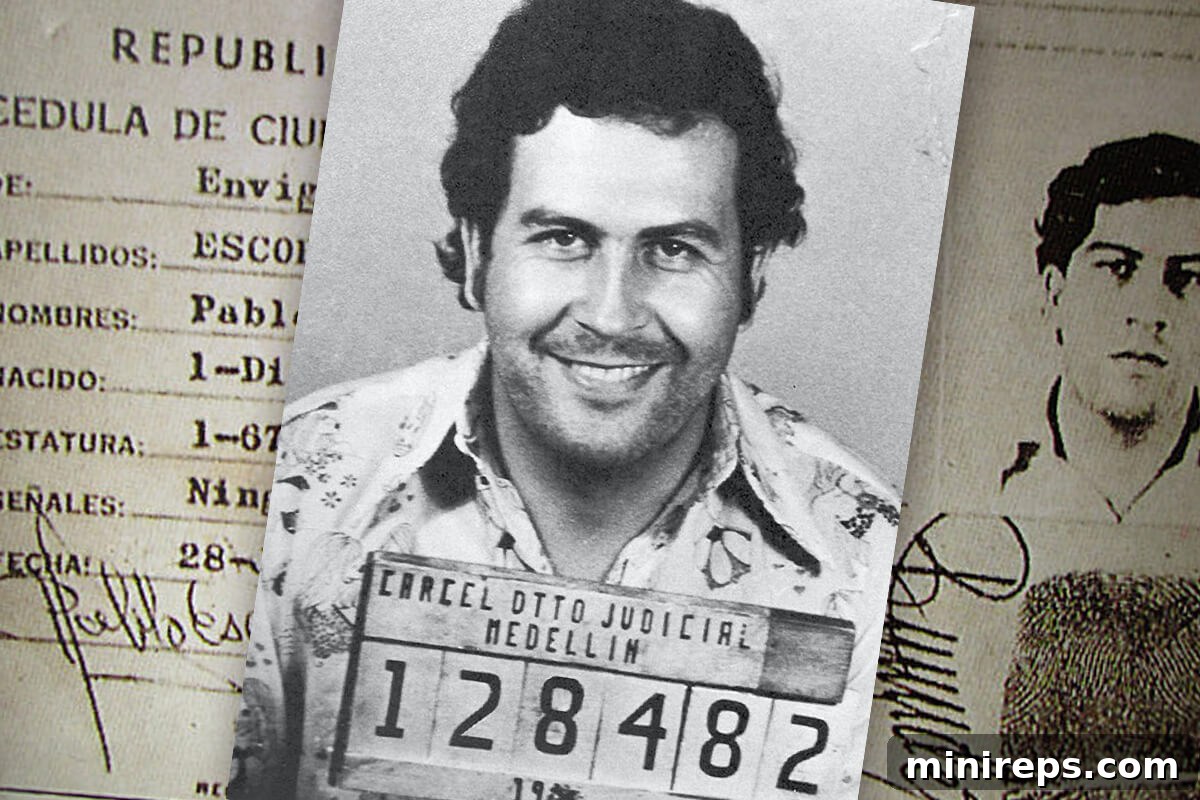
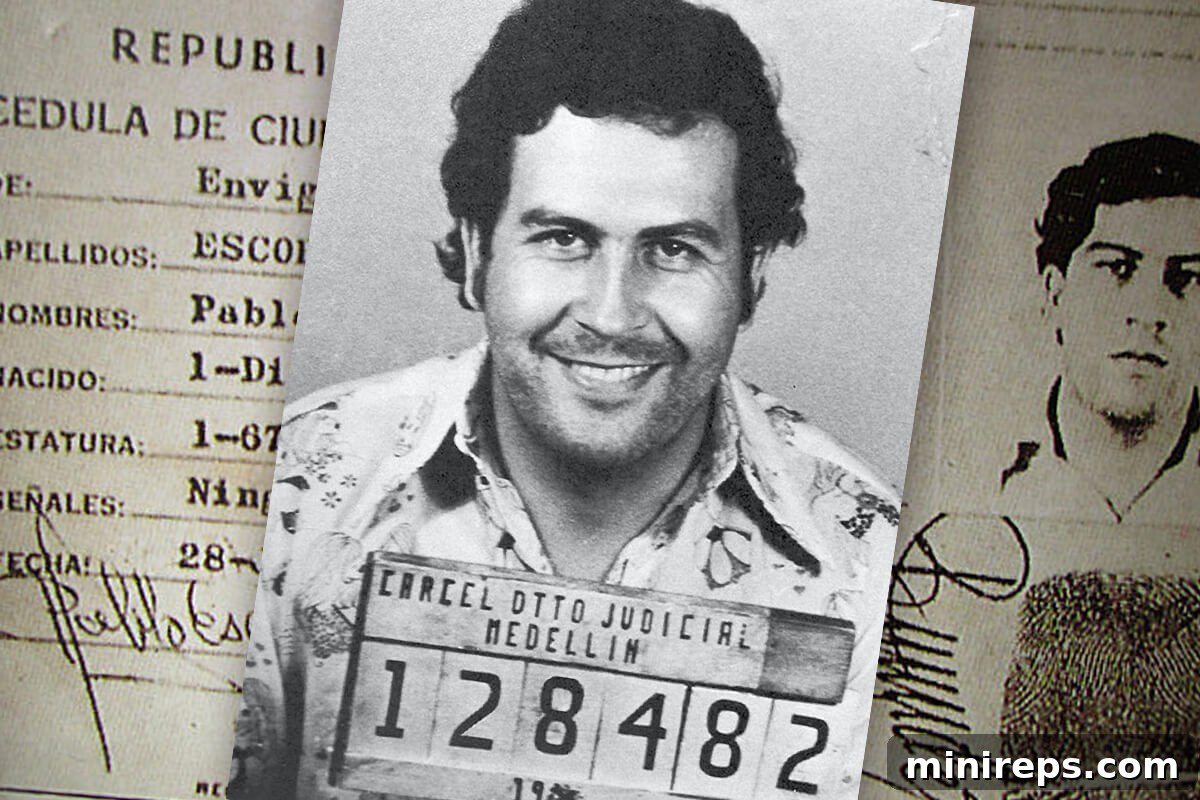
The Unprecedented Case: How Pablo Escobar’s Estate Won a $3 Million Domain Infringement Battle
Navigating Trademark Law: When a Surname Becomes a Brand
In the complex world of intellectual property, a fundamental principle often dictates that an individual cannot copyright or trademark their own name. This rule exists to prevent any single person from monopolizing common names, allowing others with the same surname to use it freely in commerce. However, as with many legal doctrines, there are crucial exceptions, particularly when a name acquires a distinctive commercial significance beyond its mere identity as a surname. This concept is central to understanding how a domain infringement case involving one of history’s most notorious figures, Pablo Escobar, took an unexpected turn.
The United States Patent and Trademark Office (USPTO), guided by Section 2(e)(4) of the Lanham Act, maintains a strict stance on surname trademark registration. It stipulates that a person’s last name should generally be refused trademark protection unless compelling evidence demonstrates its long and exclusive use. This usage must transform the public’s perception of the name from merely a personal identifier to a recognizable mark associated with specific goods or services. This transformation is known as acquiring “secondary meaning.” Without this secondary meaning, granting a trademark on a surname would unfairly prohibit others from utilizing their own name in their business endeavors. Therefore, a surname seeking trademark protection must clearly demonstrate that the purchasing public perceives it not just as a family name, but as a distinct brand identifier for particular products or services.
The Intriguing Victory of Escobar, Inc. in the pabloescobar.com Domain Dispute
Despite his death in a 1993 shootout, the legacy and intellectual property rights associated with Pablo Escobar have proven remarkably resilient, largely managed and asserted by Escobar, Inc. This private holding company found itself at the center of a high-stakes domain infringement battle over pabloescobar.com, ultimately securing a victory that underscored the critical nuances of intellectual property law and domain management.
Understanding the UDRP Process and the Escobar Case Details
The Uniform Domain-Name Dispute-Resolution Policy (UDRP) serves as an arbitration process designed to resolve disputes concerning abusive domain name registrations. It provides a streamlined alternative to traditional litigation for trademark owners seeking to reclaim domain names that infringe upon their rights. To succeed in a UDRP complaint, the complainant must demonstrate three key elements:
- The domain name is identical or confusingly similar to a trademark or service mark in which the complainant has rights.
- The registrant (respondent) has no rights or legitimate interests in respect of the domain name.
- The domain name has been registered and is being used in bad faith.
In the recent UDRP proceeding concerning pabloescobar.com, Escobar, Inc. initiated the complaint, asserting trademark rights to PABLO ESCOBAR, which the USPTO formally granted in 2017. A significant challenge arose from the fact that the disputed domain, pabloescobar.com, had been registered by the respondent back in 1999—nearly 18 years before Escobar, Inc. secured its federal trademark registration. Ordinarily, this chronological disparity, where the domain pre-dates the trademark registration, would be a strong basis for denying the relief sought by the complainant.
However, the UDRP Panelist’s decision hinged on Escobar, Inc.’s assertion of common law trademark rights dating back to 1986. Common law trademark rights are acquired through actual use of a mark in commerce, even without formal registration. This claim introduced a layer of complexity, transforming what might have been a straightforward timeline-based dismissal into a nuanced legal debate. This particular aspect of the case vividly illustrates the intricate nature of UDRP proceedings and, crucially, underscores the immense importance of a respondent actively engaging with and providing a robust defense to UDRP complaints. Failing to contest disputed “facts” or provide counter-arguments can dramatically alter the outcome, even when a respondent seemingly has strong grounds for defense.

About Escobar, Inc.: Managing a Controversial Legacy
Escobar, Inc. is a private holding company with deep roots in Medellín, Colombia. It was originally founded in 1984 by Roberto De Jesus Escobar Gaviria, the brother of the infamous Pablo Emilio Escobar Gaviria. The company’s initial purpose was to manage assets and provide value protection for Pablo Escobar and his brother. Following a period of dormancy, the company underwent reincorporation in 2014, at which point it strategically pursued the acquisition of intellectual property rights related to Pablo Escobar. Today, Escobar, Inc. functions as the official entity responsible for overseeing the Escobar family’s assets and holds a comprehensive portfolio of intellectual property, encompassing copyrights, trademarks, and all other associated rights pertaining to Pablo Escobar. This formal structure allows them to actively defend and monetize the commercial aspects of the Escobar name and image.
Dissecting the Facts: Gaps in the Trademark Claim and Timeline
A closer examination of Escobar, Inc.’s own published timeline reveals significant complexities regarding their claimed trademark rights. According to information available on their official website, Escobar Inc. was established in 1984, primarily operating as a general holding company. For the term PABLO ESCOBAR to genuinely acquire common law trademark rights, the complainant would need to demonstrate consistent, bona fide use of the term in commerce, specifically affixing it to goods or services in a manner that develops distinctiveness beyond being merely a surname. It is challenging to conceive how a general holding company, particularly one operating under the controversial circumstances surrounding Pablo Escobar’s activities, would have established such distinctiveness as early as 1986, as claimed.
The timeline further complicates matters: In 1992, Roberto Escobar surrendered to authorities and subsequently spent approximately 12 years in prison. A year later, in 1993, Pablo Escobar was killed, leading to the indefinite suspension of all Escobar, Inc. projects. Roberto Escobar was released from prison in 2004, and it wasn’t until November 2014 that Escobar Inc. was formally re-incorporated into its current business structure. Furthermore, the trademark registration itself states that the term “Pablo Escobar” “does not identify a living person.” While accurate at the time of the trademark application in 2016, this statement was demonstrably false for the claimed first use in commerce date of 1986. This discrepancy highlights potential inconsistencies in the historical narrative presented by the complainant regarding their continuous use and rights to the trademark.
The Critical Flaw: Trademark Abandonment and the Misaligned Timeline
The timeline provided by Escobar, Inc. presents substantial, undeniable gaps that bear significant implications for their trademark claim. Crucially, it can be reasonably inferred that the term PABLO ESCOBAR was not in active commercial use by the complainant for a prolonged period, specifically from Pablo Escobar’s death in 1993 until at least Roberto Escobar’s release in 2004, or more definitively, until the company’s re-incorporation in 2014. This period of non-use is a critical factor under trademark law.
Section 45 of the Lanham Act explicitly states that “nonuse for three consecutive years shall be prima facie evidence of abandonment. ‘Use’ of a mark means the bona fide use of that mark made in the ordinary course of trade, and not merely to reserve a right in a mark.” (15 U.S.C. Sec 1125). Given the stated cessation of “all projects” in 1993 and the re-incorporation in 2014, there is a clear period of more than three consecutive years during which the mark was not used in bona fide commerce. This extended dormancy strongly suggests that any common law rights to the PABLO ESCOBAR trademark, even if they had been legitimately established in 1986, were effectively abandoned during this substantial hiatus.
The specimen submitted to the USPTO by Escobar, Inc. for their trademark application was a DVD featuring the name Pablo Escobar on its cover. This specific piece of evidence raises further questions regarding the claimed first use in commerce date of 1986, unless there were other, earlier commercial uses on goods that were not disclosed to the USPTO. Even granting the complainant the generous benefit of the doubt regarding the acquisition of common law trademark rights in 1986, the subsequent period of non-use would almost certainly have led to the abandonment of those rights. This abandonment would have occurred either between 1993 (when projects were halted) and 2014 (when the entity re-incorporated), or at the very least between 1993 and Roberto’s release in 2004.
Regardless of which specific date of abandonment is considered, both fall significantly *after* the respondent first registered the domain pabloescobar.com in 1999. This chronological fact is paramount because UDRP rules strictly require a complainant to demonstrate that the respondent acted in “bad faith” in *both* the registration *and* the use of the domain name to succeed. If Escobar, Inc.’s trademark rights were abandoned or had not yet been established at the time the respondent registered the domain, it becomes exceedingly difficult to prove bad faith registration. The respondent could not have infringed upon rights that either did not exist or had been forsaken at the time of registration. This fundamental disconnect between the claimed rights and the domain registration date presented a formidable potential defense.
The Unspoken Defense: Why the Respondent Lost the UDRP
Despite the apparent weaknesses in the complainant’s arguments regarding continuous use and bad faith registration, the respondent in the pabloescobar.com UDRP case ultimately lost, incurring a potential loss of a valuable digital asset and a $3 million demand. The primary, overarching reason for this outcome was the respondent’s critical error: their failure to submit any defense in the UDRP proceeding. By remaining silent, the respondent provided no counter-arguments, no evidence, and no explanation for their domain registration or use.
In UDRP proceedings, panelists are constrained by the evidence and arguments presented to them. When a respondent fails to participate, the panelist is generally left with no alternative but to accept the veracity of the facts and assertions alleged in the complaint, provided they appear prima facie credible. The complainant, Escobar, Inc., capitalized on this silence by asserting that the respondent made no active use of the domain and was demanding an “exorbitant” amount of three million dollars as a purchase price. While a panelist’s role does not typically involve determining appropriate domain valuation, the respondent’s lack of justification for the price left the complainant’s claim of “exorbitant” and potentially “bad faith” selling tactics unchallenged.
Furthermore, regarding the respondent’s use or non-use of the domain, the panelist lacked any basis to conclude otherwise than the complainant’s assertion. The complainant argued that almost two decades of non-use demonstrated a lack of legitimate interest and thus bad faith in the registration of the domain. Had the respondent actively engaged, they could have presented numerous defenses. For instance, even the smallest “fair use” capacity, such as creating an informational website about Pablo Escobar’s life, an academic resource, a platform for parody or satire related to the public figure, or even simply holding the domain for future legitimate development, could have fundamentally altered the panelist’s perception. Such uses could have demonstrated a legitimate interest in the domain name, thereby directly refuting the critical UDRP elements of “no legitimate interest” and “bad faith use.” Without these defenses, the panelist had no choice but to rule in favor of the active and unchallenged complainant.
Key Takeaways from the Escobar, Inc. v. Neil Okrent / Ivan Munguia Case
You can review the complete case details at the following link: Escobar, Inc. v. Neil Okrent / Ivan Munguia
This remarkable case serves as a powerful reminder, not necessarily that UDRP decisions are inherently flawed, but rather of the severe dangers and irreversible consequences that arise from failing to provide a timely and comprehensive response when faced with a legal challenge. In this instance, the respondent forfeited a valuable digital asset and the potential for a multi-million dollar transaction simply because they neglected to submit a defense to the UDRP Panelist. A domain name is far more than just a web address; it represents a significant and often irreplaceable digital asset, a cornerstone of online presence, and a crucial component of intellectual property. Domain owners must be diligent and tenacious in managing their digital assets to proactively prevent loss, abandonment, or unauthorized transfer.
Proactive Brand Protection: Acting Decisively Against Infringement
Beyond domain disputes, safeguarding your copyrighted works and trademarks requires vigilance and swift action. If you detect indicators that your intellectual property is being misused or infringed upon, a prompt response is essential. This might involve issuing a formal Copyright Infringement Notice Letter or a DMCA Takedown Notice. It is crucial to understand that the effectiveness of such actions is heavily dependent on timeliness. Delaying your response can significantly weaken your position, potentially making it too late to pursue a claim effectively. Every legal cause of action is subject to a statute of limitations, a time limit within which legal proceedings must be initiated. Therefore, it is imperative to pursue a claim as soon as any infringement is discovered to maximize your chances of success.
Our dedicated team of corporate domain experts is equipped to assist you in protecting your invaluable domain portfolios. We provide expert guidance through the intricate landscape of internet law and domain management, helping you avoid costly pitfalls and missteps—just as the respondent in this case unfortunately experienced. If you find yourself a victim of copyright infringement or domain squatting, remember: act right away to preserve your rights and assets.
To learn more about UDRP and how to safeguard your digital presence, contact us today.
+1.888.982.7940
Contact Us
Let Our Domain Concierge Service Secure Your Desired Name
It’s a common scenario: you have the perfect domain name in mind, only to discover it’s already legally registered and owned by someone else. While this might seem like a dead end, it doesn’t necessarily mean your ideal domain is lost forever. The acquisition of an already registered domain requires expertise, negotiation skills, and a strategic approach, which is precisely where our Domain Concierge Service excels.
The 101domain Domain Concierge Service specializes in helping clients acquire domain names that are currently owned by third parties, provided the current owner is open to selling their rights. Our experienced domain brokers handle the entire negotiation process on your behalf. A key advantage of this service is that your identity remains completely private throughout the sensitive acquisition process. Our brokers discreetly reach out to the registrant, negotiate the best possible sale price, and manage all the intricate details, allowing you to secure your desired domain without direct engagement or revealing your interest. This privacy is invaluable, as it prevents potential price inflation often associated with direct approaches.
Should the current owner be unwilling to sell, or if you prefer to explore alternative avenues to avoid potentially higher purchase prices, another strategy is to monitor the domain for its expiration. Domain names that are not renewed eventually become available for re-registration. Our services can also assist in monitoring such domains, positioning you to procure them once they enter the public pool.

Don’t Let Your Brand Vanish: The Absolute Importance of Domain Name Renewal
In the digital age, a company’s domain name is arguably its most critical online asset, serving as the gateway to its website, email communications, and overall brand identity. Missing the renewal of a company’s domain name is not just a costly mistake; it can be a catastrophic and crippling event for any business, regardless of its size or industry. The consequences extend far beyond simple inconvenience, potentially leading to immediate operational disruptions and long-term damage to your brand and bottom line.
The moment a domain name expires, it enters a critical redemption period, but swiftly thereafter, it can become available for purchase by anyone. This means a competitor, a cyber-squatter, or even an opportunistic individual could acquire your vital online address. Losing your domain means losing immediate control over your website, making it inaccessible to customers and clients. Equally devastating is the loss of email access through your site, severing crucial communication channels with clients, partners, and internal teams. Furthermore, the SEO authority and brand recognition painstakingly built over years can evaporate overnight, necessitating a costly and lengthy process to rebuild trust and visibility. The financial implications, loss of customer trust, and operational paralysis associated with a lapsed domain registration underscore the absolute necessity of robust renewal strategies.
To mitigate these significant risks, it is highly advisable to adopt proactive domain management practices. Opting for a multiple-year registration upfront provides extended peace of mind and reduces the frequency of renewal reminders. A more common and highly effective strategy is to set up an auto-renewal payment for your domain names. However, implementing auto-renewal requires diligence: it is paramount to regularly verify that the credit card or payment method on file is current and has not expired. Outdated payment information is a frequent cause of failed auto-renewals, ironically leading to the very problem this feature is designed to prevent. Regularly auditing your domain portfolio and associated payment methods is a simple yet indispensable practice for continuous brand protection.
Contact Us +1.888.982.7940
Comprehensive Domain Name Services
We are renowned for our unparalleled global reach and extensive capabilities in domain management. Access the specialized services and expert support you need to make informed, meaningful decisions, ensuring your brand is always protected across all digital frontiers.
Advanced Monitoring & Enforcement Solutions
Our sophisticated monitoring solutions and dedicated team of expert analysts work tirelessly, around the clock, to identify potential threats to your brand. When an issue is detected, we provide swift, in-house solutions for effective resolution and enforcement.
Security & Technology Partner Ecosystem
As a leading security-focused domain name and web technology provider, we offer a vast ecosystem of complementary services and collaborate with best-in-class partners, ensuring you have access to robust solutions whenever your brand’s security demands it.