


Volume 4: 101domain Presents: Navigating Digital Millennium Copyright Act Takedown Notices for Robust Brand Protection
In today’s fast-paced digital landscape, safeguarding your company’s intellectual property is not just a best practice—it’s a critical imperative for sustainable growth and maintaining trust with your audience. As businesses increasingly rely on unique content to differentiate themselves, the unauthorized use of your creative work poses a significant threat. Knowing how to effectively enforce your rights is fundamental to promoting a secure and authentic online experience for your customers and protecting your brand’s integrity. But when your content is copied, stolen, or misused without permission, what actionable steps can you take?
At 101domain, we are committed to empowering brand owners with the knowledge and tools necessary for comprehensive online protection. In previous discussions within our Corporate Service Series, we explored how to enforce your trademark rights through mechanisms like a UDRP (Uniform Domain-Name Dispute-Resolution Policy). This time, our focus shifts to another vital pillar of intellectual property: copyright. We delve into how you can protect your valuable copyrighted materials from being exploited by others, preventing them from unjustly profiting from your hard work, creativity, and investment.
The Digital Millennium Copyright Act (DMCA) stands as a powerful and widely accessible solution for virtually any victim of copyright infringement within the United States. It provides a structured legal framework designed to address the challenges of copyright protection in the digital era, offering a crucial mechanism to reclaim control over your digital assets.
Understanding the Core Differences: Trademark vs. Copyright
One of the most common areas of confusion for brand owners lies in distinguishing between “Trademark” and “Copyright.” While both are crucial components of intellectual property law and aim to protect unique assets, they cover very distinct types of creations. The U.S. Copyright Office and the U.S. Patent and Trademark Office clearly define these terms as follows:
“A trademark is a word, phrase, symbol, and/or design that identifies and distinguishes the source of the goods of one party from those of others. Unlike patents and copyrights, trademarks do not expire after a set term of years. Trademark rights primarily arise from actual “use” in commerce, providing ongoing protection as long as the mark remains in use.”
“A copyright protects original works of authorship, encompassing a broad range of creative expressions including literary, dramatic, musical, and artistic works, such as poetry, novels, movies, songs, computer software, and architecture. The duration of copyright protection is extensive, varying based on several factors but typically lasting for the life of the author plus 70 years, or for a set term for corporate works.”
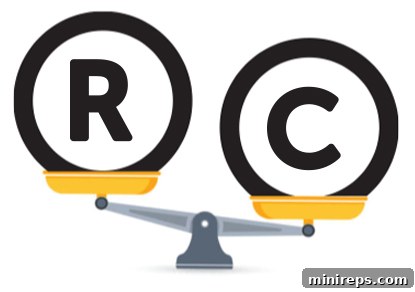
Despite their shared umbrella of intellectual property, confusing these two terms can lead to misdirected protection strategies. As previously highlighted, a trademark serves to identify and distinguish the origin of goods or services in the marketplace, preventing consumer confusion. Examples include brand names (e.g., Coca-Cola), logos (e.g., Nike’s swoosh), slogans (e.g., “Just Do It”), and even distinct product packaging. Trademark rights are earned through use and can last indefinitely if continuously used and properly maintained.
Copyright, conversely, safeguards original creative expressions. If you’ve written an article, designed a unique graphic for your website, composed a song, filmed a video, developed software code, or taken a photograph, these creations are automatically protected under copyright law from the moment they are fixed in a tangible medium. This means the work must be independently created by a human author and possess at least a minimal degree of creativity. Registration with the U.S. Copyright Office offers additional legal benefits, but protection itself is automatic. Essentially, any original content that you create and “fix” in a perceivable form—be it digital or physical—falls under the purview of copyright law. Understanding this distinction is paramount for selecting the correct legal avenue for brand protection; if you’re dealing with unauthorized use of your creative content, copyright law and the DMCA are your primary tools. For specific legal advice and to clarify any nuances, consulting an attorney specialized in copyright law is always recommended.
Get to Know the Difference: Trademark vs. Copyright
To further assist brand owners in navigating the complexities of intellectual property, 101domain Corporate Brand Services proudly presents an insightful infographic. This visual guide is designed to clarify the critical differences between trademarks and copyrights, ensuring you can make informed decisions for robust brand protection and enforcement strategies.
Click Here to download our comprehensive infographic and gain a clearer understanding of these vital distinctions.
Copyright: From Constitutional Roots to Digital Realities
The concept of copyright in the United States is deeply rooted in the nation’s founding principles, articulated in Article I, Section 8 of the Constitution. This foundational clause grants Congress the power “to promote the progress of science and useful arts, by securing for limited times to authors and inventors the exclusive rights to their respective writings and discoveries.” This foresight laid the groundwork for protecting creative endeavors, ensuring that creators could benefit from their innovations and contributions to society. The U.S. Copyright Office was subsequently established to facilitate the federal registration of works, although, crucially, a work is protected under copyright law from the moment it is created and fixed in a tangible medium, even without formal registration.
Historically, copyright infringement was less pervasive and more difficult to execute on a massive scale. Copying and distributing another’s work often required physical reproduction, limiting the speed and reach of unauthorized dissemination. However, the advent of the internet fundamentally transformed this landscape. The digital age made it incredibly easy to copy, paste, and share content globally at the click of a button, leading to an explosion of copyright issues. Recognizing this dramatic shift, Congress passed the Digital Millennium Copyright Act (“DMCA”) in 1998. This landmark legislation was specifically designed to adapt copyright law to the unique challenges presented by the internet. A key innovation of the DMCA was its recognition that internet service providers (ISPs), such as domain registrars and website hosting companies like 101domain, could not reasonably be expected to proactively monitor every piece of content hosted on their platforms. Instead, the Act established a “safe harbor” provision, shielding ISPs from liability if they promptly act to remove infringing material once properly notified of the infringement by a third-party rights holder. This balance ensures that while creators have a clear path to enforce their rights, internet service providers are not unduly burdened with impossible policing tasks, fostering a more balanced and functional online ecosystem.
Understanding the Digital Millennium Copyright Act (DMCA) and Its Mechanism
The Digital Millennium Copyright Act (DMCA) serves as a cornerstone of online copyright enforcement, aiming to strike a delicate balance between protecting the interests of copyright owners and facilitating the free flow of information for internet users. It provides a robust framework for addressing various forms of copyright infringement that proliferate in the digital realm, from unauthorized reproduction to distribution of copyrighted materials. The DMCA is specifically intended to regulate digital media, offering clear mechanisms to tackle copyright challenges faced by creators while also reinforcing penalties for those who infringe upon intellectual property rights.
A critical component of the DMCA is the “Takedown Notice.” Once an internet service provider (ISP), hosting company, or platform is properly notified of a copyright infringement, they are legally obligated to take action to mitigate the infringement. By promptly removing or disabling access to the infringing material, the ISP can avoid liability under the DMCA’s safe harbor provisions. This makes the DMCA Takedown Notice an invaluable tool for copyright holders seeking to protect their digital assets.
To be legally effective and ensure prompt action, a DMCA Takedown Notice must be a written communication provided to the internet service provider that substantially includes the following specific elements:
- A physical or electronic signature of a person authorized to act on behalf of the owner of an exclusive right that is allegedly infringed. This verifies the legitimacy of the complaint.
- Identification of the copyrighted work claimed to have been infringed, or if multiple copyrighted works at a single online site are covered by a single notification, a representative list of such works at that site. Clarity here is crucial for the ISP to locate the infringing content.
- Identification of the material that is claimed to be infringing or to be the subject of infringing activity and that is to be removed or access to which is to be disabled, and information reasonably sufficient to permit the service provider to locate the material. This often includes URLs and specific descriptions of the infringing content.
- Information reasonably sufficient to permit the service provider to contact the complaining party, such as an address, telephone number, and, if available, an electronic mail address at which the complaining party may be contacted. Accurate contact details enable proper communication and follow-up.
- A statement that the complaining party has a good faith belief that the use of the material in the manner complained of is not authorized by the copyright owner, its agent, or the law. This legal declaration underscores the complainant’s belief in the validity of their claim.
- A statement that the information in the notification is accurate, and under penalty of perjury, that the complaining party is authorized to act on behalf of the owner of an exclusive right that is allegedly infringed. This sworn statement adds a layer of legal seriousness and accountability to the notice.
It is paramount to understand that if a DMCA notice fails to meticulously comply with all the requirements listed above, a service provider may legally ignore the complaint without incurring any liability. In such instances, not only will the complaint go unanswered, but the infringing material will regrettably remain accessible on the website until a complete and accurate DMCA notice is properly filed. Therefore, ensuring the filed notice is thoroughly complete and perfectly accurate is absolutely vital for the swift and effective remediation of your copyright rights. In situations involving complex infringement or if you require assistance in drafting a legally sound DMCA Takedown Notice, professional guidance can be invaluable.
At 101domain, we are dedicated to helping you fully understand your rights as a copyright holder in the digital age. Our expert brand enforcement team is equipped to advise you on the most effective course of action, tailored to your unique situation. We welcome the opportunity to discuss your specific concerns and guide you through the process of protecting your valuable intellectual property. Don’t let your hard work be exploited; take proactive steps to defend your brand.
Contact Us Today: +1.888.982.7940 | [email protected]
Frequently Asked Questions About DMCA Takedowns
Does a DMCA Takedown Notice apply outside of the USA?
The DMCA itself is a specific piece of United States copyright law, meaning its direct legal authority and enforcement provisions primarily apply within the U.S. However, its practical reach extends further. While it directly governs websites hosted in the US, many international hosting providers and online platforms, especially those serving a global audience, often choose to voluntarily comply with DMCA takedown requests as a matter of best practice or to avoid potential legal conflicts and maintain good standing with content owners. Additionally, countries participating in international copyright treaties, such as those under WIPO (World Intellectual Property Organization), often have their own copyright laws that mirror the spirit of the DMCA, or they recognize and respond to similar notices. So, even if the copyright owner is not in the US, but the hosting website is located in the US, a DMCA notice can still be issued and is generally effective.
Does all my work require a copyright notice or registration to be protected?
No, one of the most common misconceptions is that you need to register your content or affix a copyright notice to it for it to be protected. Under current U.S. copyright law, your original material is granted copyright protection automatically from the moment it is created and fixed in a tangible form (e.g., written down, saved as a digital file, recorded). This means that your original creations cannot be legally published, distributed, or used by others without your explicit permission. Even without formal registration, you can still issue a DMCA Takedown Notice for unauthorized use, and the infringing material can be removed. However, registering your copyrighted content with the U.S. Copyright Office does provide significant additional benefits, such as the ability to sue for statutory damages and attorney’s fees in an infringement case, and establishing a public record of your ownership.
What is the DMCA safe harbor provision?
The DMCA’s “safe harbor” provision, formally known as the Online Copyright Infringement Liability Limitation Act (OCILLA), is a crucial part of the DMCA that provides conditional protection to online service providers (OSPs) and other internet intermediaries. It shields them from direct copyright infringement liability for content posted by their users. The reason for these DMCA safe harbors is to foster the growth and innovation of online services without internet service providers constantly fearing legal action for actions of their users. This provision incentivizes OSPs to facilitate robust online services while ensuring they act as responsible intermediaries. To qualify for safe harbor protection, an OSP must meet specific criteria, including: not having actual knowledge of the infringement, not receiving a direct financial benefit from the infringing activity, and expeditiously removing or disabling access to the infringing material once properly notified (via a DMCA takedown notice) by the copyright owner. This framework encourages OSPs to swiftly address valid infringement claims, rather than requiring them to proactively monitor all user-generated content.
What exactly is a DMCA Takedown Notice?
A DMCA Takedown Notice is an official, legally recognized notification issued by the owner of copyrighted content (or their authorized agent) to a website owner or an online service provider (like a web host, search engine, or social media platform). This notice formally informs the recipient that specific property found on their website or platform infringes upon the sender’s copyright. Upon receiving a valid notice, the website at the receiving end is expected to immediately take down the copyrighted material in question. If the website owner fails to comply, the Internet Service Provider (ISP) or hosting company, to protect its own safe harbor status, can forcibly take down the content or disable access to it. It is the primary legal mechanism for copyright holders to request the removal of infringing content from websites hosted in the U.S. or by companies that adhere to DMCA principles.
What is a DMCA Counter-Notice or Counter Claim?
A DMCA Counter-Notice (often colloquially referred to as a Counter Claim) is a specific legal response submitted by the accused infringing website owner (the ISP subscriber or client) in direct response to a DMCA Takedown Notice that has resulted in their content being removed or disabled. It is not a defense against the original Takedown Notice but rather a formal declaration that the content was removed in error or that the user believes they have the right to use the content (e.g., through fair use, license, or that the copyright owner does not own the copyright). By filing a counter-notice, the sender agrees to accept service of process from the notifier (the original copyright owner), which means they consent to be sued in federal court if the copyright owner decides to pursue further legal action. The counter-notice must also include a statement under penalty of perjury, affirming a good faith belief that the material was removed by mistake or misidentification. Upon receipt of a valid counter-notice, the ISP may restore the content within 10-14 business days unless the copyright owner informs them that they have filed a lawsuit against the user.
Did you miss an issue of the Corporate Service Series?
There’s no reason to worry; we have you thoroughly covered. Explore our archives and catch up on essential insights for corporate brand protection.
Comprehensive Domain Name Services
We are renowned for our extensive global reach and unparalleled capabilities in domain management. Get the expert services and dedicated support you need to make meaningful, strategic decisions, ensuring your brand is always vigilantly protected across the digital landscape.
Advanced Monitoring & Enforcement Services
Our sophisticated monitoring solutions, powered by dedicated analysts, work around the clock to detect potential threats to your brand. When an infringement or problem is identified, we provide immediate, in-house solutions to resolve it efficiently and effectively.
Our Security & Technology Partners
As a leading security-focused domain name and web technology provider, we offer a wide array of complementary services and partnerships with best-in-class technology providers, ensuring robust security and cutting-edge solutions are available whenever your business needs them.