
Understanding WHOIS Lookup and Protecting Your Digital Privacy
In today’s interconnected digital landscape, the internet often feels like an open book. While this openness facilitates communication and information sharing, it also presents significant privacy challenges. Every domain name registered across the globe comes with a public record containing detailed information about its owner. This record, known as a WHOIS record, is accessible to anyone worldwide through what’s commonly referred to as a WHOIS lookup. Unlike many other digital transactions where personal data is guarded, the internet’s design, at its core, makes domain ownership information transparent by default, with no inherent restrictions on who can view this sensitive data or how many times they can access it.
When you embark on the journey of registering a new domain name for your business, personal brand, or a creative project, you are required to provide a comprehensive set of personal and contact details. This information is not merely stored in a private database; it forms the backbone of your domain’s WHOIS record. This record typically includes your full name, physical address, email address, phone number, and administrative, technical, and billing contact information. Beyond personal identifiers, it also logs crucial dates such such as the domain’s creation, expiration, and last update, alongside the domain’s current status and the identity of the registrar managing it. This system, mandated by the Internet Corporation for Assigned Names and Numbers (ICANN), was originally designed to ensure accountability, facilitate technical support, and resolve disputes. However, in an age where data privacy is paramount, the public availability of this information has become a significant concern for many domain owners.
What is a WHOIS Lookup and Why Does it Exist?
The term “WHOIS” literally means “who is?” and it serves as a query and response protocol widely used for querying databases that store the registered users or assignees of an Internet resource, such as a domain name, an IP address block, or an autonomous system. Essentially, a WHOIS lookup tool allows anyone with an internet connection to search for and retrieve information about a specific domain name, revealing details about the individual or organization that owns it.
The genesis of WHOIS can be traced back to the early days of the internet, when resources were scarce and a clear system was needed to identify who was responsible for a particular domain or IP address. It was a simpler time, with fewer users and a greater emphasis on collaboration and troubleshooting among network administrators. The primary purpose was to ensure accountability. If a technical issue arose, or if there was a legal dispute concerning a domain, the WHOIS record provided the necessary contact points to address the situation. This public directory helped maintain the integrity and functionality of the burgeoning internet, allowing for efficient communication between registrars, registrants, and technical teams. It facilitated everything from resolving network outages to investigating potential abuses of domain names.
Over the decades, as the internet grew exponentially and became intertwined with daily life, commerce, and personal identity, the initial assumptions about data transparency began to clash with modern privacy expectations. While the original intent of WHOIS was noble – promoting transparency and accountability – its implementation has inadvertently created a vast, publicly searchable database of personal information for millions of domain owners worldwide. This fundamental design, where personal data is openly accessible, underpins the critical need for privacy solutions in the contemporary digital landscape.
Navigating the Privacy Landscape: Do You Have Privacy with WHOIS Lookup?
The short and direct answer to whether you have privacy with a WHOIS lookup by default is a resounding no. Without taking proactive measures, your personal and contact information will be openly displayed in the public WHOIS database, accessible to anyone who performs a simple search. This transparency, while serving its original purpose of accountability, exposes domain owners to a myriad of unwanted intrusions and potential risks that can severely impact their digital security and personal peace of mind.
The moment your domain’s WHOIS record becomes public, you effectively open the floodgates to various forms of unwanted attention. One of the most immediate and pervasive consequences is the influx of spam and unsolicited marketing communications. Spammers, data brokers, and advertising companies frequently scrape WHOIS databases to compile lists of active domain owners, bombarding them with unsolicited emails, phone calls, and even physical mail pitching everything from web design services to SEO packages. This can quickly clutter your inbox and disrupt your daily routine, turning the excitement of owning a new domain into a source of constant annoyance.
Beyond nuisance spam, the public display of your personal data carries more serious implications. It makes you a potential target for identity theft, phishing attempts, and social engineering scams. Cybercriminals can leverage your publicly available name, address, and phone number to craft highly convincing phishing emails, impersonate you, or gain unauthorized access to other online accounts. Furthermore, publicly visible contact information can be exploited for domain hijacking attempts, where malicious actors try to illegally transfer ownership of your domain. Competitors might also use your WHOIS data to gather intelligence about your operations, track your domain registrations, or even attempt to poach your ideas.
Perhaps one of the most concerning aspects of public WHOIS data is its permanence. If you register a domain name without WHOIS Privacy Protection, your personal information is immediately made public and is very likely archived somewhere on the internet. Various online services, data aggregators, and even search engine caches routinely scrape and store WHOIS data. This means that even if you decide to purchase Privacy Protection at a later date, many of these archived versions of your personal information may persist online indefinitely. This digital footprint can be extremely difficult, if not impossible, to erase completely, highlighting the critical importance of obtaining WHOIS Privacy Protection at the initial point of domain registration. Protecting your data from day one is the most effective strategy to prevent its widespread dissemination and long-term exposure across the internet.
How WHOIS Privacy Protection Shields Your Personal Information
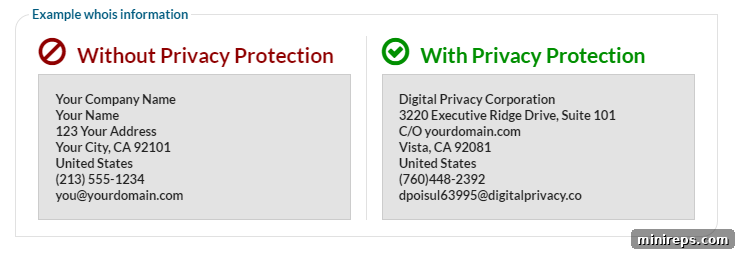
WHOIS Privacy Protection is an essential service designed to safeguard your personal identity and contact details from the public eye. When you opt for this service, typically offered by your domain registrar (like 101domain), it acts as a crucial intermediary between your private information and the public WHOIS database. Instead of your actual name, address, email, and phone number being displayed, they are replaced with the contact information of the privacy protection service provider or a designated proxy organization. This effectively creates a shield, ensuring your personal data remains private while still fulfilling ICANN’s requirement for accurate contact information associated with a domain.
The mechanism is straightforward yet highly effective: your domain name unequivocally remains yours, maintaining full ownership and control. The only difference is that when someone performs a WHOIS lookup, they will see the generic, anonymized contact details provided by the privacy service, rather than your specific personal identifiers. This means that spammers and data-mining operations will encounter generalized information, significantly reducing their ability to target you directly with unsolicited communications. It also adds a layer of defense against malicious actors who might attempt identity theft or domain hijacking by exploiting readily available personal data.
While Privacy Protection conceals your sensitive details, it’s important to understand what information typically remains visible. Essential technical information necessary for the internet’s functionality, such as the domain name itself, its registration and expiration dates, the domain registrar, and the nameservers pointing to your website, will still be publicly accessible. This ensures the ongoing operational transparency required for the internet’s infrastructure, without compromising your personal privacy. In essence, Privacy Protection allows you to enjoy the benefits of domain ownership and a public online presence, without having to sacrifice your personal data to the entire world.
Choosing to implement WHOIS Privacy Protection from the outset of your domain registration is a proactive measure that empowers you to control your digital footprint. It offers immense peace of mind, knowing that your personal contact information is secure from unwanted solicitations, competitive snooping, and more severe threats like fraud or harassment. Don’t underestimate the value of this crucial service; it’s a small investment that provides significant protection in an increasingly exposed online environment.
Choosing the Right WHOIS Privacy Protection for Your Domain
With the understanding of why WHOIS Privacy Protection is so vital, the next step is to ensure you select the right service for your needs. Most reputable domain registrars, including 101domain, offer WHOIS Privacy Protection as an add-on during the domain registration process or as a subsequent service. When making your choice, consider a few key factors.
Firstly, ascertain whether the service is free or offered for a fee. Some registrars include basic WHOIS privacy as a complimentary feature with every domain registration, recognizing its importance to customer satisfaction and security. Others may charge an annual fee, which can vary depending on the registrar and the specific features included. It’s often a worthwhile investment, even if it comes at a small cost, given the extensive benefits of safeguarding your personal information. Be wary of registrars that don’t offer any privacy options, as this could leave your data completely exposed.
Secondly, investigate the level of protection offered. While most standard WHOIS privacy services will hide your name, address, email, and phone number, some might offer more comprehensive solutions that also mask other administrative or technical contact details. Confirm what specific pieces of information will be replaced by the proxy service and what will remain visible. A robust privacy service ensures that only the necessary operational data is public, keeping your core identity private.
Thirdly, it’s prudent to review the terms of service regarding how the privacy provider handles inquiries. In some legitimate situations, such as legal requests or urgent technical issues, it might be necessary for third parties to contact the domain owner. A reliable privacy service will have a clear policy for forwarding such legitimate communications to you, ensuring you remain reachable when necessary, without compromising your privacy to unwanted contact. This balance between privacy and necessary communication is a hallmark of a high-quality WHOIS privacy service.
Finally, remember the “archiving problem.” The internet has a long memory. If you initially register a domain without privacy protection, your information will be public, and it can be scraped and permanently archived by various online services and databases. Even if you purchase privacy protection later, these archived records may persist indefinitely. Therefore, the most effective strategy for protecting your digital privacy is to opt-in to WHOIS Privacy Protection at the very moment you register your domain. This proactive step ensures your personal information is shielded from the public domain from day one, preventing its widespread dissemination and reducing the long-term risk of exposure.
Beyond WHOIS: A Holistic Approach to Online Privacy and Cybersecurity
While WHOIS Privacy Protection is a critical component of safeguarding your online identity, it’s just one piece of a broader cybersecurity and privacy puzzle. A truly secure and private digital existence requires a holistic approach, encompassing various practices and tools. Understanding and implementing these additional layers of protection can significantly enhance your overall online safety.
One fundamental aspect is securing your email. Your email address is often the key to numerous online accounts, making it a prime target for phishing attempts and unauthorized access. Utilize strong, unique passwords for all your email accounts, and enable two-factor authentication (2FA) wherever possible. Be vigilant about suspicious emails, and avoid clicking on unknown links or downloading attachments from unverified sources. Consider using an alias email address for public registrations or newsletters to further shield your primary email from spam and potential breaches.
Equally important is the use of strong and unique passwords for all your online accounts. Reusing passwords across different platforms dramatically increases your vulnerability. A password manager can help you generate and securely store complex passwords, making it easier to maintain robust security practices without the burden of memorization. Complementing this, enabling 2FA for all critical accounts adds an extra layer of security, requiring a second form of verification beyond just your password.
For enhanced browsing privacy and security, consider using a Virtual Private Network (VPN). A VPN encrypts your internet connection and masks your IP address, making it much harder for third parties, including internet service providers and potential snoopers, to track your online activities. This is particularly crucial when using public Wi-Fi networks, which are often less secure and susceptible to eavesdropping. Furthermore, regularly updating your operating system, web browser, and all software applications is vital, as these updates often include critical security patches that protect against newly discovered vulnerabilities.
Finally, be mindful of the information you share on social media and other public platforms. Every piece of personal data, whether it’s your location, birthday, or relationship status, can be pieced together by malicious actors. Review your privacy settings on social media regularly and share information judiciously. By combining WHOIS Privacy Protection with these comprehensive cybersecurity practices, you create a robust defense mechanism, allowing you to navigate the digital world with greater confidence and significantly reduce your exposure to online threats.
Conclusion: Empowering Your Digital Privacy
In an era where personal data is often considered the new currency, protecting your online identity is no longer an option but a necessity. The public nature of WHOIS records, while rooted in the early principles of internet accountability, poses substantial risks to modern domain owners. From an onslaught of spam and unsolicited marketing to more insidious threats like identity theft and domain hijacking, the exposure of your personal information in the public WHOIS database can lead to significant inconvenience and potential harm.
WHOIS Privacy Protection offers a simple yet profoundly effective solution to this challenge. By acting as an anonymizing shield, it replaces your sensitive personal details with proxy information, allowing you to maintain full ownership and control over your domain without revealing your private life to the world. The value of this service cannot be overstated, particularly given the persistent nature of internet archives that can immortalize your publicly exposed data if privacy protection isn’t implemented from day one.
Therefore, as you embark on your journey of establishing an online presence or managing your existing domains, make the conscious choice to prioritize your privacy. Don’t let the “Peeping Toms” of the internet get a hold of your private information through a simple WHOIS search. Protect yourself, your business, and your peace of mind. Ensure you opt-in to Privacy Protection at checkout, securing your digital footprint from the very beginning. It’s a fundamental step towards a safer, more private, and more secure online experience.