
In today’s digital landscape, robust email security is paramount for businesses of all sizes. The Sender Policy Framework (SPF) stands as a foundational email authentication protocol, acting as a crucial defense mechanism against email spoofing and phishing attacks. By verifying the authenticity of sending mail servers, SPF helps protect your domain’s reputation and ensures your legitimate emails reach their intended recipients. However, SPF possesses a critical, often overlooked limitation: the “lookup limit.” If not properly managed, this technical constraint can severely impact your email deliverability, compromise your sender reputation, and disrupt vital business communications. Understanding and addressing the SPF lookup limit is not just a technicality; it’s a strategic imperative for maintaining secure and reliable email operations.
Demystifying the SPF Lookup Limit: What You Need to Know
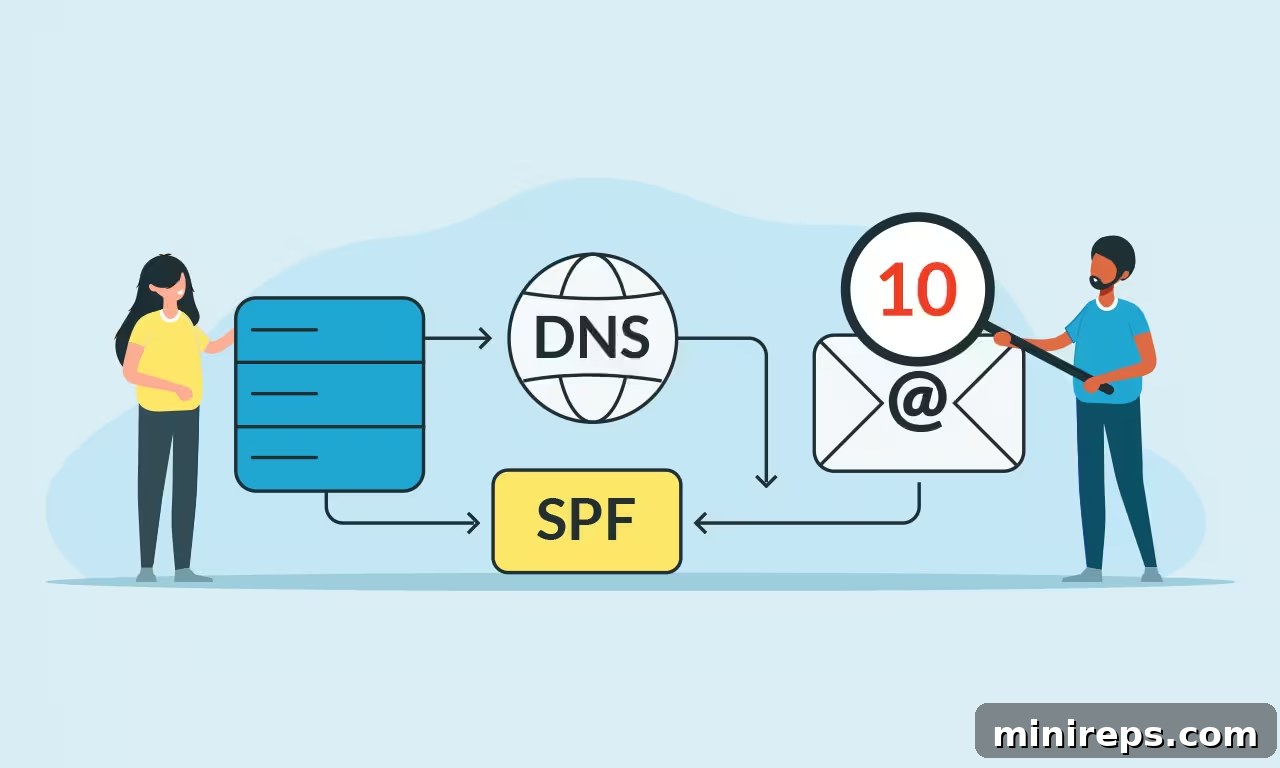
SPF operates on a simple yet powerful principle: it allows domain owners to publish a list of authorized mail servers in their domain’s DNS records. When an email is sent from your domain, the receiving mail server performs a DNS lookup to check this SPF record. If the sending server’s IP address matches an entry in your SPF record, the email passes the authentication check. This process is essential for preventing unauthorized parties from sending emails that appear to originate from your domain, a common tactic in phishing and spoofing schemes.
The SPF specification, however, imposes a strict limit on the number of DNS lookups a receiving server can perform when evaluating an SPF record. This “SPF lookup limit” is capped at a maximum of 10 lookups per email. This limit was put in place to prevent potential denial-of-service (DoS) attacks and to manage the load on DNS servers. Each time your SPF record contains mechanisms like include, a, mx, ptr, or exists, it triggers a DNS lookup. If your SPF record, or any nested SPF records it points to, exceeds this 10-lookup threshold, the SPF check will result in a “PermError” (Permanent Error). A PermError indicates that the SPF record is invalid or malformed, rendering the authentication useless and often leading to adverse outcomes for your email.
It’s important to distinguish between mechanisms that count towards the limit and those that do not. Mechanisms like ip4, ip6, and all do not require DNS lookups and therefore do not contribute to the 10-lookup limit. However, as businesses increasingly rely on a multitude of third-party services for email operations, the use of `include` mechanisms, which often point to other SPF records that themselves contain further `include` statements, makes exceeding this limit a common and critical problem.
The Far-Reaching Impact of Exceeding the SPF Lookup Limit on Your Business
Modern businesses leverage a diverse ecosystem of third-party services for their email communications. From marketing automation to customer support, each platform plays a vital role. These often include:
- Marketing Platforms: Tools like Mailchimp, HubSpot, or Constant Contact are indispensable for managing campaigns, newsletters, and promotional emails.
- Transactional Email Providers: Services such as SendGrid, Mailgun, or AWS SES handle critical transactional emails like order confirmations, password resets, and shipping notifications.
- CRM Systems: Platforms like Salesforce, Zoho CRM, or Microsoft Dynamics often send emails directly from their systems on your behalf, especially for sales and customer relationship management.
- Customer Support Tools: Helpdesk solutions like Zendesk, Freshdesk, or Intercom rely on email for ticketing and direct customer communication.
- Internal Communication and Collaboration Tools: Some organizations also use specialized tools that send notifications via email.
Each of these services typically requires you to authorize them by adding an include mechanism to your domain’s SPF record. An include mechanism points to the service’s own SPF record, which may in turn contain its own set of includes. This creates a cascading chain of DNS lookups. For example, an include:spf.mailgun.com might point to a record that itself includes spf.protection.outlook.com, and so on. This intricate web of nested lookups can quickly exhaust the 10-lookup limit, often without the domain owner realizing it until problems arise.
The consequences of hitting the SPF lookup limit are severe and can significantly undermine your business operations. The most immediate and tangible impact is on your email deliverability. When an email fails the SPF check due to a PermError, receiving mail servers are designed to respond negatively. This can lead to:
- Emails Being Marked as Spam: Your legitimate emails, including crucial marketing campaigns, sales outreach, and customer notifications, may be routed directly to spam folders, effectively disappearing from your recipients’ view.
- Messages Being Quarantined: Emails might be held in a quarantine queue, delaying critical communications and potentially requiring manual release by the recipient, which is often not feasible for high volumes.
- Outright Rejection of Emails: In the most severe cases, receiving servers may completely reject emails failing the SPF check, resulting in non-delivery and bounce-backs. This can be catastrophic for time-sensitive communications.
Beyond immediate deliverability, exceeding the SPF lookup limit has profound long-term implications for your business:
- Damaged Sender Reputation: Consistent SPF failures negatively impact your domain’s and IP address’s sender reputation. Internet Service Providers (ISPs) and email clients learn to distrust emails from your domain, making it harder to reach inboxes in the future, even for correctly authenticated emails.
- Erosion of Customer Trust: When customers don’t receive expected communications (e.g., order confirmations, support replies), or find your emails in their spam folder, it erodes trust in your brand’s reliability and professionalism.
- Increased Security Vulnerabilities: An invalid SPF record means your domain lacks proper authentication, making it an easier target for malicious actors to spoof. This heightened vulnerability can lead to successful phishing attacks, brand impersonation, and potential data breaches, resulting in financial losses and severe reputational damage.
- Operational Inefficiencies and Lost Revenue: Missed sales opportunities due to undelivered marketing emails, delayed customer support, and internal communication breakdowns can directly impact revenue and operational efficiency. Compliance with regulations like GDPR or CCPA can also be jeopardized if critical notifications fail to reach recipients.
RELATED ARTICLE: Understanding How DMARC Impacts Email Sender Reputation
How to Determine if Your SPF Lookup Count Exceeds the Limit
Given the critical consequences, it’s essential to regularly monitor your SPF record and ensure it adheres to the 10-lookup limit. Proactive identification of an oversized SPF record can prevent potential email deliverability crises and protect your domain’s integrity. While manual inspection of DNS records is possible, it’s a complex and error-prone process, especially when dealing with nested includes.
The easiest and most reliable way to check your SPF lookup count, and indeed, the overall health of your SPF record, is to use a dedicated SPF Checker Tool. Such tools automate the process of traversing all included records, calculating the total number of DNS lookups, and identifying potential PermErrors or other syntax issues. Our free SPF Checker Tool is designed to provide comprehensive insights into your SPF setup. This powerful utility will not only show you your current SPF lookup count but also:
- Display your SPF status: Confirming if your record is valid, has a PermError, or other issues.
- List all authorized sending sources: Helping you visualize all the services configured to send emails on your behalf.
- Highlight potential errors: Identifying common misconfigurations like multiple SPF records, syntax errors, or invalid mechanisms.
- Provide DMARC and BIMI statuses: Offering a holistic view of your email authentication posture, which is crucial for comprehensive email security.
Regularly utilizing an SPF checker allows businesses to identify and rectify issues before they escalate into major deliverability problems, safeguarding their email ecosystem and brand reputation.
Key Consequences of an Overloaded SPF Record
When your SPF record exceeds the 10-lookup limit, it creates a cascade of negative effects that directly impact your business bottom line:
- Severe Email Deliverability Issues: Legitimate emails are flagged as suspicious, leading to them being filtered into spam folders, quarantined, or outright rejected. This directly affects critical communications with clients, partners, and internal teams, potentially causing missed opportunities, delayed responses, and customer frustration.
- Significant Brand Reputation Damage: Persistent SPF failures harm your domain’s sender reputation. As emails consistently fail authentication checks, your brand is perceived as less trustworthy by ISPs and email clients, making it increasingly difficult to reach inboxes. This erodes customer confidence and can have lasting negative effects on your brand image.
- Heightened Security Risks: An invalid SPF record leaves your domain vulnerable. Without proper SPF validation, malicious actors can more easily spoof your domain, launching convincing phishing attacks that target your customers or employees. This exposes your business to data breaches, financial losses, and regulatory non-compliance.
For more insights on interpreting SPF reports and improving email deliverability, you can refer to our User-Friendly Guide on SPF Checker Tool Reports.
Dynamic SPF Management: Our Solution with OnDMARC
While awareness of the SPF lookup limit is the first step, implementing an effective solution is paramount. Traditional methods of managing SPF records, such as manually consolidating mechanisms or using `ip4`/`ip6` addresses, are often complex, time-consuming, and prone to errors. They also struggle to adapt to the dynamic nature of modern email sending, where third-party services frequently update their IP ranges, requiring constant manual adjustments to your SPF record.
This is where dynamic SPF management solutions, such as those offered by OnDMARC, become indispensable. OnDMARC provides an advanced, automated feature designed specifically to overcome the SPF 10-lookup limit. It achieves this by acting as a proxy for your SPF record, dynamically aggregating all your authorized sending sources into a single, optimized SPF record that always stays within the 10-lookup limit. This intelligent flattening process ensures that your domain’s SPF record remains valid and effective, regardless of how many third-party services you use or how frequently their underlying IP addresses change.
OnDMARC’s dynamic SPF management feature empowers you to:
- Simplify DNS Management: Consolidate the management of SPF, DKIM, and DMARC records into one intuitive interface. This drastically reduces the complexity associated with updating multiple DNS records, minimizing the risk of human error and freeing up valuable IT resources. With a single, optimized SPF record managed by OnDMARC, you no longer need to manually track and update numerous includes.
- Enhance Email Deliverability: By ensuring that your SPF record is always valid and within the lookup limit, OnDMARC guarantees that legitimate emails are properly authenticated. This significantly improves your sender reputation and maximizes the likelihood that your emails will reach inboxes, rather than being marked as spam or rejected. Consistent authentication leads to higher engagement rates for marketing campaigns and reliable delivery for transactional messages.
- Automate Threat Detection and Remediation: OnDMARC continuously monitors your email traffic and SPF records in real-time. It quickly identifies unauthorized sending sources and potential spoofing attempts, alerting you to threats before they can cause significant damage. This proactive approach to email security allows for rapid response and remediation, protecting your brand and your recipients from phishing and impersonation attacks.
- Future-Proof Your Email Authentication: As your business grows and your email sending infrastructure evolves, OnDMARC automatically adapts your SPF record. This means you can integrate new third-party services without worrying about exceeding the lookup limit, ensuring continuous email authentication compliance and security.
For businesses looking to fortify their email security, optimize deliverability, and eliminate the headache of manual SPF record management, OnDMARC provides a comprehensive and intelligent solution. It integrates seamlessly with existing email systems and authentication protocols, offering a robust defense against modern email threats while ensuring your communications always reach their intended audience.
Need Expert Assistance with Your SPF Setup?
Navigating the complexities of email authentication protocols like SPF, DKIM, and DMARC can be challenging. Ensure your domain is fully protected and your emails are consistently delivered with professional guidance. Learn more about 101domain’s Managed DMARC Services. Our team of experts will handle the intricate details of policy setup, continuous monitoring, and comprehensive reporting, allowing you to rest easy knowing your email infrastructure is secure and optimized for peak performance.