


The digital revolution, spearheaded by the internet, has undeniably transformed our world. It has dissolved geographical barriers, connecting individuals from diverse cultures and enabling businesses to transcend physical limitations, achieving exponential growth and global reach. However, the advent of social media has ushered in a new era, profoundly reshaping the dynamics between companies and their customers. This shift has redefined the roles each plays in the expansive global social dialogue, making transparency and purpose more critical than ever.
Today’s consumers are increasingly discerning. They don’t just seek products or services; they actively pursue brands that demonstrate a genuine commitment to societal or environmental betterment. More than that, they expect companies to take a clear, unequivocal stance on pressing social issues. In this landscape, showcasing Corporate Social Responsibility (CSR) on your website is no longer merely an option; it’s a strategic imperative. It allows conscious customers to easily identify and align with brands that champion causes they deeply care about, fostering deeper connections and unwavering loyalty. Embracing and highlighting your CSR initiatives can significantly enhance your brand’s reputation, attract top talent, and drive sustainable growth. Here are essential strategies to help you effectively integrate and communicate your corporate social responsibility efforts.
Find a Cause That Truly Aligns with Your Business Values and Mission
In our interconnected world, brands and the visionary individuals behind them wield significant influence. The moment your business establishes its digital presence, it gains the potential to connect with billions globally. This unparalleled reach translates into immense power – power to inspire, to mobilize, and to effect profound change. When individuals unite for a common purpose, extraordinary things happen. Similarly, when businesses stand firmly behind their core purpose and deeply held values, they can catalyze real, tangible social and environmental transformation.
The selection of causes for your corporate social responsibility initiatives must be unequivocally genuine. Authenticity is paramount, especially considering the immediate and far-reaching impact it can have on your brand’s reputation in the court of public opinion. Consumers are astute; they can quickly discern between sincere commitment and performative philanthropy. Therefore, your CSR activities should not be an afterthought or a mere marketing tactic. Instead, they must emerge as a natural, organic extension of your overarching business mission and foundational values. When there’s a clear, logical connection between your operations and your social contributions, it reinforces your integrity, builds trust, and resonates deeply with your audience. This genuine alignment also inspires your employees, creating a sense of shared purpose and pride.
To identify the right cause, consider your company’s industry, products, services, and the broader ecosystem it operates within. A tech company might focus on digital literacy or bridging the digital divide, while a food brand might prioritize sustainable agriculture or combating food waste. Engaging employees in this selection process can also yield powerful results, fostering a sense of ownership and collective impact. True alignment means that your CSR efforts are not just “doing good” on the side, but are intrinsically woven into the fabric of your business identity, driving positive change while also reinforcing your core competencies and strategic objectives. This holistic approach ensures that your commitment to social responsibility is sustainable, impactful, and genuinely reflective of who you are as a brand.
Examples of brands that exemplify effective and authentic corporate social responsibility:
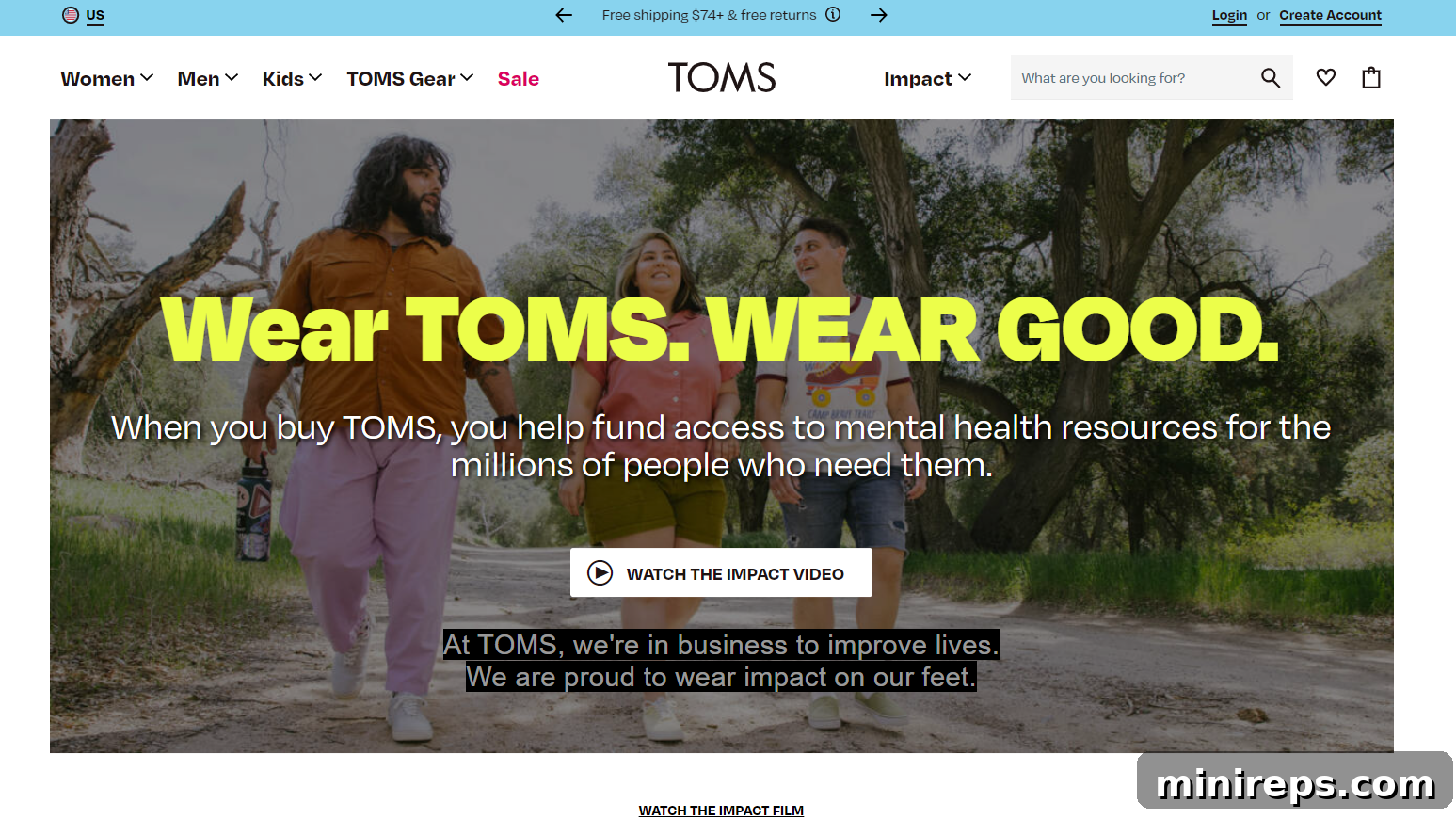
TOMS famously pioneered the innovative one-for-one charitable model, revolutionizing how businesses could integrate social impact into their core operations. Its original, highly recognizable mission was straightforward yet powerful: for every pair of shoes purchased, TOMS would donate a pair to a child in need. This direct, tangible impact resonated globally, creating a powerful emotional connection with consumers and establishing TOMS as a leader in purpose-driven business.
Over the years, as societal needs evolved, TOMS’ corporate social responsibility strategy thoughtfully shifted to address new challenges. Today, their commitment has broadened, and TOMS now strategically invests one-third of its profits into vital mental health resources. While this revised mission might initially seem less directly “on brand” for a shoe company, it demonstrates an acute awareness of pressing global issues. TOMS recognizes that mental health is a critical concern impacting billions worldwide, transcending demographics and geographical boundaries. This evolution showcases a brand’s willingness to adapt its philanthropic efforts to current, urgent needs, proving that true social responsibility is dynamic and responsive, rather than static. Their ongoing dedication reinforces the idea that genuine impact often requires flexibility and a deep understanding of human challenges, even if it means venturing beyond immediate product categories to address broader societal well-being.
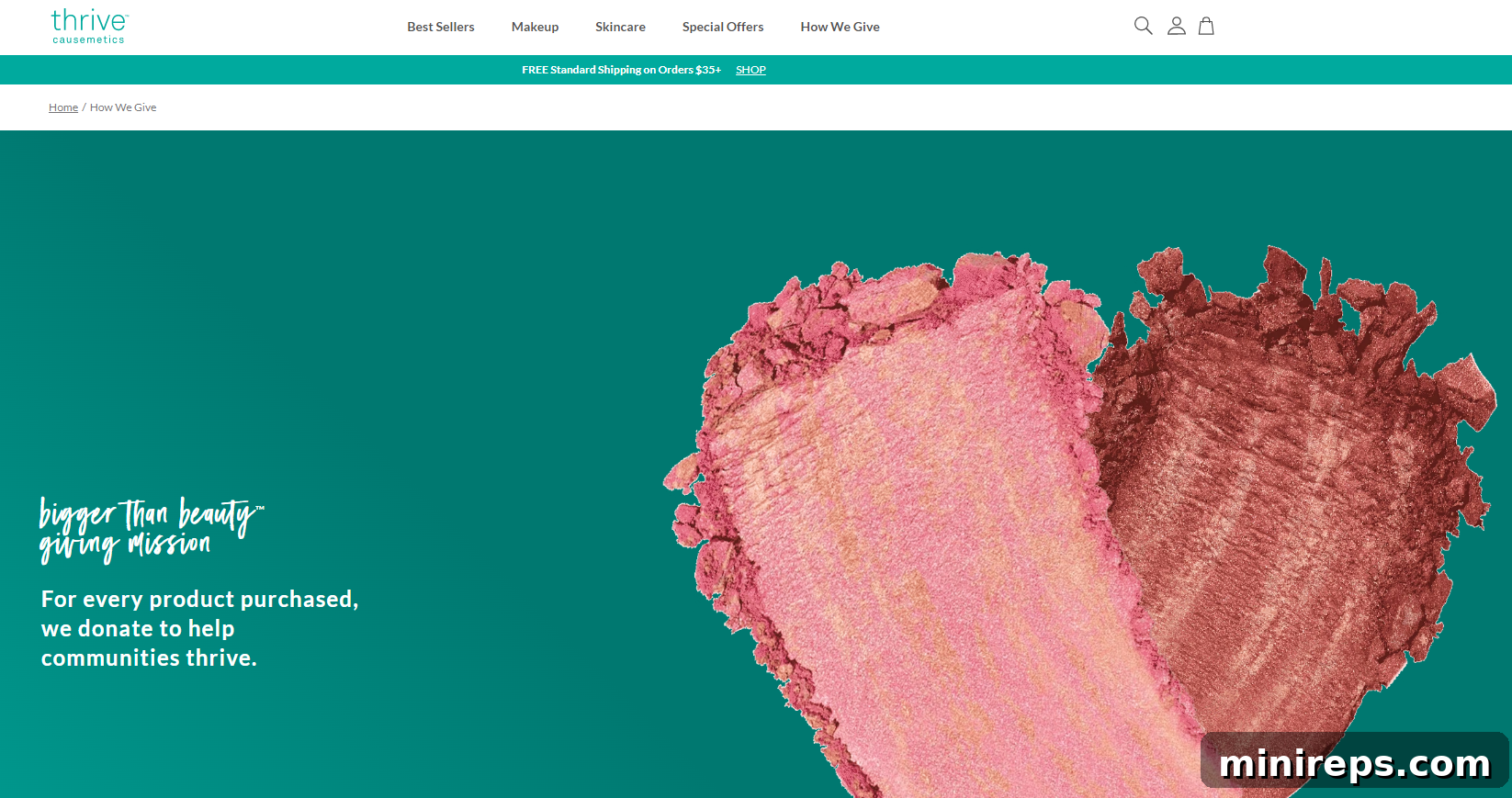
Thrive Causemetics stands out as another exemplary brand in the realm of corporate social responsibility. They ingeniously embedded their “cause” directly into their brand name, immediately signaling their purpose to consumers. Beyond a clever name, this cosmetics brand has robustly backed up its charitable efforts with a well-defined and impactful CSR model. Their commitment is clear and direct: for every product purchased, Thrive Causemetics donates products and financial resources to help communities not just survive, but truly thrive.
This approach highlights a seamless integration of business and philanthropy. As a makeup company predominantly serving women, their chosen areas of donation are a natural and highly resonant fit. They focus on female-centered causes, including crucial initiatives in women’s health, supporting breast cancer research and awareness, and providing assistance to victims of domestic abuse. This strong alignment ensures that their giving resonates deeply with their primary customer base, creating a powerful emotional connection. Customers feel that their purchases directly contribute to empowering women and addressing critical issues affecting their demographic. Thrive Causemetics demonstrates that when a brand’s products, mission, and charitable giving are harmoniously integrated, it creates a compelling narrative that fosters immense customer loyalty and amplifies social impact.
Strategically Spotlight Your Corporate Social Responsibility Program for Maximum Impact
The manner in which you showcase corporate social responsibility on your website is a direct reflection of how highly you prioritize it within your business strategy. If your business model is inherently donation-based, or if your core operations are deeply focused on ecological sustainability and social betterment, your CSR initiatives should rightfully be front and center. It’s crucial to make your commitment immediately visible and easily accessible to every visitor. Consider displaying your CSR program as a prominent link on your top navigation bar, ensuring it’s among the first things visitors see. Alternatively, you can feature it prominently on your ‘About Us’ page, weaving your purpose-driven narrative into your brand’s origin story and values. For truly greater visibility and a comprehensive approach, it is highly recommended to create a dedicated landing page, a specialized blog section, or even a robust database where you can provide periodic updates, highlight upcoming events, share success stories, and detail the impact of your efforts. This dedicated space serves as a transparent hub for all your CSR-related activities, allowing customers, partners, and stakeholders to delve deeper into your commitment.
Beyond traditional website placement, an excellent practice for amplifying your CSR message involves registering new generic top-level domains (gTLDs) like .foundation, .charity, and .gives. These highly relevant domains can then be seamlessly forwarded to the dedicated CSR section of your main corporate website. New generic domains are an exceptionally powerful and often underutilized marketing tool, specifically designed for advertising your message and driving it home with an attention-grabbing call to action. They immediately signal your purpose and make it incredibly easy for interested parties to find information about your philanthropic efforts. Imagine a customer searching for “yourbrand charity”; a .charity domain instantly directs them to your impact page. This strategy not only enhances your online visibility but also reinforces your brand’s commitment to social good, distinguishing you in a crowded marketplace and appealing directly to conscious consumers who value purpose-driven businesses. Integrating these digital assets ensures your social impact story is not just told, but actively sought out and celebrated.



Communicate Your CSR with Genuineness, Clarity, and Transparency
Effectively communicating how your organization gives back to the community is a powerful catalyst for boosting your brand’s reputation, carving out a distinctive position from your competitors, and inspiring a deeper connection with your audience. However, the impact of these communications hinges entirely on authenticity. Your actions and their portrayal must be genuine to truly earn the unwavering loyalty of your customers. Modern consumers are incredibly discerning; they possess an innate ability to distinguish between truly genuine corporate social responsibility and mere performative gestures or “greenwashing.” An inauthentic approach can quickly backfire, damaging trust and reputation more severely than doing nothing at all.
To ensure your CSR communications are both impactful and trustworthy, here are a few indispensable rules of thumb to follow when highlighting your initiatives:
- **Use simple, clear, and accessible language:** Avoid corporate jargon, complex terminology, or overly academic prose. Your message should be easily understandable by everyone, regardless of their background or expertise. Clarity ensures your message resonates broadly.
- **Talk about the mission more than yourself:** While it’s important to highlight your company’s involvement, the true hero of your CSR story should always be the cause itself and the positive impact being made. Focus on the problem you’re solving and the beneficiaries, rather than solely on your brand’s magnanimity. This approach reinforces sincerity.
- **Avoid generic statements and broad claims:** Vague promises like “we support the environment” or “we care about people” lack credibility. Be specific about the issues you address, the communities you serve, and the precise actions you are taking. Specificity builds trust and demonstrates concrete commitment.
- **Provide a few compelling facts and statistics you’re proud of:** Quantifiable data brings your story to life and validates your efforts. Share how many trees you’ve planted, the number of meals donated, the percentage of sustainable materials used, or the hours employees have volunteered. Tangible metrics demonstrate real impact.
- **Always back up statements of your accomplishments with undeniable proof:** Transparency is key. If you claim to have achieved something, be prepared to show evidence. This could be through testimonials, photographs, videos, independent audit reports, or links to partner organizations. Verifiable proof eliminates doubt and strengthens your credibility.
For businesses committed to the highest level of transparency and accountability, consider going the extra mile by publishing annual corporate social responsibility reports on your website. These comprehensive reports, often available for download, provide a detailed overview of your goals, progress, challenges, and future commitments, offering deep insight into your impact. Don’t be too modest to celebrate your significant wins and milestones; acknowledge the positive change you’re fostering. Furthermore, don’t be afraid to get your top executives, leadership team, and staff actively involved in sharing your CSR story. People naturally connect more deeply when they get to know the authentic individuals behind the brands they passionately support and love. Highlighting employee volunteer efforts, leadership advocacy, and personal stories of impact can forge a powerful, human connection that transcends transactional relationships.
Final Takeaway: CSR as a Pillar of Modern Business Success
In today’s conscientious marketplace, investing in and prominently showcasing corporate social responsibility on your website is far more than a trend; it’s a fundamental strategy for building profound customer trust and significantly furthering your brand’s mission and long-term success. Consumers are actively seeking brands that align with their values, and by transparently sharing your commitment to social and environmental betterment, you cultivate a loyal community that believes in your purpose. This dedication not only enhances your brand’s reputation and fosters deeper engagement but also contributes meaningfully to a better world. After all, serving others and contributing positively to the wider community remains an essential and deeply rewarding part of the human experience, and increasingly, an integral component of sustainable business leadership.