


In an increasingly interconnected digital world, businesses face an ever-evolving landscape of cyber threats. These threats often emerge from unexpected vulnerabilities, leaving organizations scrambling to safeguard their brand, customer trust, and operational integrity. While some cyber risks grab headlines, others, like Dangling DNS, operate quietly in the background, yet pose a significant danger if left unaddressed.
Dangling DNS, though not a novel concept, has re-emerged as an accessible and potent vector for cyber attackers to inflict severe damage. As companies expand their digital footprint, relying heavily on cloud infrastructure, microservices, and a multitude of subdomains for various operations, the potential for this vulnerability to be exploited grows exponentially. Understanding this insidious threat, its mechanisms, and effective countermeasures is no longer optional but essential for modern cybersecurity strategies. This article delves into the intricacies of Dangling DNS, explores how it can be weaponized by malicious actors, and, most importantly, outlines robust strategies to protect your brand from its potentially devastating impact.
What is Dangling DNS? Understanding the Vulnerability
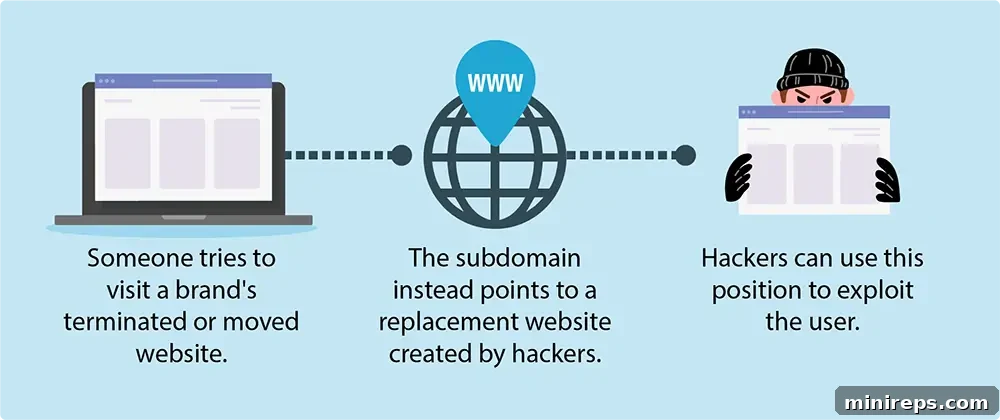
Dangling DNS records represent a specific type of vulnerability where a subdomain within a company’s domain structure points to an external service or resource that no longer exists or has been terminated. This oversight creates an exploitable entry point for cybercriminals, leading to what is commonly known as a subdomain takeover.
To fully grasp Dangling DNS, it’s crucial to understand how subdomains and DNS records function. Companies frequently delegate control of subdomains (e.g., `blog.yourcompany.com`, `app.yourcompany.com`, `dev.yourcompany.com`) to third-party services, cloud providers, or content delivery networks (CDNs). This delegation is managed through Domain Name System (DNS) records, typically CNAME (Canonical Name) records, which map a subdomain to another domain name (e.g., `blog.yourcompany.com` CNAME `yourcompany.github.io`).
The problem arises when these third-party services are decommissioned, migrated, or simply no longer in use by the organization. Instead of updating or removing the corresponding DNS record, it is often left unchanged, still pointing to the now-defunct service. This abandoned DNS entry creates a “dangling” pointer. Attackers can then register the specific resource name (e.g., an S3 bucket name, a Heroku app name, or a GitHub Pages repository name) that the dangling DNS record points to. By doing so, they effectively seize control of your subdomain.
Imagine your company once used `help.yourcompany.com` for a customer support portal hosted on a specific SaaS platform. If that platform account was closed but the DNS record for `help.yourcompany.com` was never updated, it would still point to the platform’s (now available) resource name. A hacker could then create an account on that same platform using the exact resource name, and suddenly, `help.yourcompany.com` would resolve to the hacker’s malicious site. This allows cybercriminals to leverage your legitimate domain to host their content, giving their attacks an air of authenticity.
The consequences of a successful subdomain takeover through Dangling DNS are severe and wide-ranging. Attackers can use the compromised subdomain to:
- Launch Phishing Campaigns: Send fraudulent emails and create fake login pages that appear legitimate, tricking customers, employees, or partners into divulging sensitive information such as login credentials, credit card numbers, or personal data.
- Distribute Malware: Host malicious software or ransomware on the seemingly trustworthy subdomain, leading to widespread infection.
- Deface Websites: Replace legitimate content with harmful or offensive material, severely damaging your brand’s image and reputation.
- Manipulate SEO and Traffic: Redirect traffic intended for your legitimate services to malicious sites, or use the subdomain to host spam content, negatively impacting your search engine rankings.
- Conduct Impersonation Attacks: Create fake internal portals or communication channels, gaining unauthorized access to internal systems or sensitive company data.
- Bypass Security Policies: In some cases, a compromised subdomain might bypass strict cross-origin policies, allowing attackers to perform sophisticated attacks against your main domain.
What makes this vulnerability particularly insidious is its stealth. Since the DNS record itself isn’t inherently “broken” (it’s pointing to a legitimate, albeit available, external resource), it doesn’t always trigger immediate alerts in standard monitoring systems. This makes detection challenging and often means the exploit can go unnoticed until significant damage has been done. The financial costs, regulatory fines, and irreparable harm to brand trust make Dangling DNS an elusive threat demanding vigilant and continuous monitoring.
The Growing Danger of Dangling DNS in a Modern Digital Landscape
The prevalence of Dangling DNS vulnerabilities is not merely a technical oversight; it’s a byproduct of contemporary IT trends and practices. The rapid adoption of cloud services, microservice architectures, and digital transformation initiatives has empowered companies to quickly provision and de-provision digital resources. While this agility offers significant business advantages, it often outpaces the development of robust, centralized asset management and decommissioning protocols. Companies are rapidly spinning up new subdomains for marketing campaigns, temporary projects, development environments, and third-party integrations, frequently without comprehensive tracking or systematic decommissioning processes.
This dynamic environment leads to an ever-expanding attack surface. An attack surface refers to the sum of all possible points where an unauthorized user can try to enter or extract data from a system. Each new subdomain, especially those linked to external services, adds another potential entry point. As these infrastructural web components proliferate, so do the opportunities for hackers to identify and exploit misconfigurations like Dangling DNS records. Automated scanning tools and services specifically designed to uncover these vulnerabilities are readily available to malicious actors, making it easier than ever to discover ripe targets.
The potential for wide-scale phishing attacks and other sophisticated cyber campaigns increases exponentially as hackers manipulate these ‘dangling’ subdomains. By leveraging a legitimate brand’s subdomain, they can create highly convincing fraudulent websites or email campaigns that bypass many standard security filters and user skepticism. In doing so, they can harvest sensitive credentials, personal identities, and confidential information from unsuspecting customers, employees, or partners. The original, legitimate companies are then left to bear the brunt of severe reputational damage, customer mistrust, financial losses, and potential legal liabilities stemming from data breaches or privacy violations.
This amplification of risk underscores why Dangling DNS is a critical threat that no business, regardless of its size or industry, can afford to ignore. As digital ecosystems become more complex, proactive identification and mitigation of such vulnerabilities are paramount to maintaining a secure and trusted online presence.
What You Can Do About Dangling DNS: A Proactive Defense Strategy
Combatting Dangling DNS requires a multi-faceted approach that integrates robust internal policies with advanced technological solutions. Organizations must foster a security-conscious culture and leverage proactive monitoring tools to identify and mitigate these risks effectively.
1. Cultivate a Security-Conscious Organizational Culture
Many cyberattacks, including those exploiting Dangling DNS for phishing, rely heavily on social engineering tactics. Therefore, ensuring every individual within your organization is aware of potential vulnerabilities and suspicious communications is foundational to a strong defense.
- Comprehensive Training and Awareness Programs: Implement regular, mandatory cybersecurity training for all employees, from new hires to executive leadership. Educate them on the significance of DNS security, common phishing indicators, the dangers of clicking unknown links, and the potential implications of lax digital practices. Use real-world examples and simulated phishing exercises to enhance vigilance and practical detection skills.
- Rigorous Due Diligence on DNS Configurations: Instill a culture of precision and accountability within your IT and DevOps teams regarding DNS record management. This includes developing clear, standardized procedures for creating, modifying, and reviewing DNS entries. Regular, scheduled audits of all DNS records are essential to ensure they accurately reflect active services and eliminate any stale or unused entries. Implement version control for DNS configurations to track changes and roll back if necessary.
- Structured Decommissioning Protocols: A crucial step in preventing Dangling DNS is to establish stringent, mandatory decommissioning processes. Whenever a service is terminated, migrated, or retired, there must be a clear protocol that mandates the immediate review and removal of all associated DNS records. This protocol should include checklists, designated ownership, and, where possible, automated cleanup scripts integrated into your IT service management (ITSM) workflows to minimize human error and ensure timely action.
2. Be Proactive With Attack Surface Monitoring (ASM)
While internal policies are vital, the sheer scale and dynamic nature of modern digital infrastructure make manual oversight insufficient. Combatting Dangling DNS effectively requires a proactive technological approach, incorporating complete visibility and continuous monitoring of your entire digital attack surface. Fortunately, advanced solutions like Attack Surface Monitoring (ASM) are specifically designed to address these elusive threats head-on, serving as a critical preventative measure.
How Attack Surface Monitoring Bolsters Your Cybersecurity:
- Continuous and Comprehensive Scanning: ASM platforms continuously scan your organization’s entire external digital infrastructure, including all registered domains and subdomains. It meticulously monitors DNS configurations, actively searching for CNAME records that point to non-existent or available third-party services. This allows you to identify and rectify potential points of exploitation, such as Dangling DNS, before they can be capitalized upon by malicious actors.
- Automated Alerts and Enhanced Visibility: Beyond just scanning, ASM provides automated, real-time alerts for any suspicious or unauthorized changes detected across your DNS settings and subdomains. This includes prompt detection of new, unmanaged subdomains or existing ones pointing to non-existent destinations. This continuous vigilance ensures that security teams are immediately informed of potential misconfigurations or attack vectors, enabling rapid response.
- Specific Dangling DNS Indicators and Reporting: Leading ASM platforms are specifically engineered to identify and categorize Dangling DNS vulnerabilities. The platform records these findings as specific “Issues,” such as “Dangling Resource Record,” detailing the problem, its exact location (the subdomain), and its severity. It then generates prioritized alerts and clear remediation guidance to notify users of these critical misconfigurations, ensuring a structured and rapid response to potential threats.
- Holistic Attack Surface Visibility and Reporting: ASM provides a full, unvarnished look into your entire digital attack surface, extending beyond just DNS. It uncovers shadow IT, expired SSL certificates, open ports, misconfigured cloud resources, and other vulnerabilities you might not even be aware of. Comprehensive reports offer actionable insights, helping security teams understand their risk posture, prioritize remediation efforts, and maintain compliance standards.
- Reduced Mean Time to Resolution (MTTR): By automating detection and providing clear remediation steps, ASM significantly reduces the time it takes to identify and fix vulnerabilities. This rapid response capability is crucial in preventing minor oversights from escalating into major security incidents.
Key Takeaways: Fortifying Your Digital Defenses
Dangling DNS is a dangerous vulnerability that primarily exploits oversight, inattention, and the rapid expansion of digital infrastructure to wreak havoc on unsuspecting companies. Its potency lies in the stealthy control it gives hackers over legitimate brand assets, enabling them to launch highly convincing and damaging attacks.
To effectively protect your brand, digital spaces, and customer trust, organizations must adopt a dual strategy:
- Implement Robust Internal Processes: Foster a strong security culture through continuous employee training, enforce rigorous due diligence in DNS record management, and establish clear, non-negotiable decommissioning protocols for all digital services and their associated DNS entries.
- Leverage Advanced Attack Surface Monitoring: Deploy proactive technological solutions that provide continuous, automated scanning and real-time alerts for your entire digital footprint. Tools like Attack Surface Monitoring are indispensable for identifying and remediating Dangling DNS and other hidden vulnerabilities before they can be exploited.
Cyber threats are continually evolving, growing in sophistication and scale. However, so too are the defenses available to organizations. Through unwavering vigilance, a commitment to best practices, and the strategic implementation of targeted monitoring solutions, thwarting Dangling DNS vulnerabilities is not only an achievable goal but a fundamental requirement for maintaining a secure and trusted online presence. Secure your digital brand identity today and uphold the confidence you’ve diligently cultivated with your valued customers and partners.
Need help with your Attack Surface?

For assistance with understanding the intricate details surrounding your particular attack surface and how to protect it, speak with one of our cybersecurity experts. Learn more about how a comprehensive Attack Surface Monitoring solution could empower your organization to proactively identify and neutralize hidden vulnerabilities like Dangling DNS.