

Elevate Your Website Security: Why HTTPS and SSL Certificates are Non-Negotiable in the Digital Age
In today’s interconnected world, where online interactions are integral to our daily lives, the expectation of digital safety is paramount. Every time we make an online purchase, submit a form, or log into a service, we entrust our sensitive information – from bank details and passwords to contact information – to the businesses we engage with. This trust is the bedrock of the digital economy, and we inherently expect that the brands we choose are doing everything necessary to keep our data secure. Website security is no longer a luxury; it’s a fundamental requirement, and a non-negotiable aspect of maintaining customer loyalty and business credibility.
For years, Google has been a leading voice in advocating for a more secure internet. Their initiatives, such as the introduction of the dedicated and inherently secure .APP domain and the developer-focused .DEV domain, signaled a clear direction. Now, Google has intensified its commitment to online safety with a critical update that directly impacts how internet users perceive the security of your website. If your website’s security measures aren’t up to standard, your business could face significant losses, not just in revenue but in invaluable customer trust and brand reputation.
The Shifting Sands of Online Trust: Google’s Stance on Website Security
As online consumers, we often navigate the web with a baseline level of trust. We assume websites are safe unless glaring red flags or negative past experiences prove otherwise. Google, recognizing the potential for misuse and data breaches on unencrypted sites, is on a mission to make website security crystal clear and transparent for every internet user. This monumental shift began with its widely used Chrome browser, which holds the largest market share globally.
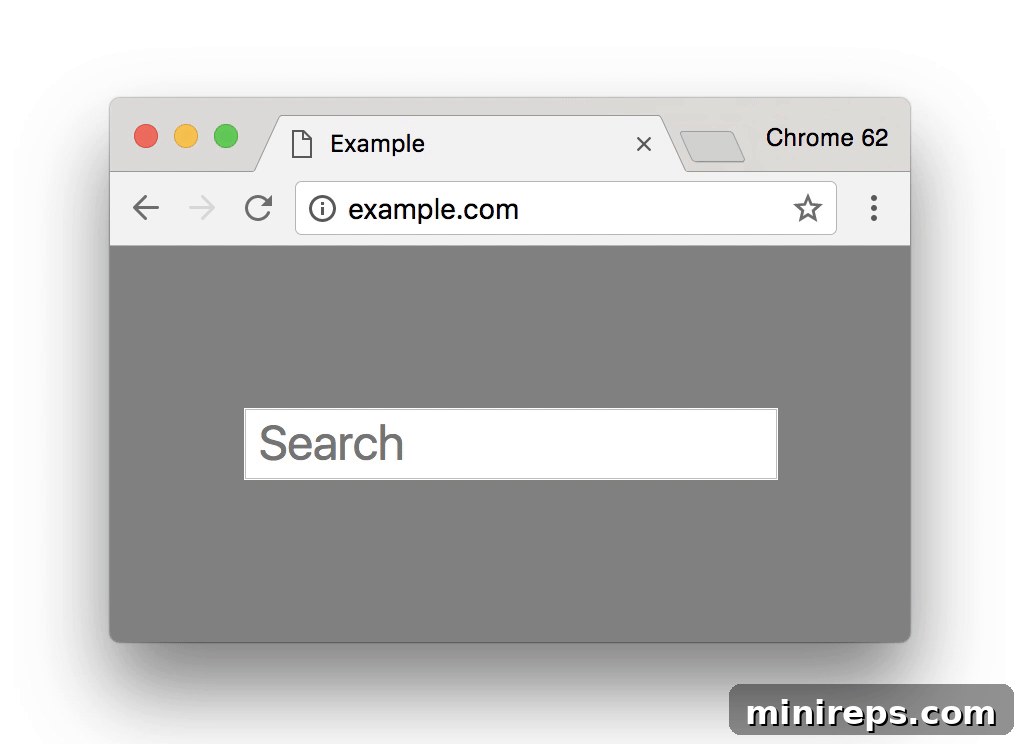
With the release of Google Chrome 62, a significant change was implemented that marked a turning point in web security. This version, and all subsequent updates, began to prominently display a stark “Not secure” warning on any HTTP website that includes fields for passwords or credit card information. Imagine a colossal, illuminated neon sign blaring “Not secure” – that’s the visual equivalent of what Chrome now presents to your visitors on unencrypted pages. This immediate and highly visible warning is designed to alert users to potential risks and pressure website owners to adopt stronger security protocols.
Here’s how this critical warning appears to users:
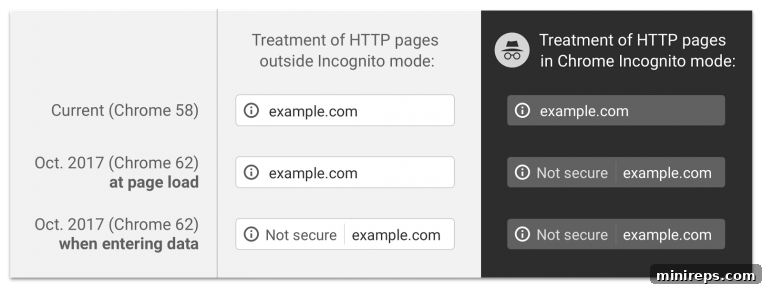
Image Source: cloudflare.com
Understanding the Core: HTTP vs. HTTPS Explained
You might recognize “HTTP” as the prefix you occasionally type, or simply see, before a website address in your browser’s address bar. While it might seem like a mere formality, HyperText Transfer Protocol (HTTP) serves a crucial purpose as the foundational protocol for data exchange between your web browser and the website you are visiting. However, the critical flaw with HTTP is its lack of inherent security. Any information entered or transmitted on an HTTP website – be it login credentials, personal details, or financial data – is sent in plain text. This means it is unencrypted and vulnerable to interception by anyone monitoring the network, making it susceptible to “man-in-the-middle” attacks, eavesdropping, and data theft.
In contrast, HTTPS, or HyperText Transfer Protocol Secure, is the secure counterpart to HTTP. The crucial “S” at the end signifies that all communication between your browser and the website is encrypted using an SSL/TLS (Secure Sockets Layer/Transport Layer Security) certificate. This encryption scrambles the data, rendering it unreadable to unauthorized parties even if it is intercepted. Think of it as sending your sensitive information in a securely locked, unbreakable digital briefcase rather than an open postcard. HTTPS ensures data integrity, confidentiality, and authentication, meaning that the data hasn’t been tampered with, it remains private, and you are indeed connected to the legitimate website you intended to visit.
The Visual Impact: What Chrome’s “Not Secure” Label Means for Your Business
The implications of Google’s “Not secure” label for businesses still operating on HTTP are profound and far-reaching. In an age where data breaches are front-page news, consumer awareness regarding online security is at an all-time high. When a user sees a prominent warning that a site is “Not secure,” especially on pages requesting sensitive information, their immediate reaction is often to distrust and disengage. This can lead to:
- Increased Abandonment Rates: Customers are highly likely to abandon their shopping carts or registration forms if they perceive a risk to their personal or financial data. This directly translates to lost sales and revenue.
- Damaged Brand Reputation: A “Not secure” label can severely tarnish your brand’s image. It suggests negligence, a lack of professionalism, and a disregard for customer safety, which can take years to rebuild.
- Erosion of Customer Trust: Trust is the currency of the internet. Once trust is broken, it’s incredibly difficult to regain. Customers will seek out competitors who prioritize their security.
- Negative SEO Impact: While Google has stated that HTTPS is a minor ranking signal, consistently operating an unsecure site can indirectly affect your SEO by increasing bounce rates, reducing time on site, and discouraging organic traffic from users who are educated about secure browsing.
Beyond the Warning: The Multifaceted Benefits of HTTPS and SSL Certificates
Migrating to HTTPS isn’t merely about avoiding a negative label; it’s about embracing a superior standard of web communication that offers a multitude of benefits for your business, your brand, and your customers.
Enhanced Data Security & Privacy
The primary benefit of HTTPS is the robust encryption it provides. An SSL/TLS certificate establishes a secure, encrypted connection between a user’s browser and your web server. This safeguards all data transmitted, including login credentials, credit card numbers, personal identifiable information (PII), and browsing history, from eavesdropping, tampering, and forgery. This layer of security is vital for protecting your users from cyber threats and ensuring their privacy.
Boosting Customer Trust & Confidence
When users see the padlock icon in the browser’s address bar and the “https://” prefix, they instantly recognize that their connection is secure. This visual cue provides a profound sense of reassurance and confidence, particularly during critical interactions like making a purchase or submitting personal data. This confidence directly translates into higher conversion rates and increased customer loyalty, as users are more likely to complete transactions on a website they perceive as trustworthy.
Improving Brand Reputation & Credibility
Operating an HTTPS-enabled website signals to the world that your brand is professional, responsible, and prioritizes the safety and privacy of its users. In a competitive digital landscape, this commitment to security can be a significant differentiator, enhancing your brand’s credibility and fostering a positive public image. It positions your business as a leader that adheres to best practices in digital security.
SEO Advantages
Google officially announced HTTPS as a ranking signal in 2014. While its initial weight might have been small, it has consistently encouraged widespread adoption. Secure websites are generally favored in search rankings over their insecure counterparts. By implementing HTTPS, you’re not only enhancing security but also potentially gaining a competitive edge in search engine results, driving more organic traffic to your site.
Compliance & Regulatory Requirements
Many industry standards and data protection regulations, such as the General Data Protection Regulation (GDPR) in Europe and the California Consumer Privacy Act (CCPA) in the United States, emphasize the importance of data security and encryption. Migrating to HTTPS helps businesses meet these stringent compliance requirements, mitigating legal risks and avoiding potential penalties.
Making the Seamless Transition to HTTPS: Your Action Plan
The move to HTTPS is not a complex undertaking, especially when you have the right support. The cornerstone of HTTPS is the SSL/TLS certificate, a small data file that digitally binds a cryptographic key to your organization’s details. Once installed on a web server, it activates the padlock icon and the HTTPS protocol, enabling secure connections from a web server to a browser.
Adding an SSL certificate to your site is an essential first step and is surprisingly easy to implement. The process typically involves:
- Choosing the Right SSL Certificate: Depending on your needs, you might opt for a Domain Validated (DV) certificate for basic encryption, an Organization Validated (OV) certificate for enhanced trust with organizational details, or an Extended Validation (EV) certificate, which displays your company name in the browser bar for maximum assurance.
- Acquiring and Activating Your Certificate: Trusted providers offer a range of SSL certificates designed to fit various budgets and security requirements.
- Installing the SSL Certificate: Once acquired, the certificate needs to be installed on your web server. Most hosting providers offer straightforward tools or services to assist with this process.
- Updating Internal Links and Redirects: After installation, it’s crucial to update all internal links on your website to use HTTPS. Additionally, implement 301 redirects from your HTTP pages to their new HTTPS counterparts to ensure users and search engines are directed to the secure version of your site.
We are here to help you get started with powerful HTTPS and website security solutions that are both flexible and affordable, designed to fit your specific budget and operational needs. From selecting the appropriate SSL certificate to guiding you through the implementation process, our experts can ensure a smooth transition, minimizing downtime and potential complications.
Don’t Wait: Secure Your Digital Future Today
The era of nonchalantly operating an HTTP website, especially one that handles user data, is rapidly drawing to a close. As Google continues to roll out further updates and reinforces its commitment to internet security, websites lacking robust security protocols will inevitably be left behind. Your HTTP website simply isn’t going to fly with discerning customers once the curtains of transparency fully drop.
Securing your website, protecting your invaluable brand reputation, and safeguarding your customers’ data must be your absolute priority today. Procrastination in this domain can lead to severe consequences, from lost sales and damaged trust to potential legal liabilities. Embrace the power of HTTPS and the protection of an SSL certificate now to build a safer, more trustworthy, and ultimately more successful online presence. Make this crucial investment in your digital future, fostering an environment where both your business and your customers can thrive securely.