

Have you ever found yourself wondering, “Why is my domain name taking so long to be registered?” You’re not alone. The truth is, the process of registering a domain name isn’t always instant, and its duration can vary significantly. This isn’t due to a single, universal system, but rather a complex ecosystem involving various entities and specific requirements for each domain extension. Understanding this process is key to setting realistic expectations for your online presence.
At the heart of every domain extension is a Registry, the organization responsible for owning and operating that particular domain. For instance, Verisign is a globally recognized Registry, managing popular domain endings like .com and .net, among others. Each domain extension is essentially a unique digital brand, meaning it comes with its own set of rules, policies, and registration procedures. These unique characteristics are precisely why there isn’t a one-size-fits-all answer to the question of how long it takes to register a domain name.
The Domain Name Registration Process: A Comprehensive Guide to Timelines and Requirements
Registering a domain name involves several crucial steps, each contributing to the overall timeline. While some domains can go live within hours, others might require weeks or even months due to their specific regulations and the manual processes involved. Let’s break down the typical journey your domain name takes from submission to activation.
Step 1: Understanding and Meeting Domain Registration Requirements
The first factor influencing how long it takes to register a domain is the complexity of its registration requirements. Not all domains are created equal in this regard. Many generic Top-Level Domains (gTLDs) are unrestricted, open to anyone globally, making their registration process relatively straightforward and quick.
However, a significant number of domains are subject to stricter standards. These often include verified domains, which demand additional documentation and a verification process. The purpose of this verification is to ensure that the registrant’s intentions align with the domain brand’s policies and to maintain trust and security within specific online communities. This might involve submitting business licenses, identification documents, or other proofs of legitimacy, adding time to the initial stages.
Even more stringent are many Country Code Top-Level Domains (ccTLDs). These domains are tied to specific countries or territories and often have unique rules designed to serve local interests. A common requirement for ccTLDs is a local presence, meaning the registrant must have a physical address, a registered business, or some other verifiable connection within that country. For example, to register a .de domain (Germany), you typically need an address in Germany. Failing to meet these specific requirements from the outset can significantly delay the domain registration process, as the registrar will need to guide you through obtaining the necessary proofs or services.
Step 2: The Registrar’s Expert Review and Submission
Once you initiate a domain registration through a registrar (like 101domain), your application doesn’t go straight to the Registry. Instead, it undergoes a critical internal review by a team of domain service specialists. This step is crucial for ensuring accuracy and compliance before the application reaches the Registry, ultimately saving time in the long run.
These specialists meticulously examine all submitted information and documents to confirm that every registration requirement, as dictated by the respective Registry, has been met. For verified domains or ccTLDs with complex local presence requirements, this team plays an invaluable role in verifying everything from business registration certificates to local contact details. They act as your advocate, navigating the intricacies of various Registry policies. If any information is missing or incorrect, they will promptly reach out to you, preventing a rejection from the Registry and allowing for corrections. When everything is in perfect order and aligns with the Registry’s guidelines, the application is then formally submitted to the Registry for their final activation and release of the domain name.
Step 3: Registry Processing and Approval – Where Timelines Vary Most
This stage is undoubtedly where the answer to “how long does it take to register a domain” varies the most. After the registrar submits your application, it’s in the hands of the Registry. While a significant majority of domain names, especially common gTLDs, can be registered and activated within 24 hours (and often much faster), some registrations can take anywhere from a few days to an astonishing three months. This variability is primarily driven by the specific Registry’s operational procedures, technological infrastructure, and the complexity of the domain extension itself.
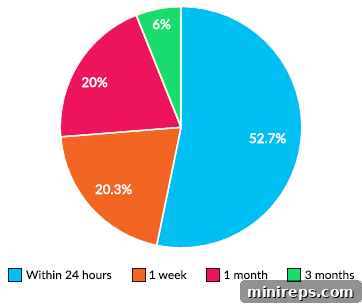
You might wonder why, in this age of advanced technology, some domain registrations could possibly take up to three months. The reason often lies with certain Country Code domains (ccTLDs), which are frequently regulated by governmental bodies, universities, or specific information technology entities within their respective countries. Unlike the highly automated systems of large gTLD Registries, some ccTLD Registry systems are less advanced, relying on manual processes that may seem archaic by modern standards. It’s not uncommon for these Registries to operate with limited resources, sometimes even relying on traditional methods like fax machines for document submission or communication.
Let’s look at a few illustrative examples:
-
.MO Domain (Macau, Asia): Registering a .MO domain for Macao in Asia exemplifies a complex, time-consuming process. It requires a copy of the organization registration from Macao SAR, a business registration certificate, a business establishment form (M1 form), or a sales tax collection notice (M8 form). Crucially, all these documents, along with company contact information and a copy of any applicable trademark, must be physically mailed to the Registry in Macao. The necessity for physical mail, coupled with manual processing by the Registry, extends the typical timeframe for .MO domain registration to approximately three months. This rigorous process is designed to ensure that only legitimate entities with a verifiable presence in Macao can register a .MO domain, reflecting national policies.
-
.JO Domain (Jordan): The .JO domain for Jordan presents another example of strenuous registration measures. Applicants are required to obtain a copy of their company certificate and have it notarized by Jordan’s embassy or a recognized secretary of state. This international notarization process adds layers of bureaucracy and processing time. The need for official seals and multi-level verification pushes the typical timeframe for .JO domain registration to around two months, ensuring legal compliance and authenticity for domains associated with Jordan.
-
.AI Domain (Anguilla): The .AI domain, originally for Anguilla, has seen a surge in popularity among Artificial Intelligence companies and startups in recent years. Interestingly, despite its association with cutting-edge technology, .AI registrations are often manual processes at the Registry level. However, this highlights that “manual” doesn’t always equate to “slow.” The team behind the .AI domain Registry is renowned for being exceptionally responsive and efficient. As a result, the turnaround time for .AI registrations is often the same day in most cases, proving that dedicated human oversight can sometimes outperform automated systems in terms of speed and flexibility.
Step 4: Domain Name Propagation and Going Live
The final step in the domain registration process, after the Registry has approved and activated your domain name, is its propagation across the internet’s Domain Name System (DNS). This is the process where your newly registered domain name is pushed to the global network of root servers, ultimately making your website accessible to everyone online. While the actual domain registration might be complete, the domain won’t fully “go live” until this propagation has finished.
The DNS acts like the internet’s phonebook, translating human-friendly URLs (like yourdomain.com) into numerical IP addresses that computers use to locate websites. These root servers, though identified as 13 named servers, are actually a distributed network of hundreds of physical servers located in countries worldwide. When your domain propagates, these servers update their records to include your new domain and its associated IP address. This global update process typically takes anywhere from 24 to 48 hours, though sometimes it can be faster. Factors like your Internet Service Provider’s (ISP) caching policies and the geographical location of your users can influence how quickly they see the updated DNS information.
So, when you ask, “how long does it take to register a domain?”, you can see there’s a fascinating and intricate system operating behind the scenes. From specific country regulations to global network updates, many elements contribute to the final timeline. While the journey might seem complex, particularly for unique ccTLDs, reliable domain registrars are dedicated to streamlining this process for you. They handle the nuanced requirements and communication with Registries, ensuring your domain name is registered accurately and promptly, allowing you to focus on building your online presence.
Just for a touch of intrigue, did you know that the fundamental security of the global domain name system is safeguarded by a select group of individuals who hold and protect seven cryptographic keys, authenticating the data? (No, really, it’s a fascinating narrative!) But we won’t go down that particular rabbit hole today. Rest assured, your chosen domain registrar is working diligently to navigate these complexities, ensuring your domain name is registered first and promptly, so you can swiftly get to doing the things you want to be doing online with your new digital identity.