
Unlock Your Brand’s Potential: The Ultimate Guide to Choosing the Perfect Domain Name and Mastering Domain Hacks
In today’s competitive digital landscape, your domain name is more than just an address; it’s the cornerstone of your online identity, a crucial element of your brand, and often the first impression prospective customers have of your business. Many entrepreneurs find themselves stalled, hesitant to launch their dream venture because they’re overwhelmed by the process of securing the perfect domain name. The challenge often lies in finding a name that is not only relevant and memorable but also available amidst a sea of existing websites.
We frequently hear from customers asking for guidance on “what’s a good domain extension for ______” their specific business or project. The answer isn’t always straightforward, as the ideal domain choice depends heavily on your brand’s industry, your marketing objectives, whether you’re targeting a local or global audience, and your overall digital strategy. Thankfully, the world of domain names offers a diverse range of options, each with unique advantages. Understanding these categories is the first step toward making an informed decision that truly empowers your online presence.
Understanding the Landscape of Domain Name Categories
To navigate the vast world of domain names effectively, it’s helpful to categorize them into three main types. Each category offers distinct opportunities and considerations, allowing you to tailor your choice to your specific needs.
Classic Generic Top-Level Domains (gTLDs)
These are the foundational domain extensions that have been around for decades, instantly recognizable and often the first choice for businesses and individuals alike. They include household names like .COM, .NET, and .ORG. Their primary advantages include:
- High Recognition and Trust: Users are generally familiar with these extensions and perceive them as credible and authoritative.
- Global Appeal: They are universally understood and do not carry specific geographic connotations, making them ideal for international brands.
- Default Choice: Many internet users instinctively type “.com” when searching for a business, giving .COM domains a natural advantage in direct navigation.
However, their popularity also means they are highly saturated. Finding a short, memorable, and available name under .COM can be incredibly challenging, often leading to compromises or the need to register longer, less ideal URLs.
New Generic Top-Level Domains (New gTLDs)
Launched in recent years, New gTLDs have revolutionized the domain market by offering a plethora of specific and creative options. These extensions move beyond the generic, catering to particular hobbies, locations, brands, and industries. Examples include .TECH, .STORE, .BLOG, .APP, and even city-specific extensions like .NYC. Their benefits are significant:
- Enhanced Specificity: They immediately convey the nature of your business or content, helping you stand out and attract a targeted audience.
- Greater Availability: With so many new options, it’s much easier to find unique and concise domain names that truly reflect your brand.
- Improved Branding and Marketing: A domain like “yourfashion.store” or “innovate.tech” is inherently descriptive and can be a powerful marketing tool.
- Niche Targeting: Perfect for businesses looking to establish authority within a specific industry or community.
While some new gTLDs are rapidly gaining traction, others may still be less familiar to the general public, requiring a bit more effort in brand education.
International/Country Code Top-Level Domains (ccTLDs)
Country Code Top-Level Domains (ccTLDs) were originally created to identify websites with a specific geographic location and target audience, such as .DE for Germany or .CA for Canada. However, their utility has expanded far beyond their initial purpose. In recent years, ccTLDs have gained immense popularity for a highly creative application known as “domain name hacks.” These clever manipulations leverage the ccTLD as part of the brand name or a word, creating memorable, short, and often witty domain names.
The Art of the Domain Hack: Creativity Meets Functionality
A domain hack is essentially a domain name that creatively uses the domain extension (TLD) as an integral part of the name itself, rather than just an identifier. This ingenious approach allows brands to craft unique, memorable, and often shorter URLs that resonate with their audience and stand out in the digital crowd. It’s a testament to how linguistic creativity can be applied to technical structures.
What is a Domain Hack?
Imagine your domain name not ending with a period and an arbitrary extension, but rather having the extension complete a word or phrase. That’s the essence of a domain hack. It transforms a standard URL into a catchy, often playful, and highly brandable asset. For example, a business called “Visual Studio” might use “visualstudio.io” where “.io” finishes “studio,” or a photography site might choose “flic.kr” where “.kr” completes “flickr.” This strategy directly addresses the problem of domain name scarcity by opening up a whole new realm of possibilities.
Types of Domain Hacks
Domain hacks typically fall into two main categories:
- Acronym-Based Hacks: These hacks utilize ccTLDs that happen to form common acronyms or abbreviations relevant to a specific industry or concept. For instance, .AI (Anguilla) is frequently used by artificial intelligence companies, while .GG (Guernsey) has become a favorite among the gaming community (standing for “Good Game”). Other popular examples include .IO (British Indian Ocean Territory) for tech or input/output companies, and .FM (Federated States of Micronesia) for radio or podcasting platforms.
- Word-Completion Hacks: This type of hack uses the ccTLD to complete a word or a name, creating a seamless and often striking brand identity. Mainstream brands have adopted this strategy to great effect:
- Instagr.am: Using .AM (Armenia) to complete “Instagram.”
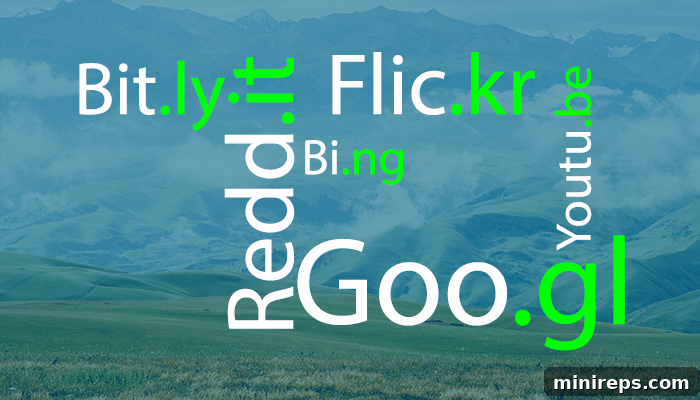
- Bit.ly: Leveraging .LY (Libya) for a URL shortener, creating a highly memorable and concise name.
- Bi.ng: Microsoft’s search engine using .NG (Nigeria) to form “Bing.”
- Goo.gl: Google’s URL shortener (now deprecated) that used .GL (Greenland).
- Flic.kr: The popular photo-sharing site using .KR (South Korea).
- Redd.it: The social news aggregation site using .IT (Italy).
- Youtu.be: The ubiquitous video platform using .BE (Belgium).
These examples demonstrate how a seemingly obscure ccTLD can become an integral part of a global brand’s identity, making the domain name itself a creative statement.
If you’re frustrated because your desired name isn’t available in a saturated extension like .COM, and you don’t want to settle for a long, difficult-to-remember URL, a domain hack offers a brilliant solution. It allows you to create a short, meaningful, and highly memorable URL, significantly improving your marketing efficiency and engagement by making your web address easy to recall and share.
Benefits of Using Domain Hacks
Beyond simply finding an available name, domain hacks offer several compelling advantages for businesses and personal brands:
- Unforgettable Branding: A clever domain hack is inherently memorable and stands out. It’s a conversation starter that helps your brand stick in people’s minds.
- Increased Availability: You can bypass the fierce competition for .COM domains, opening up a wider range of creative and concise naming possibilities.
- Enhanced Marketing Potential: A witty domain hack can become a marketing asset in itself, driving curiosity and making your URL more shareable across social media and other platforms.
- Conciseness: Domain hacks often result in shorter URLs, which are easier to type, remember, and fit into character-limited spaces (like Twitter bios or print ads).
- Niche Authority: For specific industries, like tech (.IO, .AI) or gaming (.GG), using the relevant ccTLD can immediately signal your specialization and expertise.
- Creative Expression: It allows brands to inject personality and innovation directly into their web address, reinforcing their unique identity.
Considerations Before Choosing a Domain Hack
While highly beneficial, it’s crucial to consider a few factors before committing to a domain hack:
- Audience Familiarity: Ensure your target audience will understand and appreciate the cleverness of the hack. Some hacks might be too obscure for a general audience.
- Brand Alignment: The hack should genuinely align with your brand’s message and tone. A playful hack might not suit a highly formal business.
- Geographical Perception: While domain hacks leverage ccTLDs creatively, some users might still associate them with their original country. This is generally less of an issue for widely recognized hacks like .LY or .IO, but worth considering if your business aims for global neutrality.
- Long-Term Expansion: If your brand plans to expand globally, consider if the hack will still make sense or if you might need companion domains in other regions.
- Trademark Infringement: Always perform due diligence to ensure your chosen name and hack do not infringe on existing trademarks.
- Registration and Renewal Costs: Some ccTLDs can have different registration rules or higher annual renewal fees compared to generic domains. Always check the long-term costs.
Top 10 ccTLDs for Creative Domain Hacks
To spark your brainstorming session, we’ve composed a list of some of the most versatile and popular ccTLDs that lend themselves exceptionally well to creative domain hacks:
- .ME (Montenegro): Perfect for personal branding, portfolios, or “about me” pages. (e.g., “About.me”, “ConnectWith.me”)
- .CO (Colombia): A popular alternative to .COM, often used for companies, corporations, or startups. (e.g., “Company.co”, “Startup.co”)
- .IO (British Indian Ocean Territory): Widely adopted by tech companies, startups, and developers due to its association with “Input/Output.” (e.g., “Studio.io”, “Innovat.io”)
- .LY (Libya): Ideal for URL shorteners, lifestyle blogs, or lyrics-related content. (e.g., “Bit.ly”, “Shorten.ly”, “YourLife.ly”)
- .AI (Anguilla): The go-to extension for anything related to Artificial Intelligence, quickly becoming an industry standard. (e.g., “Neural.ai”, “Future.ai”)
- .FM (Federated States of Micronesia): Excellent for radio stations, podcasts, music-related sites, or frequency modulation themes. (e.g., “Podcast.fm”, “Listen.fm”)
- .TV (Tuvalu): Heavily used for television, video streaming, and any visual content platforms. (e.g., “Watch.tv”, “Stream.tv”)
- .IT (Italy): Great for completing words like “redd.it”, “spl.it”, or for Italian-themed businesses. (e.g., “Read.it”, “Share.it”)
- .GG (Guernsey): Hugely popular within the gaming community for its meaning “Good Game.” (e.g., “ProGame.gg”, “Esports.gg”)
- .LA (Laos): Often used by businesses in Los Angeles, but also versatile for creating words ending in “la” or as a general creative option. (e.g., “Hola.la”, “Stella.la”)
How to Choose the Right Domain Extension
Selecting the perfect domain extension is a strategic decision that can impact your brand’s visibility and recall. Here’s a quick guide to help you:
- Identify Your Core Purpose: Are you building a personal blog, an e-commerce store, a tech startup, or a local business? Your purpose will narrow down your options.
- Consider Your Target Audience: Are they tech-savvy enough to appreciate a domain hack, or do they prefer the familiarity of a .COM?
- Define Your Brand Identity: Does your brand aim to be traditional and trustworthy, or innovative and playful? The extension should reflect this.
- Assess Availability and Memorability: Always prioritize a short, easy-to-remember name. If your desired name isn’t available in .COM, don’t be afraid to explore New gTLDs or creative ccTLD hacks.
- Think Long-Term: Choose an extension that will grow with your business and won’t limit future expansion.
The Final Step: Registering Your Dream Domain
Don’t let the initial pressure of finding the “perfect” domain name hinder you from bringing your entrepreneurial dreams to life. The online world offers an incredible array of choices, from traditional favorites to innovative domain hacks, ensuring that there’s a unique and fitting identity waiting for your brand. Taking that first step towards launching your online venture is often the hardest part; fortunately, finding and registering your domain doesn’t have to be. With the right guidance and a little creativity, you can secure a domain name that not only sets you apart but also propels your business forward.
At 101domain, we’re committed to making the domain registration process as simple and straightforward as possible, empowering you to focus on what you do best: building your business. Explore the possibilities and claim your unique space on the internet today!