

In the digital age, a company’s domain name is far more than just an address; it’s a cornerstone of its brand identity, a critical digital asset, and often the primary gateway for customer interaction. Yet, despite its immense importance, the seemingly simple task of domain renewal is often overlooked, leading to embarrassing, costly, and downright detrimental consequences for businesses and individuals alike. Forgetting to renew a domain can trigger a cascade of problems, from website downtime and lost revenue to severe reputational damage and legal liabilities. While technology is designed to streamline our lives, human oversight can sometimes create the most significant vulnerabilities. They say intelligent people learn from their own mistakes, but truly wise individuals learn from the mistakes of others. To help you empathize with their pain and equip you to avoid similar pitfalls, we delve into three compelling stories of brands and individuals who experienced the harsh realities of lapsed domain renewals.
1. Marketo: An Embarrassing Lapse for a Marketing Giant 🙈

One of the most strikingly ironic and potentially embarrassing incidents in recent memory involved Marketo, a prominent marketing automation software provider. A company whose very existence revolves around helping businesses manage their digital presence and engage with customers somehow managed to let its own domain expire. The incident unfolded early one morning when client complaints began to flood in, signaling an unknown problem with their website and services. For a company valued at $1.8 billion, a sudden outage of this magnitude was nothing short of a public relations nightmare, undermining the very trust they sought to build with their clientele.
The true irony became apparent when a vigilant customer, Travis Prebble, took matters into his own hands. After diagnosing the problem as a lapsed domain renewal, he commendably stepped in to pay the $38 renewal fee and an additional $35.99 reinstatement charge out of his own pocket. To ensure Marketo was aware of his swift action and to prompt a quick resolution, he promptly tweeted the invoice at the company, stating, “I renewed your domain @Marketo. Hopefully things will be back up soon.”
Marketo was incredibly fortunate that Travis acted with good intentions, prioritizing the restoration of their service rather than attempting to extort a company of their stature. The swift, public nature of the resolution, while effective, also served as a very public reminder of a fundamental operational lapse. In the aftermath, Marketo attributed the ordeal to a combination of process and human error. They pledged to conduct an internal audit of their domain management operations, vowing to implement more robust protocols to prevent such a critical oversight from recurring. This incident serves as a stark reminder that even the most technologically sophisticated companies are vulnerable to basic administrative errors, highlighting the absolute necessity of rigorous domain management procedures.
2. Sorenson Communications: The High Cost of Oversight 🙉

The sting of a preventable mistake often lingers, especially when the consequences are severe and far-reaching. Sorenson Communications, a company that provides vital American Sign Language (ASL) emergency communication services through sorenson.com, learned this lesson in the most expensive way imaginable. An internal failure led to the expiration of their crucial domain registration, plunging their essential services into a two-day outage and interruption. For a service provider dedicated to enabling emergency communications for the deaf and hard of hearing community, such an outage was not merely an inconvenience but a potentially life-threatening disruption, directly impacting vulnerable individuals who rely on their platform for critical communication.
The fallout from this administrative blunder was catastrophic. Beyond the immediate loss of service, the incident severely eroded public trust and confidence in Sorenson’s reliability, a paramount concern for an emergency service provider. The financial penalties were equally staggering. Sorenson was charged with a monumental $2.7 million reimbursement to the Telecommunications Relay Service Fund, coupled with an additional settlement of $252,000 to the United States Treasury. This immense sum, totaling nearly $3 million, stemmed from the simple oversight of failing to renew a .com domain – an asset that can cost as little as $13.49 annually.
The Sorenson case stands as a powerful cautionary tale, illustrating the profound disparity between the negligible cost of proactive domain management and the astronomical price of neglecting it. It underscores the critical responsibility that companies, particularly those offering essential services, bear in maintaining their digital infrastructure. The financial repercussions alone were devastating, but the intangible damage to their reputation and the trust of their user base was arguably even more significant, proving that some mistakes come with a price tag far beyond mere dollars and cents.
3. Eli Chamberlin: When Your Brand Becomes Someone Else’s Nightmare 🙊
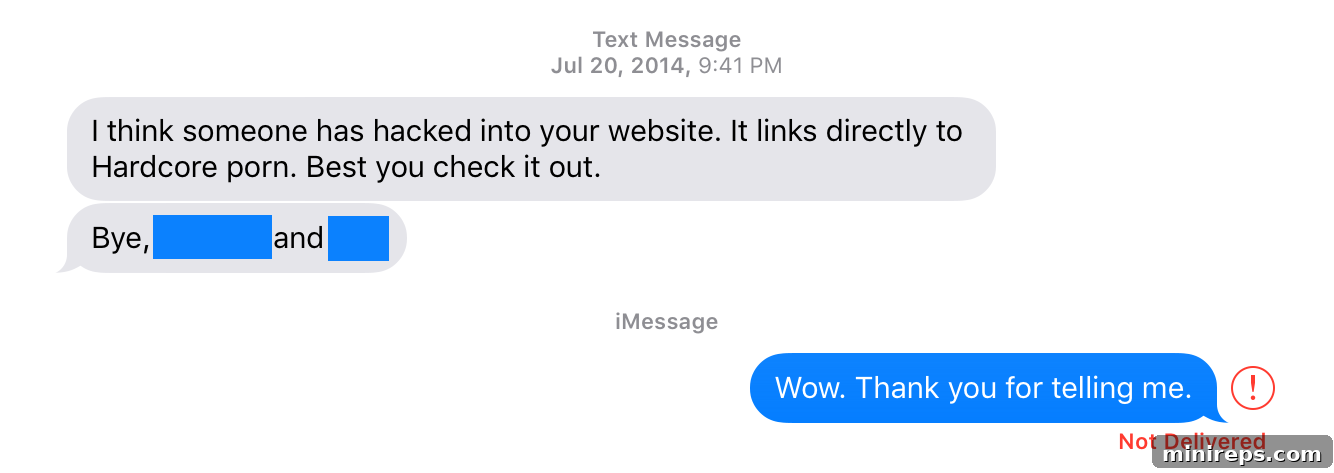
Image credit: Don’t let your domain lapse… because porn
Websites are indispensable personal and professional tools, serving as digital portfolios, resumes, and primary points of contact. However, like any valuable asset, they demand consistent attention and maintenance. Eli Chamberlin learned this lesson through an experience that transcended mere embarrassment, plunging him into a brand crisis of epic proportions. His once professional, branded website, which served as a showcase for his work and identity, tragically transformed into a hub for “hardcore porn.” The discovery, made and subsequently pointed out by his ex-girlfriend’s mother, added an extra layer of mortification and personal horror to an already dire situation.
Eli’s ordeal unfolded in a series of agonizing stages:
- Damage Control: His immediate reaction was a frantic scramble to purge all links to the defunct domain from his resumes, professional profiles, social media accounts, and anywhere else his personal brand was displayed. This was a race against time to minimize the exposure of the inappropriate content now associated with his name.
- Denial: Initially, Eli struggled with the notion that this was his fault. He deflected blame, convinced it was the work of malicious hackers, a more palatable explanation than his own oversight.
- Acceptance: The harsh reality set in when he finally checked his spam folder and discovered a trove of ignored email notifications from his domain provider, explicitly warning him of the impending expiration. The undeniable proof shattered his denial, revealing the painful truth of his negligence.
- Remorse and Helplessness: The full weight of his mistake crushed him as he realized the immediate futility of his situation. He would have to wait until the next renewal period, hoping against hope that the new owner of his domain, the porn site operator, would not renew it, thereby giving him a slim chance to reclaim his digital identity.
The saga didn’t end there. In a cruel twist of fate, while the porn site did not renew the domain, Eli subsequently lost it in an auction to another bidder – a “domainer” (an individual who speculates on and trades domain names). This domainer, recognizing the value of the name, demanded a price far exceeding what Eli was willing or able to pay to recover it. His story remains a poignant, ongoing struggle, a vivid illustration of how a single oversight can lead to the permanent loss of a vital personal and professional asset, with lasting repercussions for one’s brand and reputation.
Beyond the Blunders: Proactive Strategies for Domain Renewal Success
These compelling cautionary tales serve as invaluable lessons, highlighting the critical importance of vigilant domain management. While it’s easy to critique the mistakes of others, the true value lies in extracting actionable insights to safeguard our own digital assets. Here are practical, proactive tips to ensure you stay ahead of your domain renewals and avoid costly, embarrassing, or brand-damaging scenarios.
1. Implement Robust Access Management Protocols

One of the most common reasons for lapsed domain renewals is a lack of clarity regarding who is responsible for domain management. Personnel changes, departmental shifts, or reliance on a single individual can create dangerous gaps in oversight. When an employee leaves, or changes roles, critical account information, passwords, and renewal dates can be lost in the transition, leaving domains vulnerable.
To mitigate this risk, establish clear, documented protocols for domain access and accountability:
- Identify Key Stakeholders: Clearly define who has administrative access to your domain registrar account. This should ideally be a small, trusted group rather than a single individual.
- Implement Multi-Person Access: Ensure that at least two, and ideally three, individuals within your organization have full access to important account information, including login credentials, renewal dates, and payment methods. This creates a redundancy that prevents single points of failure.
- Document Everything: Maintain a secure, centralized record of all domain names, their respective registrars, login credentials, renewal dates, and associated contact information. This documentation should be regularly reviewed and updated.
- Conduct Regular Audits: Periodically review who has access to your accounts. Remove access for former employees or those no longer responsible for domain management. Update passwords and security questions as a standard security practice.
- Leverage Organizational Tools: Utilize password managers and project management software to securely share and track access details and renewal tasks among authorized team members.
2. Opt for Longer Renewal Periods
While you cannot purchase a domain for life, extending your registration term is a highly effective strategy to minimize the frequency of renewal events and reduce the chances of oversight. Most domain registrars allow you to register or renew a domain for up to 10 years at a time.
The benefits of longer renewal periods are manifold:
- Reduced Administrative Burden: Renewing once a decade significantly lessens the administrative overhead associated with annual or biennial renewals, freeing up time and resources.
- Cost Stabilization: Locking in a domain for a longer term can often secure better pricing, protecting you from potential price increases that may occur over shorter renewal cycles. Domain prices, like many digital assets, tend to increase over time.
- Enhanced Business Continuity: Longer registration periods provide greater stability for your digital infrastructure, allowing you to focus on business growth rather than constantly worrying about impending expirations.
- Improved SEO Stability: While not a primary ranking factor, a consistently registered domain signals stability and trustworthiness to search engines, potentially contributing to long-term SEO health.
Consider setting a company policy to renew critical domains for the maximum allowable period to embed this proactive approach into your operational practices.
3. Enable Automatic Renewal for All Domains
If you’ve ever experienced the anxiety of a forgotten domain renewal, you understand the immense value of automation. Enabling auto-renew for all your domains is perhaps the most critical safeguard against accidental expiration. This feature, offered by virtually all reputable domain registrars, automatically charges your designated payment method and renews your domain before its expiration date.
While auto-renew is a powerful tool, it requires diligent maintenance to be truly effective:
- Maintain Valid Payment Information: The most common reason for auto-renewal failure is an expired or invalid credit card on file. Regularly update your payment details, especially if cards expire or are replaced. Consider using a corporate card or a dedicated payment method specifically for recurring services.
- Ensure Sufficient Funds: Confirm that the payment method linked to your auto-renewal always has sufficient funds to cover the charges.
- Monitor Renewal Notifications: Even with auto-renew enabled, pay attention to pre-renewal notifications from your registrar. These emails often confirm successful auto-renewal or alert you to potential payment issues, giving you an opportunity to intervene if necessary.
- Set Up Secondary Notifications: Supplement registrar notifications with your own internal calendar reminders or third-party monitoring services that alert you to upcoming renewal dates. This creates an extra layer of protection.
By entrusting the recurring task of renewal to technology, you significantly reduce the potential for human error and gain peace of mind that your essential digital assets are continuously protected.
4. Consolidate Your Domain Portfolio
Many businesses, especially as they grow, accumulate multiple domain names over time, often through different registrars. This fragmentation can lead to a convoluted and error-prone management process. Consolidating all your domain names under a single registrar and a single account dramatically simplifies management.
- Centralized Management: A single dashboard allows you to view all your domains, their expiration dates, and associated settings in one place.
- Streamlined Billing: Managing renewals and payments becomes much simpler when they are all processed by one provider.
- Easier Access Control: Applying access protocols (as discussed in Tip 1) to a single account is more straightforward than managing multiple logins across different platforms.
While the initial process of transferring domains can seem daunting, the long-term benefits in terms of efficiency and security are well worth the effort.
5. Keep Contact Information Updated
Domain registrars rely heavily on the contact information associated with your account to send crucial renewal notifications, payment alerts, and security updates. Outdated contact details are a silent killer of domain registrations.
- Primary and Secondary Email Addresses: Ensure the primary email address is actively monitored, ideally by a team rather than an individual. Also, consider adding a secondary, redundant email address.
- Phone Numbers: Keep phone numbers current for critical alerts or verification processes.
- Physical Address: While less frequently used for renewals, an up-to-date physical address is essential for compliance and specific legal notices.
Regularly review and update your WHOIS information and account contact details within your registrar’s portal. Treat these updates with the same urgency as updating your payment information.
Conclusion: Your Domain, Your Responsibility
The stories of Marketo, Sorenson Communications, and Eli Chamberlin are powerful reminders that overlooking domain renewals is not a trivial matter. These digital assets are fundamental to a brand’s online presence, operational continuity, and public trust. From embarrassing public gaffes and multi-million dollar penalties to severe personal brand destruction, the consequences of a lapsed domain can be far-reaching and incredibly costly.
The lesson is clear: proactive domain management is not just a best practice; it is an absolute necessity in today’s digital landscape. By implementing robust access controls, opting for longer renewal terms, activating auto-renew, consolidating your portfolio, and meticulously maintaining accurate contact information, you transform a potential vulnerability into a resilient foundation. Do not entrust this critical responsibility to chance or solely to human memory. Leverage technology and implement sound organizational processes to ensure your digital identity remains secure, active, and thriving.