


Unlocking Global Reach: The Strategic Power of Country Code Top-Level Domains (ccTLDs)
The digital landscape is vast and ever-expanding, far beyond the familiar confines of traditional domain extensions like .com, .net, and .org. The internet is a mosaic of domain types, encompassing new generic top-level domains (gTLDs) such as .bank, .law, and even .sucks, alongside internationalized domain names (IDNs) and, critically, country code top-level domains (ccTLDs). These two-letter identifiers, uniquely assigned to every country and overseas territory, are among the most frequently registered domain extensions globally. Yet, despite their widespread adoption and undeniable strategic value, ccTLDs often don’t receive the recognition they truly deserve. They are powerful tools for establishing local credibility, enhancing search engine visibility, and fostering deep trust with target audiences worldwide.
What Exactly Are Country Code Top-Level Domains (ccTLDs)?
Country Code Top-Level Domains, or ccTLDs, are distinctive two-letter domain endings that serve as specific identifiers for individual countries or sovereign states and their dependent territories. Each ccTLD is managed by its respective country, granting them autonomy over their registration policies and regulations. This decentralized management contrasts sharply with generic TLDs, which are typically governed by centralized authorities like ICANN. Currently, there are 254 ccTLDs officially delegated and available for registration, covering virtually every nation on the planet.
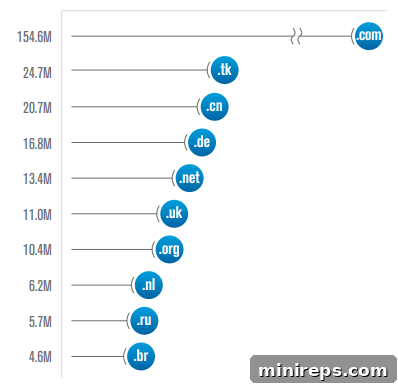
The prominence of ccTLDs in the global domain market is undeniable. According to reports from Verisign, an authoritative source on domain industry data, ccTLDs account for an impressive 7 out of the top ten largest Top-Level Domains by the sheer number of registered domains. This statistic alone underscores their massive global footprint and importance. While users in regions like North America might primarily encounter and utilize .com domains, ccTLDs are significantly more prevalent and preferred throughout the rest of the world, acting as crucial indicators of local presence and trust.
For businesses and individuals alike, establishing a strong digital identity means more than just securing a single .com domain. Many countries take immense pride in their ccTLD, leveraging it as their primary online address and a symbol of national digital presence. However, strategic domain management dictates a broader approach. Registering your brand’s .com and other valuable gTLDs is essential for comprehensive brand protection. The same principle applies, perhaps even more so, to ccTLDs. Neglecting to secure relevant ccTLDs leaves a significant vulnerability in your domain portfolio, making your brand susceptible to cybersquatters, counterfeiters, and opportunistic competitors who can exploit these gaps, potentially diverting traffic and eroding customer trust. A robust domain strategy includes defensive registrations across key ccTLDs where your brand has, or plans to have, a presence.
Navigating the Registration Process for Country Code Domains
One of the defining characteristics of country code domains is their decentralized management. Unlike gTLDs, which operate under a relatively uniform framework overseen by ICANN, each country retains the right to establish its own unique set of rules and regulations for its ccTLD. This autonomy leads to considerable variations across the globe in terms of pricing structures, specific registration requirements, enforcement policies, dispute resolution mechanisms, and more. For businesses looking to expand their international digital footprint, understanding and navigating these diverse regulations can present significant challenges.
For instance, consider the case of Singapore’s .sg domain. Any individual or entity seeking to register a domain under the .sg ccTLD is required to appoint an administrative contact who possesses a valid postal address within Singapore. Such local presence requirements are common for many ccTLDs, aiming to ensure that registrants have a genuine connection to the country and can be reached for administrative or legal purposes. Other countries might demand proof of local business registration, a physical presence, a local bank account, or even specific tax identification numbers.
At this point, you might be thinking, “This sounds great for local businesses, but what if I don’t reside or have an established presence in every country where I want to register a domain?” This is precisely where specialized services become indispensable. Providers like 101domain offer Trustee Services, designed to simplify and make affordable the process of registering domains worldwide, even when you do not meet the direct local presence requirements. A Trustee Service acts as your legal proxy, fulfilling the administrative or technical contact requirements on your behalf, thereby enabling you to secure vital ccTLDs without the complexities and costs associated with establishing a physical presence in each target country. This service democratizes global domain ownership, opening up opportunities for businesses of all sizes to truly expand their international reach.
Five Compelling Reasons to Register a Country Code TLD
Investing in ccTLDs is more than just an option; it’s a strategic imperative for any entity with global ambitions. Here are five powerful reasons why you should prioritize registering country code top-level domains:
1. Enhanced Local SEO Benefits and Geotargeting
Registering a ccTLD for your website is one of the strongest signals you can send to search engines, explicitly indicating that your content is intended for a specific geographical region. For instance, if you operate a bakery in Paris and wish to attract customers living in France, securing a .fr domain name virtually guarantees that your business will feature prominently in the search results of individuals located in France. Search engines like Google highly prioritize ccTLDs as clear geographical indicators, boosting your site’s visibility for local queries. This precise geotargeting allows you to reach your most relevant audience effectively, leading to higher organic traffic, improved conversion rates, and a stronger local market presence. It ensures that when someone in France searches for “boulangerie Paris,” your .fr site is more likely to appear than a generic .com, regardless of content optimization.
2. Instilling Stronger Buyer Confidence and Trust
In many countries around the world, ccTLDs are not just preferred but are often considered essential over generic .com domains. This preference stems from a fundamental human tendency to trust what is familiar and local. When customers see a website ending in their country’s specific domain, it immediately instills a sense of confidence and authenticity. They perceive the business as genuinely local, understanding their language, currency, cultural nuances, and local regulations. This fosters a belief that transactions will be conducted in their native language, prices will be displayed in their local currency, shipping will be efficient within their region, and customer service will be readily available. This psychological comfort translates directly into increased buyer confidence, making customers more likely to complete purchases and engage with a website they identify as truly local, leading to higher conversion rates and greater customer loyalty.
3. Greater Availability of Desirable Domain Names
The quest for the perfect domain name under the popular .com extension has become increasingly challenging. Traditional and public domains like .com have been around for decades, leading to a saturation where most short, memorable, or keyword-rich names are already taken. This scarcity often forces businesses to compromise on their preferred brand name or resort to longer, less impactful alternatives. ccTLDs, however, offer a vast and often untapped reservoir of domain names. With hundreds of unique country codes available, you have a significantly greater chance of securing your ideal brand name or a highly relevant keyword-rich domain. This availability is a huge advantage for startups, small businesses, and established enterprises alike, allowing them to establish a strong, memorable online identity without the limitations faced in the crowded .com space.
4. Opportunity for Shorter and More Memorable Names
As established, ccTLDs are inherently characterized by their two-letter codes, which are assigned to every country. This concise nature inherently offers the potential for significantly shorter and more memorable domain names compared to many gTLDs. Furthermore, because each country has the prerogative to determine its own guidelines for assigning domain names, some ccTLD registries do not impose higher prices for short, high-value domain names, unlike the premium pricing often associated with short .com domains. Shorter domain names are not only easier for customers to recall and type accurately, reducing the risk of typos, but they also offer a significant advantage in branding and marketing efforts. They can be more impactful on business cards, advertisements, and social media, contributing to stronger brand recognition and recall.
5. Unleashing Creativity with Domain Hacks
One of the most innovative uses of ccTLDs is in the creation of “domain hacks.” A domain hack is a clever play on words where the domain extension (the ccTLD) forms part of the overall brand name or phrase. There are primarily two types of domain hacks. The first involves using the ccTLD itself to complete a word or phrase, creating a unique and often memorable brand identity. The second type involves using a ccTLD for a purpose other than its original geographical intent, often leveraging its letters to suggest an industry or concept. Country code domains are perfectly suited for these creative applications due to their short, diverse letter combinations.
The most common and widely recognized examples include .ai for artificial intelligence (Anguilla’s ccTLD) and .io for input/output (British Indian Ocean Territory’s ccTLD), both hugely popular in the tech industry. Brands are continuously finding innovative ways to apply ccTLDs for domain hacks. For instance, the popular URL shortener bit.ly cleverly utilizes Libya’s .ly domain to complete its name. Similarly, the email marketing giant Mailchimp uses Belgium’s .be domain for their memorable domain name subscri.be, which seamlessly redirects to mailchimp.com. These creative uses not only build strong, distinctive brands but also enhance memorability and engagement, showcasing the versatility of ccTLDs beyond their traditional geographical purpose.
Expand Your Global Digital Footprint Today with ccTLDs
The strategic importance of Country Code Top-Level Domains cannot be overstated in today’s interconnected world. They are essential for establishing local credibility, optimizing for international search engines, building deep customer trust, securing unique brand names, and even unleashing creative marketing opportunities. Ignoring the power of ccTLDs is to overlook a significant advantage in the competitive global marketplace.
Whether you’re looking to target specific national markets, protect your brand from digital infringement, or simply find a memorable domain name that stands out, ccTLDs offer unparalleled potential. With the largest selection of country code domains available anywhere, 101domain is your premier partner in navigating the complexities of global domain registration. Don’t let geographical barriers limit your digital aspirations. Review our comprehensive price list here and take the crucial step towards expanding your online international presence with confidence and ease today.