


Fortifying Your Digital Presence: A Deep Dive into Preventing DDoS Attacks with Cloudflare
In the ever-evolving landscape of cyber threats, Distributed Denial-of-Service (DDoS) attacks stand out as a formidable challenge for businesses and organizations worldwide. A DDoS attack is a malicious attempt to disrupt the normal traffic of a targeted server, service, or network by overwhelming it with a flood of internet traffic. Imagine your website as a bustling highway; a DDoS attack is akin to intentionally jamming all lanes with unnecessary traffic, preventing legitimate users and customers from reaching their destination. This deluge consumes all available network bandwidth and server resources, rendering your online services inaccessible and grinding your operations to a halt.
The consequences of a successful DDoS attack can be devastating. Beyond the immediate disruption, these attacks can severely harm your company’s reputation, erode customer trust, and lead to significant financial losses through interrupted sales, lost productivity, and potential data breaches occurring during the chaos. The cost of remediation—from incident response to system recovery—can be exorbitant, far outweighing the cost of preventative measures. Understanding how to effectively prevent DDoS attacks is not just a technical necessity but a critical business imperative. This guide explores the modern landscape of DDoS threats and reveals how you can proactively protect your digital assets with Secure Web Accelerator powered by Cloudflare.
Understanding Modern DDoS Attack Tactics and Their Targets
DDoS attacks are sophisticated tools in the arsenal of cybercriminals, activists, and even competitors. They are deployed for a myriad of reasons, each with potentially severe implications. Cybercriminals often use DDoS attacks for extortion, demanding ransom to cease the attack, or as a diversionary tactic to mask more insidious activities like data theft or system infiltration. Competitors might weaponize DDoS to gain an unfair advantage, disrupting a rival’s services during peak business hours or critical launches.
While some attacks are highly targeted and financially motivated, others, often orchestrated by “script kiddies,” aim merely to cause disruption and chaos, sometimes without a clear objective other than proving technical prowess. On the other end of the spectrum, activists employ DDoS attacks as a form of “hacktivism,” arguing that denying access to a website is a modern equivalent of a physical protest. Just as protesters might block access to a building to make a statement, digital activists might flood a website with traffic. However, it’s crucial to distinguish: while traditional protest is a protected right, launching a DDoS attack is an illegal act that carries significant legal penalties. Despite this, the frequency and sophistication of these attacks continue to rise globally.
Common Targets and Motivations Behind DDoS Attacks
No entity with an online presence is entirely immune to the threat of a DDoS attack. However, certain sectors and types of organizations are statistically more likely to become targets due to their visibility, the nature of their operations, or the value of their data. Understanding these common targets can help organizations better assess their own risk profile and allocate resources for robust protection.

Government Agencies and Public Services: Government websites and critical infrastructure providers are frequent targets for DDoS attacks. These attacks can be politically motivated, aimed at disrupting public services, suppressing information, or making a political statement. State-sponsored groups or hacktivists often orchestrate such attacks to demonstrate power, undermine public confidence, or retaliate against perceived injustices. The disruption of essential services, from tax filing portals to emergency communication systems, can have far-reaching societal impacts.

Gaming Companies and Online Entertainment: The gaming industry is notoriously susceptible to DDoS attacks, often at the hands of its own users or disgruntled competitors. “Script kiddies” frequently target gaming servers to disrupt tournaments, gain an unfair advantage, or simply to express frustration over game features or player interactions. The high stakes in competitive gaming, combined with the passionate and sometimes volatile nature of the player base, create an environment ripe for such disruptions. For gaming companies, uninterrupted service is paramount for player engagement and revenue.

E-commerce and Financial Institutions: Businesses that rely heavily on online transactions, such as e-commerce platforms and financial institutions, are prime targets for DDoS attacks, often for direct financial gain. Perpetrators might launch attacks during peak shopping seasons or critical financial periods to demand ransom payments. More insidiously, a DDoS attack can serve as a calculated distraction. While a business scrambles to mitigate the overwhelming traffic, the actual objective of the attacker might be to exploit other vulnerabilities, steal sensitive customer data, or compromise backend systems unseen amidst the chaos. This “smokescreen” tactic makes DDoS attacks a dangerous component of multi-vector cyber campaigns.
Proactive Strategies: How to Prevent a DDoS Attack Effectively
While the threat of DDoS attacks is constant, there are robust preventative measures and mitigation strategies that organizations can implement to significantly reduce their vulnerability. Relying solely on internal infrastructure often proves insufficient against modern, large-scale attacks due to the sheer volume of traffic involved.
One initial thought for prevention might be to simply “beef up” your servers and network infrastructure to handle more traffic and bandwidth. While increasing capacity can offer a marginal defense against smaller, less sophisticated attacks, this approach is often prohibitively expensive and ultimately unsustainable. The scale of modern DDoS attacks can easily overwhelm even the most robust in-house infrastructure. Furthermore, over-provisioning for a rare event can lead to significant wasted resources.
For companies utilizing cloud hosting, scaling bandwidth up or down can be more flexible, as detailed in articles like Why Cloud Hosting is the Best Hosting. However, even cloud providers require additional layers of DDoS protection, as basic cloud infrastructure might not inherently offer advanced, always-on mitigation.
The most effective strategy against DDoS attacks is to leverage specialized DDoS mitigation services. These providers possess the global network capacity and sophisticated technology required to absorb and filter malicious traffic before it ever reaches your origin server. Among the leading names in DDoS mitigation, Cloudflare stands out. Cloudflare operates a vast global network of servers, strategically distributed across hundreds of cities worldwide. This enormous network is designed not only to accelerate legitimate web traffic but, crucially, to withstand and protect against even the largest and most complex recorded DDoS attacks, offering an unparalleled shield for your online presence.
How Cloudflare’s Advanced Network Prevents DDoS Attacks
Cloudflare’s Secure Web Accelerator acts as an essential intermediary, positioning itself between your server and the broader Internet. When you integrate Cloudflare with your domain, all incoming web traffic is routed through Cloudflare’s global network first. This strategic positioning allows Cloudflare to inspect, analyze, and filter traffic at the edge of the Internet, long before it ever reaches your website’s origin server.
Think of Cloudflare as an advanced water filtration system for your web traffic. Just as a filter cleanses water of impurities before it reaches your tap, Cloudflare intercepts every web request, scrutinizing it to ensure that only legitimate, “clean” traffic makes its way to your website. Malicious requests, including those characteristic of DDoS attacks, are automatically identified and filtered out, preventing them from consuming your server resources or causing any disruption.
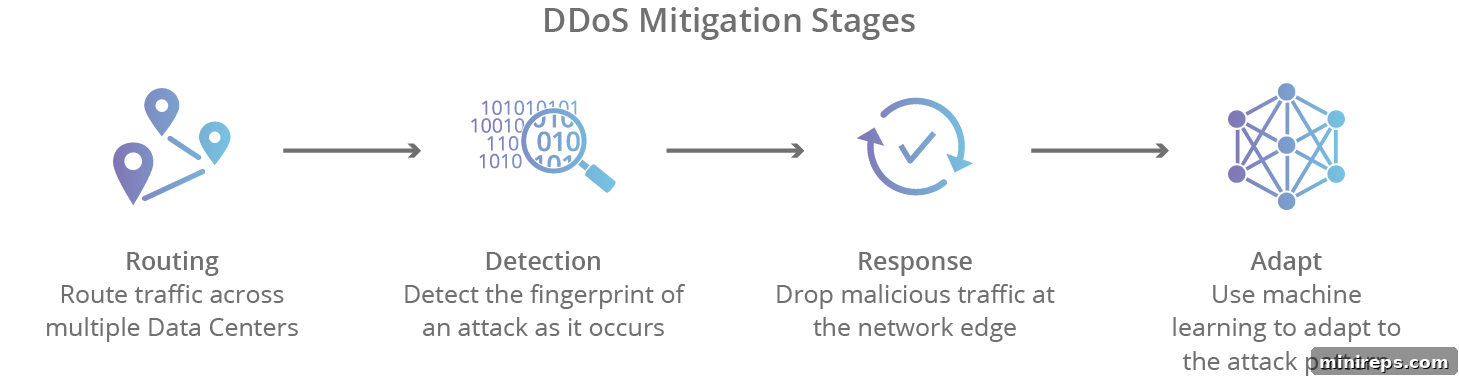
Cloudflare’s effectiveness stems from its massive, globally distributed network. Each of its data centers, comprising numerous servers, is equipped with sophisticated DDoS mitigation technologies. These systems continuously monitor for various types of DDoS attacks, from volumetric floods that overwhelm bandwidth to protocol attacks that exploit server vulnerabilities, and application-layer attacks that target specific web application weaknesses. The challenge with modern DDoS attacks is their multi-vector nature, often combining several attack types simultaneously, which makes them incredibly difficult for individual companies to detect and mitigate on their own.
To combat this complexity, Cloudflare leverages cutting-edge machine learning and artificial intelligence. Its systems constantly analyze the immense volume of Internet traffic passing through its network. By identifying patterns, anomalies, and behavioral deviations indicative of malicious intent, Cloudflare can detect and respond to emerging threats in real-time. This proactive approach allows it to adapt to new attack methodologies, ensuring continuous protection against evolving cyber threats.
John Graham-Cumming, Chief Technology Officer at Cloudflare, eloquently describes the power of their collective intelligence:
“Because of the scale of a cloud-first network — with such a large number of users using Cloudflare, traffic coming through us — we can actually look for anomalous behavior on our network, which would be indication of some type of attack, and then we can use that to protect other users.”
This statement highlights a core advantage: every attack detected on any part of Cloudflare’s network contributes to the collective intelligence that protects all other users. This continuous learning cycle ensures that Cloudflare’s defenses are constantly updated and strengthened, staying ahead of attackers.

The sheer scale of Cloudflare’s operations is staggering; it oversees over 11 million HTTP requests per second. This unparalleled visibility into global Internet traffic provides an immense dataset for its machine learning models, allowing them to rapidly identify and neutralize threats that would overwhelm smaller, isolated security systems. By leveraging this vast network effect, Cloudflare offers a level of DDoS protection that is virtually impossible for any single organization to achieve on its own.
Always Prepare for the Worst: Building a Robust DDoS Incident Response Plan
While robust preventative measures like Cloudflare provide an advanced defense, no security solution offers a 100% guarantee against all threats. Therefore, the wisest approach for any organization is to always prepare for the worst by having a comprehensive emergency plan in place. A well-defined incident response plan can significantly minimize the impact and recovery time should your company become the target of a DDoS attack. Proactive planning transforms potential chaos into a manageable incident.
Here are key actions you can take to ensure your company is fully prepared to respond effectively in the event a DDoS attack occurs:

1. Develop a Crisis Communication Plan: Prepare a clear, concise, and empathetic company statement that would be released to the public, customers, and stakeholders in the event of an attack. This pre-approved message should acknowledge the incident, explain its nature (without revealing sensitive details), assure customers that data is secure (if applicable), and outline steps being taken to restore services. Timely and transparent communication helps maintain trust and manage public perception during a crisis. Designate a spokesperson and establish communication channels.

2. Allocate a Dedicated Security Budget: Recognize that every minute of a DDoS attack translates directly into lost revenue, diminished productivity, and potential long-term damage to your brand. Proactively investing in robust DDoS protection services and having an emergency budget for incident response and recovery is far more cost-effective than attempting to resolve an attack reactively. Factor in potential costs for forensics, legal counsel, public relations, and increased operational expenses during an outage. Prioritizing security as an investment, not just an expense, is crucial.

3. Adopt and Follow Expert Security Strategies: Regularly review and implement security strategies recommended by industry leaders, especially your chosen DDoS mitigation provider. For Cloudflare users, this means staying updated with their recommended security best practices. This includes configuring appropriate security settings, understanding rate limiting options, deploying Web Application Firewalls (WAFs) for application-layer attacks, and ensuring “Always On” protection is enabled to continuously filter traffic. Regular security audits and penetration testing can also help identify and rectify vulnerabilities before they are exploited.
By integrating these proactive measures into your overall cybersecurity framework, your organization can build a resilient defense against the escalating threat of DDoS attacks, safeguarding your operations, reputation, and customer trust.

Elevate Your Website Security with Secure Web Accelerator
Don’t leave your website vulnerable to the growing threat of DDoS attacks. Secure Web Accelerator, powered by Cloudflare’s industry-leading network, offers comprehensive protection against DDoS attacks, abusive bots, and a wide array of other common cyber threats. With its effortless one-click installation, you can fortify your digital assets quickly and affordably. Start protecting your business today for less than $1/month and ensure uninterrupted service, maintain customer trust, and safeguard your online revenue.