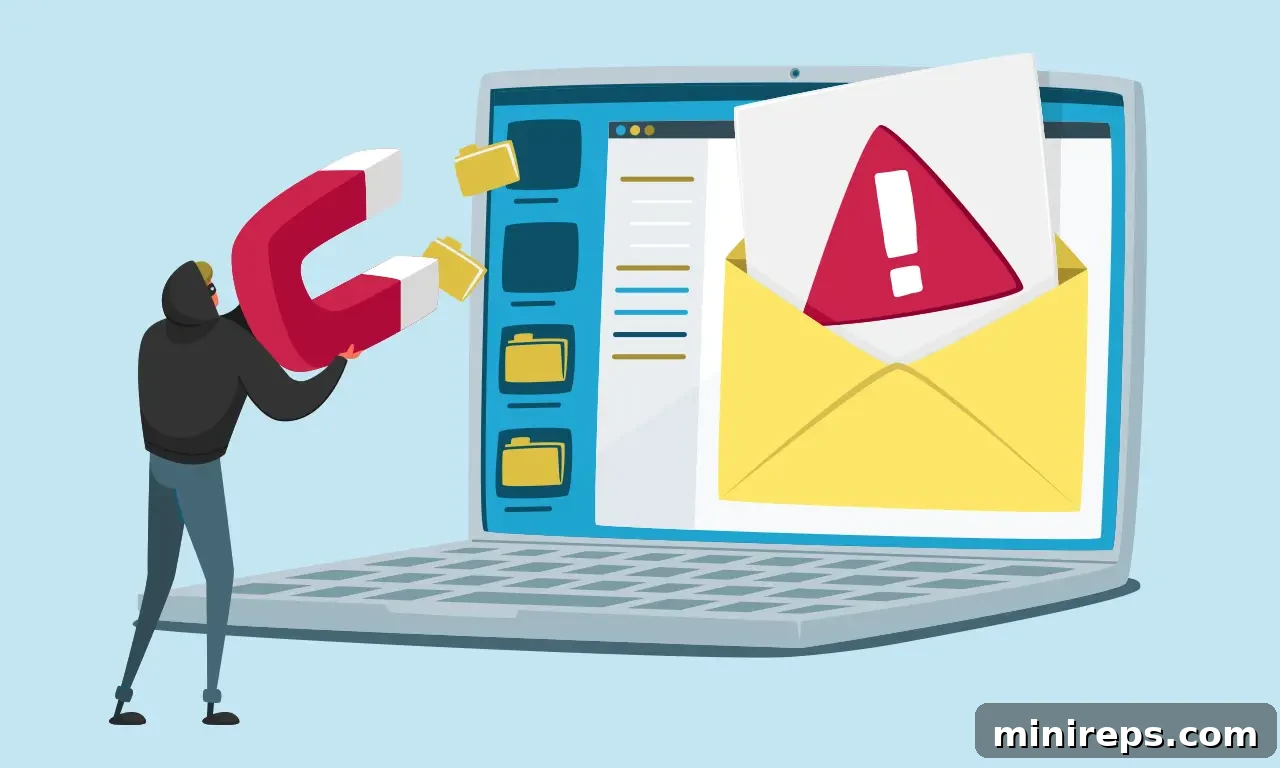

In today’s interconnected digital landscape, brand trust is inextricably linked to a company’s commitment to securing its communications and safeguarding its customers from an ever-evolving array of cyber threats. Among the most prevalent and insidious dangers are phishing and spoofing attacks, where malicious actors craft sophisticated deceptions to impersonate legitimate entities, aiming to trick unsuspecting victims. As organizations globally strive to fortify their digital perimeters, a fundamental question emerges for IT professionals and business leaders alike: How effectively can we prevent email spoofing and protect our brand’s integrity?
The Evolving Landscape of Cyber Threats: Phishing and Spoofing Explained
Phishing and spoofing represent two sides of the same coin in the world of cybercrime, each designed to exploit trust and vulnerability. Understanding their mechanics is the first step toward building robust defenses.
Understanding Phishing Attacks
Phishing is a deceptive tactic where cybercriminals attempt to acquire sensitive information, such as usernames, passwords, credit card details, or other personal data, by masquerading as a trustworthy entity in an electronic communication. These attacks often take the form of emails, text messages (smishing), or phone calls (vishing) that appear to come from legitimate organizations like banks, social media platforms, e-commerce sites, or government agencies. Phishing campaigns frequently leverage urgency, fear, or tempting offers to prompt recipients into clicking malicious links, opening infected attachments, or directly revealing information. The goal is to trick individuals into divulging credentials that can then be used for unauthorized access, identity theft, or financial fraud.
The Menace of Email Spoofing
Email spoofing is the precursor to many successful phishing attacks. It involves forging the sender’s address of an email to make it appear as if it originated from a legitimate, trusted source. The attacker manipulates email headers to display a familiar sender name or domain, creating a convincing illusion. For instance, an email might appear to come from your CEO, your bank, or a reputable service provider, even though it was sent by a malicious actor. This false representation is a powerful tool for social engineering, designed to bypass initial skepticism and increase the likelihood of a recipient interacting with a fraudulent message. Spoofing allows attackers to impersonate brands, executives, or even internal departments, significantly undermining communication integrity and eroding trust.
Why These Attacks Are So Dangerous
The effectiveness of phishing and spoofing lies in their exploitation of human psychology and the inherent trust users place in their communication channels. Cybercriminals capitalize on busy schedules, lack of awareness, and the sheer volume of digital interactions to trick individuals into making errors. For businesses, the consequences can be devastating, ranging from data breaches and financial losses to severe reputational damage and diminished customer trust. A single successful attack can compromise sensitive customer data, intellectual property, or critical financial systems, making a proactive and comprehensive defense strategy absolutely essential.
DMARC: The Cornerstone of Modern Email Security and Spoofing Prevention
In the face of these sophisticated threats, organizations require advanced defenses. Domain-based Message Authentication, Reporting & Conformance (DMARC) stands out as a critical email validation system engineered specifically to detect and protect against the unauthorized use of email domains in phishing and spoofing campaigns. Its widespread adoption is evident, with many major email providers like Google, Yahoo, and Outlook now mandating DMARC implementation for businesses to ensure reliable email delivery.
What is DMARC?
DMARC is an open-standard email authentication protocol that allows domain owners to define how email receivers should handle messages that fail authentication checks. It provides a robust framework for improving email deliverability, preventing domain impersonation, and gaining critical insights into email traffic originating from and purporting to be from a domain. By implementing DMARC, organizations take a proactive stance in asserting control over their email identity and protecting their recipients.
How DMARC Works: A Multi-Layered Defense
DMARC doesn’t work in isolation. It operates in tandem with two foundational email authentication systems—Sender Policy Framework (SPF) and DomainKeys Identified Mail (DKIM)—to verify the authenticity of an email’s origin and ensure its integrity during transit.
- Sender Policy Framework (SPF): SPF allows email senders to publish a record in their Domain Name System (DNS) that explicitly lists all the IP addresses authorized to send email on behalf of their domain. When an email server receives a message, it can check the sender’s domain against its SPF record. If the email originates from an IP address not listed in the SPF record, it flags the email as suspicious, indicating a potential spoofing attempt. SPF primarily checks the “envelope sender” address, which is used for the email’s return path.
- DomainKeys Identified Mail (DKIM): DKIM adds a layer of cryptographic authentication. When an email is sent, a digital signature is attached to its header. This signature is generated using a private key by the sending server. The receiving server can then use a public key, published in the sender’s DNS record, to verify the signature. If the signature is valid, it confirms two crucial things: first, that the email indeed originated from the claimed domain, and second, that the email content (including headers) has not been tampered with or altered during its journey from sender to recipient. DKIM checks the “header sender” (From address) and message content.
DMARC builds upon these frameworks by requiring that SPF or DKIM (or both) pass authentication, AND that the ‘From’ domain in the email header (the one users typically see) aligns with the domain authenticated by SPF or DKIM. This crucial “alignment” check is what makes DMARC so powerful in preventing direct domain spoofing. If a message fails DMARC checks, the receiving server consults the domain owner’s DMARC policy for instructions on how to handle it.
DMARC Policies: Taking Control of Unauthenticated Emails
One of DMARC’s most significant features is the ability for domain owners to specify policies that instruct receiving email servers on how to treat emails that fail authentication. There are three main policy types:
- p=none (Monitoring Mode): This is the initial, safest policy to implement. It instructs receiving servers to take no specific action on failed emails but to send DMARC reports back to the domain owner. This “monitoring” mode allows organizations to gather data on their legitimate email traffic and identify unauthorized senders without impacting email delivery. It’s crucial for understanding your email ecosystem before enforcing stricter policies.
- p=quarantine (Quarantine Mode): With this policy, emails that fail DMARC authentication are not directly rejected but are instead moved to the recipient’s spam or junk folder. This significantly reduces the chances of fraudulent messages reaching the inbox, offering a stronger layer of protection while still allowing for review if a legitimate email were accidentally flagged.
- p=reject (Enforcement Mode): This is the strongest DMARC policy. When set to ‘reject,’ receiving email servers are instructed to completely block and bounce any email that fails DMARC authentication. This ensures that spoofed emails never reach the recipient’s mailbox, providing the highest level of protection against direct domain impersonation and phishing attacks.
The Power of DMARC Reporting
A cornerstone of DMARC’s effectiveness is its comprehensive reporting mechanism. Domain owners receive two types of reports:
- Aggregate Reports (RUA): These XML-formatted reports are sent daily to the specified email address in the DMARC record. They provide a high-level overview of all email traffic purportedly from your domain, including information about sending IP addresses, authentication results (SPF and DKIM pass/fail), and DMARC policy application. Aggregate reports are invaluable for monitoring your domain’s email ecosystem and identifying legitimate as well as potentially fraudulent sending sources.
- Forensic Reports (RUF): These reports provide anonymized copies of individual messages that failed DMARC authentication. While less common due to privacy concerns and potential for large volumes, they can offer granular detail useful for incident response and understanding specific attack vectors.
These reports provide actionable intelligence, allowing organizations to fine-tune their DMARC policies, identify legitimate third-party senders that need SPF/DKIM configured, and promptly respond to unauthorized use of their domain.
The Unrivaled Benefits of DMARC in Combating Email Spoofing
Implementing DMARC fundamentally elevates a domain’s defense against spoofing and phishing by ensuring that only legitimate, authenticated communication reaches recipient inboxes. Its benefits extend far beyond simple email filtering.
Fortifying Email Security and Protecting Recipients
When correctly configured and set to an enforcement policy (quarantine or reject), DMARC significantly reduces the risk of malicious or suspicious emails reaching end users. By ensuring that incoming messages claiming to be from your domain are properly authenticated, DMARC prevents spoofed emails from ever landing in an employee’s or customer’s inbox. This proactive filtering directly safeguards sensitive data, protects users from malware and ransomware distributed via phishing, and minimizes the chances of employees falling victim to business email compromise (BEC) schemes. It essentially creates a trusted channel for your domain’s communications.
Gaining Unprecedented Visibility into Email Traffic
DMARC reports provide a panoramic view of your domain’s email landscape. They don’t just tell you about failed emails; they give you insights into all senders using or attempting to use your domain, legitimate or otherwise. This visibility helps organizations:
- Identify Authorized Senders: Discover all legitimate services (e.g., marketing platforms, CRM systems, HR tools) that send email on behalf of your domain, ensuring they are properly configured with SPF and DKIM.
- Uncover Unauthorized Activity: Quickly spot unknown or malicious IP addresses attempting to spoof your domain, allowing for swift action to block these sources.
- Refine Policies: Use the data to safely transition from monitoring (‘p=none’) to enforcement (‘p=quarantine’ or ‘p=reject’) policies, knowing the impact on your legitimate email flow.
This actionable intelligence is crucial for maintaining an optimal email security posture and adapting to new threats.
Safeguarding Brand Reputation and Customer Trust
The unauthorized use of a company’s domain in phishing and spoofing attacks can cause irreparable damage to its brand reputation. Customers who fall victim to scams purporting to be from a trusted brand may lose faith, leading to diminished loyalty and potential financial losses for the business. DMARC directly mitigates this risk by ensuring that only authentic communications bearing your brand’s name reach the recipient. By curtailing fraudulent emails, DMARC fortifies your brand’s image, ensuring that customers can trust the legitimacy of messages they receive from you. This protection extends beyond just your customers; it protects your employees, partners, and the entire ecosystem connected to your brand, preserving its integrity and value.
Achieving Regulatory Compliance
In an era of stringent data protection and privacy regulations (such as GDPR, CCPA, HIPAA), robust email security is not just good practice, but often a compliance requirement. DMARC plays a vital role in demonstrating due diligence in protecting customer data and preventing security incidents. By implementing DMARC, organizations can show that they are taking proactive steps to prevent email fraud, which can be critical during audits and in establishing a strong security posture required by various regulatory bodies.
Optimizing DMARC Effectiveness: The Role of Managed Services
While DMARC can significantly diminish the risk of spoofing, its full potential is realized through diligent implementation, consistent monitoring, and a responsive approach to its detailed reports. The intricacies involved in interpreting aggregate XML reports and continuously adjusting policies can be daunting for many organizations, especially those with limited cybersecurity resources. This is why many industry experts, including Google, recommend outsourcing DMARC implementation and management to specialized third-party services.
The Challenges of Self-Managed DMARC
Managing DMARC in-house can present several challenges:
- Complexity of Setup: Properly configuring SPF, DKIM, and the DMARC record itself requires technical expertise to avoid legitimate emails being blocked.
- Report Interpretation: DMARC aggregate reports are in XML format, making them difficult for the average user to read and extract actionable insights from. Large organizations can receive thousands of these reports daily.
- Policy Evolution: Moving from a ‘p=none’ policy to ‘p=quarantine’ or ‘p=reject’ requires careful analysis and iterative adjustments to ensure legitimate emails are not negatively impacted.
- Ongoing Monitoring: The threat landscape evolves, and continuous monitoring is essential to detect new spoofing attempts and maintain an effective DMARC posture.
Why Partner with a Third-Party DMARC Provider
Specialized DMARC management services, such as OnDMARC provided by 101domain, streamline the entire process. They offer expert insights, automated tools, and dedicated support, ensuring that potential threats are not overlooked and that your DMARC policies are optimally configured. These services convert complex data into actionable intelligence, saving time, resources, and significantly enhancing your email security.
Benefits of leveraging third-party DMARC services include:
- Simplified Report Management: Services like OnDMARC offer intuitive dashboards that transform raw, complex XML data from DMARC reports into easy-to-understand visualizations and actionable intelligence. This allows IT teams to quickly identify legitimate sending sources that need authentication and pinpoint malicious activity, saving countless hours typically spent on manual parsing and analysis.
- Advanced Threat Detection: These platforms often deploy sophisticated algorithms, machine learning, and threat intelligence to spot anomalies, identify emerging spoofing patterns, and detect subtle attack vectors that might be missed by manual review. They provide an early warning system against potential spoofing attempts, proactively alerting you to suspicious activity.
- Expert Guidance and Support: Dedicated DMARC experts offer invaluable guidance on policy refinement, help troubleshoot authentication issues, and provide best practices for maintaining a robust email security posture. This expert support ensures that DMARC is not just implemented, but optimized and continuously managed to respond effectively to new and evolving threats. They can assist in safely moving to an enforcement policy, preventing disruption to legitimate email.
- Automated Implementation and Configuration: Many services simplify the initial setup of SPF, DKIM, and DMARC records, often providing step-by-step wizards and automated tools to ensure correct configuration and prevent common errors that can lead to deliverability issues.
Conclusion: DMARC as Your Strategic Ally Against Spoofing
So, can DMARC prevent spoofing? The answer is a resounding yes – provided that it is implemented comprehensively, configured correctly, and monitored diligently. DMARC is not merely a technical protocol; it is a critical strategic component in any organization’s cybersecurity arsenal, offering unparalleled protection against email fraud and brand impersonation.
By embracing DMARC and strategically leveraging the expertise and advanced capabilities of third-party managed DMARC services like OnDMARC, organizations can fortify their communication channels, protect their brand’s reputation, and bolster customer trust with confidence. In an era where cyber threats are constantly evolving and becoming more sophisticated, taking a proactive stance and deploying the right tools makes all the difference. With DMARC, you acquire not just a powerful defense mechanism, but a strategic ally in your ongoing journey towards cyber resilience and the unwavering protection of your digital identity.
Need Help With Your DMARC Setup?
Learn more about 101domain’s Managed DMARC Services and let us do the heavy lifting for you. We handle policy setup, monitoring, and reporting so you can rest easy knowing your emails are secure and your brand is protected.