

The Essential Guide to SSL Certificates: Securing Your Digital Presence
In today’s interconnected digital landscape, online security is not just an option; it’s a fundamental necessity. Every day, millions of pieces of sensitive information are exchanged across the internet, from personal details and financial transactions to private communications. Ensuring the integrity and confidentiality of this data is paramount for both businesses and individual users. This comprehensive guide explores the critical role of SSL certificates in establishing a secure online environment, safeguarding sensitive information, and building user trust.
What is SSL? Understanding the Foundation of Web Security
Many internet users are familiar with the “HTTP” and “HTTPS” prefixes that appear at the beginning of a website address. While commonly recognized, the underlying function of these protocols, particularly the Hypertext Transfer Protocol (HTTP), isn’t always fully understood. In its simplest form, HTTP facilitates the communication between your web browser and the website server. However, HTTP websites transmit data in plain text, meaning that any information exchanged is unencrypted and vulnerable to interception by malicious actors.
The crucial difference lies with “HTTPS,” where the “S” stands for “Secure.” This “S” signifies that there is a secure connection established through a technology called Secure Sockets Layer (SSL). SSL, and its more modern successor Transport Layer Security (TLS), creates an encrypted link between a web server and a browser. This encryption acts like a digital lock, scrambling the data during transit so that only the intended recipient (your browser or the website server) can unlock and read it. Without SSL, your sensitive data is exposed, making your website a potential target for cyberattacks and eroding user trust.
How Does SSL Really Work? The Encryption Process Explained
At its core, an SSL certificate serves as a digital passport for your website. When you integrate an SSL certificate, you activate encryption for all data flowing between your site and its visitors. This mechanism is vital for protecting sensitive information, ensuring that any data transferred remains unreadable to unauthorized parties, such as hackers and cybercriminals. When a user’s browser attempts to connect to an HTTPS-secured website, a “handshake” process occurs:
- The browser connects to a web server secured with SSL.
- The server sends its SSL certificate, including its public key, to the browser.
- The browser verifies the certificate’s authenticity with a Certificate Authority (CA).
- If verified, the browser generates a unique session key, encrypts it with the server’s public key, and sends it back.
- The server decrypts the session key using its private key, and both parties now use this session key for secure, encrypted communication throughout the session.
This intricate process ensures that all data – from simple page requests to complex financial transactions – is protected by robust encryption. Beyond the technical protection, SSL certificates also play a psychological role, building brand trust and confidence through visible indicators like a padlock icon or a green address bar in the browser. Establishing this foundation of trust with a secure connection is absolutely critical for online success, customer loyalty, and long-term business growth.
What Type of Sensitive Information Does an SSL Certificate Protect?
The scope of data protected by an SSL certificate is extensive, covering virtually any information exchanged between a user and a website. This protection is indispensable for any site that handles personal or confidential data, guarding against eavesdropping, tampering, and message forgery. Without SSL, all of this information is vulnerable to cybercriminals who could intercept it and use it for malicious purposes.
- Transaction and Bank Information: Essential for e-commerce, ensuring credit card numbers, bank account details, and payment credentials are encrypted during online purchases.
- Credit Card Information: Directly related to transactions, this includes card numbers, expiry dates, and CVV codes, which are highly sought after by identity thieves.
- Usernames and Passwords: Protects login credentials for all types of accounts, from social media to online banking, preventing unauthorized access and account takeovers.
- Contact Information: Safeguards personal details such as names, addresses, phone numbers, and email addresses submitted through forms, sign-ups, or inquiries.
- Search Bar History: Even seemingly innocuous data like search queries can reveal user interests and behaviors, making their protection important for privacy.
- Medical and Health Records: For healthcare providers, SSL is vital for protecting sensitive patient data, adhering to strict privacy regulations like HIPAA.
- Proprietary Business Data: When businesses exchange internal data or client information via web portals, SSL ensures that this confidential information remains secure from corporate espionage.
What Are the Undeniable Benefits of SSL?
The digital economy thrives on trust. Consumers are increasingly savvy about online security and are far more likely to engage with and purchase from brands they perceive as secure. SSL certificates provide the end-to-end security necessary to cultivate this trust, protecting your most valuable digital assets and fostering a positive user experience. Websites operating without SSL are leaving themselves and their customers exposed to significant risks, making them vulnerable to cyberattacks, data breaches, and reputational damage. A single security incident can have devastating, long-lasting consequences for a business.
- Inspire Trust & Confidence: An SSL certificate is a clear signal to your visitors that their data is protected. Visual cues like the padlock icon and HTTPS in the URL reassure users, reducing bounce rates and encouraging deeper engagement. This fosters loyalty and positions your brand as a responsible and secure entity.
- Boost SEO Rankings: Since 2014, Google has officially recognized HTTPS as a “lightweight ranking signal.” Websites secured with SSL are favored in search engine results, which can lead to higher visibility, increased organic traffic, and a competitive edge over non-secured competitors. This means better search engine optimization and more potential customers finding your site.
- Increase Conversions: When users feel secure, they are more inclined to complete transactions, fill out forms, or subscribe to services. E-commerce sites, in particular, see a direct correlation between SSL implementation and improved conversion rates, as security anxieties are a major barrier to online purchases.
- Protect Brand Reputation: A data breach can severely damage a brand’s reputation, leading to loss of customer trust, legal repercussions, and financial penalties. SSL acts as a crucial preventative measure, demonstrating a commitment to customer safety and protecting your brand’s integrity against the fallout of security incidents.
- Future-Proof Your Website: The trend towards a fully encrypted web is irreversible. Major browsers increasingly flag non-HTTPS sites as “Not Secure,” pushing all websites towards mandatory encryption. Implementing SSL now ensures your site remains compliant with evolving web standards and browser requirements, preventing future compatibility or security issues.
How Will a Visitor Know the Connection is Secured?
Web browsers are designed to provide clear visual indicators when a website uses a secure connection. These cues are universally recognized and help users quickly determine the trustworthiness of a site before they engage with it or submit any sensitive information. Understanding these indicators empowers users to make informed decisions about their online interactions.
- HTTPS Prefix: The most fundamental indicator. Seeing “HTTPS” instead of “HTTP” in the address bar confirms that the website is using an SSL certificate for encrypted communication.
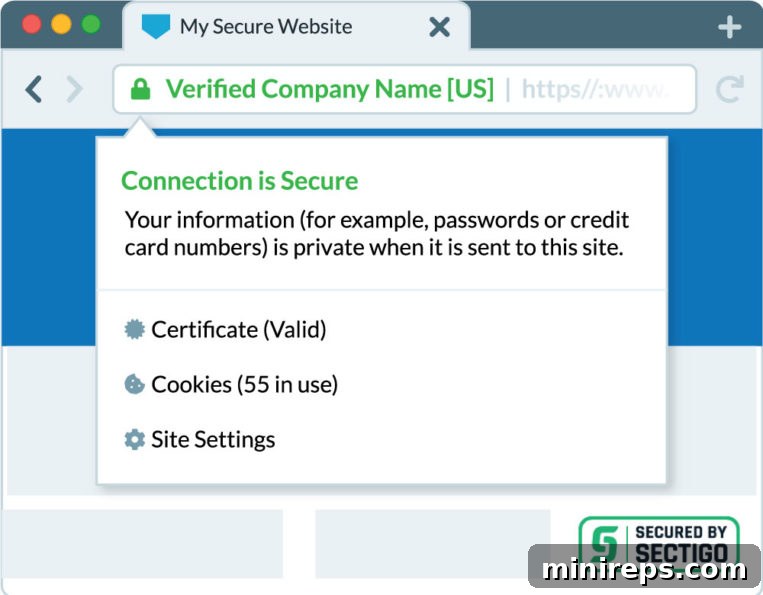
- Padlock Icon: Typically displayed in the browser’s address bar, a small padlock icon signifies a secure connection. Clicking on this icon often reveals more details about the certificate and the website’s identity.
- Company Name (for EV certificates): For Extended Validation (EV) SSL certificates, the company’s verified name is prominently displayed in the address bar, often in green. This is a powerful visual cue of high-level trust and verification.
- Trusted Site Seal: Many Certificate Authorities provide a clickable site seal or badge that websites can display. Clicking this seal typically shows real-time verification details, reinforcing the site’s security status.
Why is SSL Indispensable in Today’s Digital World?
In the current digital environment, having an SSL certificate is no longer merely an option; it has become an absolute requirement for any website that seeks to operate legitimately and successfully online. The industry-wide shift towards ubiquitous encryption means that sites without SSL are increasingly left behind, jeopardizing their functionality, reputation, and ability to attract and retain users.
Online attacks are not only becoming more frequent but also increasingly sophisticated and easier for malicious actors to execute. From phishing scams to ransomware, the threat landscape is constantly evolving. Organizations globally are under immense pressure and increasing scrutiny to ensure that all online transactions and interactions involving confidential data are robustly secured against these growing threats. SSL provides that foundational layer of security.
Google’s Influence and Browser Market Share
The internet, while a powerful tool, also harbors significant threats. Over the past decade, major players like Google have taken decisive steps to illuminate these issues and enhance web safety for everyone. Visual security indicators in browsers are now more prominent than ever, empowering consumers with the information needed to discern which companies they can trust with their personal data and business.
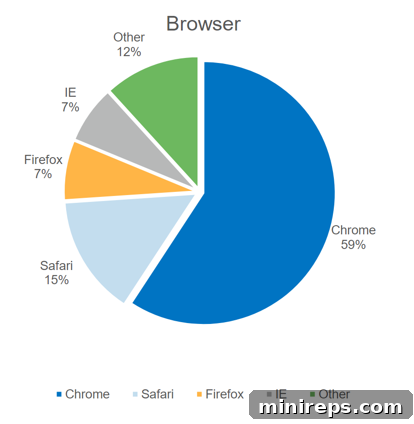
A pivotal moment occurred in 2015 when Google announced that HTTPS would be used as a lightweight ranking signal within its search algorithm. This was a clear message to website owners: prioritize security. Over time, Google has progressively placed greater importance on the implementation of industry-leading security through SSL encryption, actively encouraging all website owners to make the essential switch to SSL-secured websites. Given Google’s dominant browser market share, its policies exert significant influence on the operational standards and future direction of the internet. Google has a substantial vested interest in a secure web and consistently favors sites that implement HTTPS across their entire domain, penalizing those that do not.
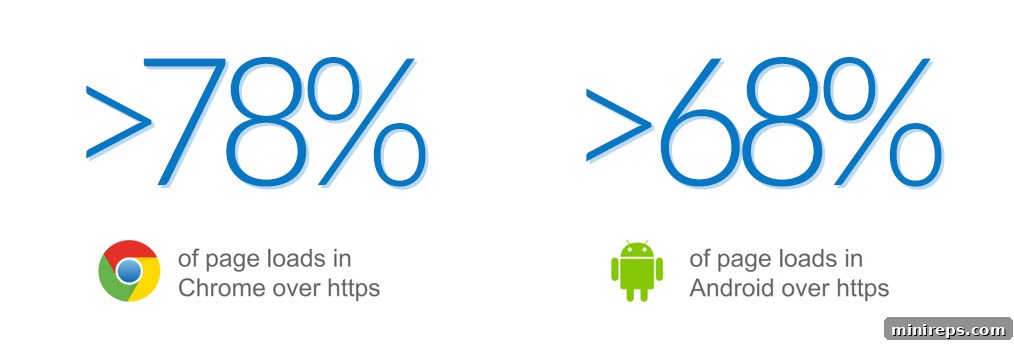
Since these changes regarding the treatment of HTTP websites came into effect, there has been a dramatic increase in the number of pages loading over HTTPS, signifying a broad industry adoption of the standard.
Avoid Non-Secure Browser Warnings: Protect Your User Experience
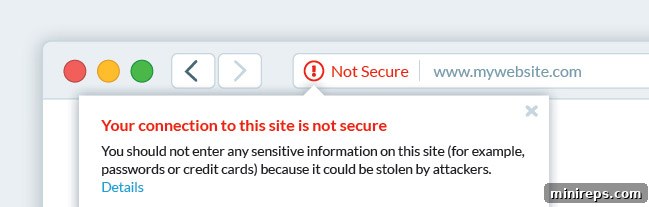
One of the most immediate and detrimental impacts of not having an SSL certificate is the “Not Secure” warning displayed by modern web browsers. Browsers like Google Chrome, Firefox, and Safari now explicitly flag all non-encrypted websites as unsafe. This prominent warning acts as a significant deterrent, actively discouraging potential customers and visitors from entering or interacting with your site. It can appear prominently in the address bar, immediately signaling danger to the user.
Imagine the “Non Secure” browser warning as the digital equivalent of someone standing outside the front doors of your physical business, holding a large sign telling people not to enter. This visual alert immediately erodes trust and professionalism, causing visitors to abandon your site and seek secure alternatives elsewhere. For businesses, this translates directly to lost traffic, missed opportunities, and a damaged reputation.
The primary objective for any website owner is to serve their content to as many people as possible and provide them with a seamless, trustworthy experience. Companies that are truly serious about protecting their customers’ data and upholding their business reputation must implement SSL across all their digital properties. Doing so removes these off-putting warnings, signals trustworthiness, and ensures a smooth user journey.
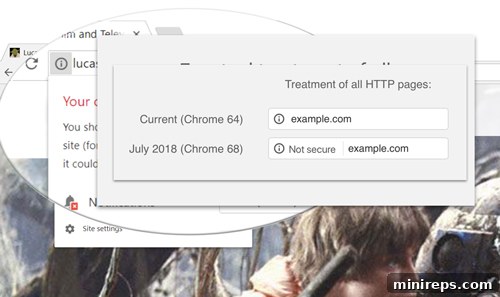
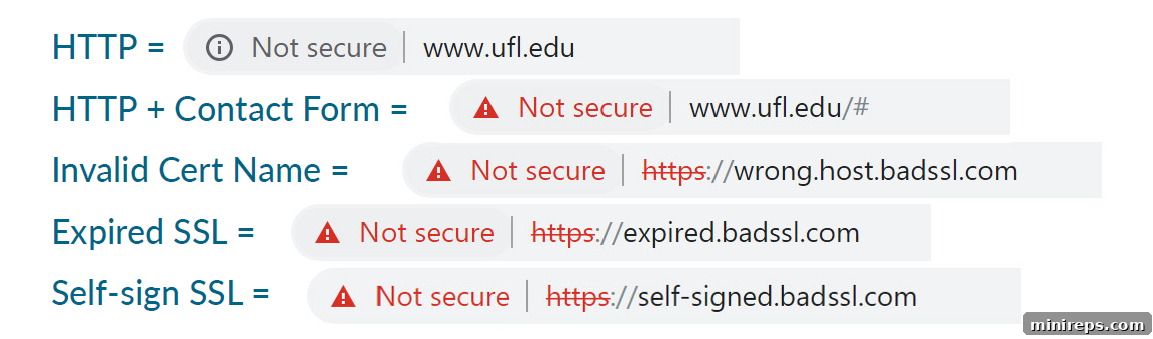
Chrome Security Indicators

Navigating the world of SSL certificates can initially seem complex due to the variety of options available. To simplify this, we can categorize them primarily based on two key distinctions:
- Types of Certificates (what they secure)
- Level of Validation (how deeply the identity is verified)
What Types of SSL Certificates Are Available?
SSL certificates come in various brands, price points, and validation levels, each designed for different needs. While any valid SSL certificate will prevent “Not Secure” browser warnings, websites handling sensitive information, especially e-commerce platforms, require a certificate that reflects a higher security standard and provides stronger visual trust indicators. Choosing the right type depends on your website’s scope and the level of trust you need to convey.
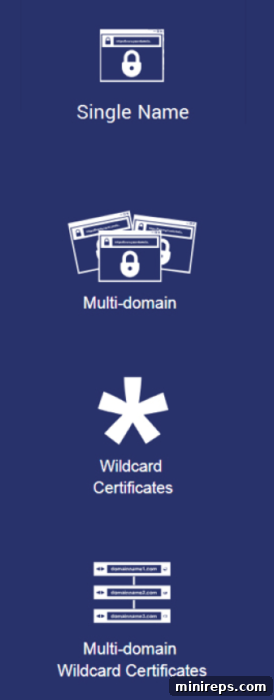
- Single Name SSL: This is the most basic type, designed to secure one specific fully qualified domain name (FQDN). It typically covers both the “www” and non-“www” versions of your domain (e.g., example.com and www.example.com) for free. Ideal for small blogs or simple informational sites.
- Multi-Domain SSL (SAN/UCC): A single certificate capable of securing multiple distinct domain names, subdomains, and even IP addresses. This type is highly versatile and ideal for environments like Microsoft Exchange and Unified Communications (UCC) servers, where multiple hostnames need securing under one certificate. It can include non-www versions for the common name but usually not for all additional domain names.
- Wildcard SSL: This certificate type is designed to secure an unlimited number of subdomains at a specific level for a single domain name. It’s denoted by an asterisk symbol (*), for example: `*.yourdomain.com` will secure `blog.yourdomain.com`, `shop.yourdomain.com`, etc., but not `test.dev.yourdomain.com`. It’s a cost-effective solution for businesses with many subdomains.
- Multi-Domain Wildcard SSL: Representing one of the most comprehensive and powerful SSL types on the market, this certificate combines the capabilities of both Multi-Domain and Wildcard certificates. It can secure multiple primary domain names, each with an unlimited number of subdomains. This is perfect for large organizations managing a complex web presence with numerous websites and subdomains.
Choosing the Right Validation Method for Your Business
Beyond the certificate type, the level of validation is crucial. This refers to the depth of identity verification performed by the Certificate Authority (CA) before issuing the SSL certificate. There are three primary levels of validation, each offering varying degrees of trust and authentication. Understanding each process will help you select the most appropriate method for your business’s needs and compliance requirements.
1. Domain Validation (DV) SSL
DV certificates represent the most basic and quickest form of SSL. They require applicants to prove ownership or control of the domain name to be secured. The validation process is straightforward and can typically be completed in minutes. This makes DV certificates a great, cost-effective introduction to website security, satisfying basic browser requirements and enabling HTTPS.
There are three common and easy ways to prove domain ownership:
- Email-Based Authentication: Responding to an email sent to a pre-approved address (e.g., [email protected]).
- File-Based Authentication (HTTP/HTTPS): Uploading a specific file provided by the CA to your website’s root directory.
- CNAME/DNS-Based Authentication: Adding a specific CNAME or TXT record to your domain’s DNS settings.
A Quick Look at DV SSL
Benefits of DV:
- Satisfies basic browser HTTPS requirements.
- Highly cost-effective and often free.
- Fastest issuance, often within minutes.
- Entry-level encryption solution suitable for simple sites.
Who is it suitable for?
- Non-registered businesses or personal blogs.
- Low-traffic websites that don’t handle sensitive data.
- Short-term projects or internal network use.
- Sites where visible identity verification isn’t a priority.
2. Organization Validation (OV) SSL
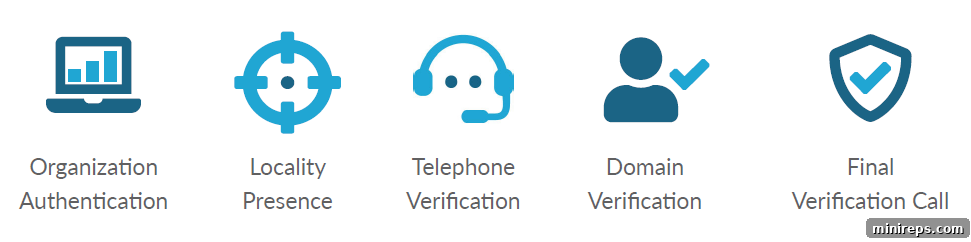
OV certificates require a more rigorous vetting process than DV, aimed at verifying the legitimacy of your organization as a legal entity. This involves the Certificate Authority performing checks on your business registration, physical address, and operational status. While more involved than DV, OV certificates offer a valuable middle ground solution. They are generally less expensive than Extended Validation (EV) options but provide significantly more trust indications than DV, as they include verified organizational details within the certificate itself, visible to users.
Typically, there are five key requirements involved in obtaining an OV certificate:
3. Extended Validation (EV) SSL
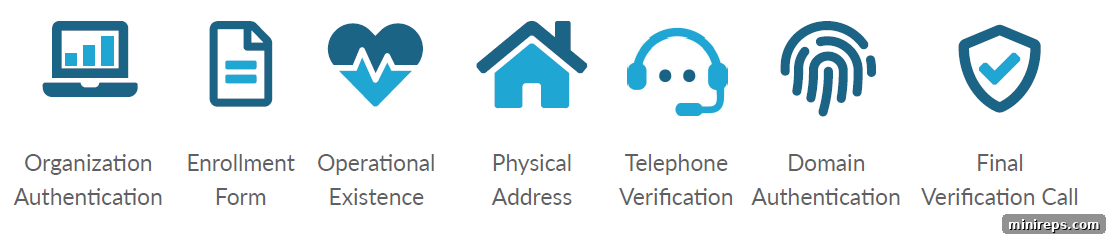
EV SSL certificates represent the most premium and robust type of validation method available. They involve the most thorough and stringent vetting process, verifying the organization’s identity, legal, and operational existence in exquisite detail. EV certificates are trusted by the world’s leading websites and financial institutions due to their unparalleled level of assurance. These certificates are primarily identifiable by the distinctive green address bar (or prominent display of the company name) in web browsers, which is universally recognized as the highest symbol of trust on the web, significantly enhancing user confidence.
There are typically seven comprehensive requirements involved in obtaining an EV certificate, which can take several business days to complete due to the depth of verification:
DV vs. EV SSL: Why Business Validation Matters
While Domain Validation (DV) certificates effectively satisfy the basic browser requirements for HTTPS encryption, they are not a universal solution suitable for every website. With the widespread availability of free and low-cost DV solutions, particularly from services like Let’s Encrypt, an unfortunate side effect has emerged: DV certificates are now commonly associated with phishing attacks and fraudulent websites. Cybercriminals often use free DV certificates to make their malicious sites appear legitimate, deceiving unsuspecting users.
This reality underscores why businesses, especially those handling sensitive customer data or financial transactions, need to move beyond basic DV. Opting for certificates with business-level validation, such as Organization Validation (OV) and particularly Extended Validation (EV), provides a crucial layer of defense. These certificates require a verified legal identity, which significantly mitigates the dangers posed by fraudulent sites. Business-validated certificates offer:
- Increased Site Transactions: Higher trust leads to higher conversion rates, as customers feel secure in making purchases or sharing information.
- Regulatory Compliance: Essential for adhering to industry standards and regulations (e.g., PCI DSS, HIPAA) that mandate robust identity verification.
- Enhanced Phishing Combat: Makes it far more difficult for phishers to impersonate your legitimate business, protecting your customers and your brand.
- Demonstrate Customer Care: Visibly shows your commitment to protecting customer data, fostering loyalty and a strong brand image.
- Stronger Trust Signals: Distinct visual cues like the green address bar (EV) provide undeniable proof of your business’s legitimate identity, building unparalleled confidence.
The Unmatched Benefits of Extended Validation (EV) SSL
EV certificates offer the pinnacle of online security and trust, profoundly reassuring customers about your website’s authenticity and integrity. The distinctive green address bar or prominent display of your company’s name serves as an immediate, universally recognized visual cue that instills unparalleled confidence in visitors. This powerful indicator encourages users to feel safe and proceed with interactions, transactions, and information sharing on your website, knowing they are dealing with a verified, legitimate entity.
The rigorous, enhanced validation process integral to EV certificates provides an exceptional level of security against sophisticated cyber threats such as phishing and other criminal attacks involving fake impersonation sites. It makes it exceedingly difficult for fraudsters to mimic your website, offering robust protection for both your business and your customers.
Furthermore, many critical industry standards and governmental regulations, including PCI-DSS (Payment Card Industry Data Security Standard), HIPAA (Health Insurance Portability and Accountability Act), HITECH, SOC2, and GDPR (General Data Protection Regulation), explicitly require online businesses to implement stringent measures to combat the theft of confidential information online. EV SSL is often considered the most reliable and comprehensive protection an SSL certificate can offer, helping businesses achieve and maintain compliance with these demanding mandates.
“EV certificates maximize site transactions, including an increase in sales, web form completions, new user sign-ups, and engagements.”
Capital Investment in Trust
Investing in an EV certificate is a strategic capital investment in your web security infrastructure that directly translates to improved customer confidence and trust. Research indicates a significant positive impact:
57.8% uplift in customers feeling a site is trustworthy when using EV.
Superior Risk Management
Implementing EV certificates significantly enhances your organization’s risk management strategy by reducing both the impact and the probability of occurrence of security breaches. This proactive approach safeguards your assets and reputation:
67.9% uplift in customers feeling safe doing business online when using EV.
Prepare Your Digital Assets for the Future
In the digital age, every website, regardless of its size or purpose, requires an SSL certificate. It is a fundamental component of a holistic cybersecurity strategy designed to protect your brand, intellectual property, and entire domain portfolio. Relying solely on free or basic cost-effective solutions may satisfy the bare minimum requirements, but it begs a crucial question: Do you aspire for your company to merely meet basic industry standards, or do you want to rise above them and stand for more?
Choosing a robust SSL solution means committing to more security for your website, cultivating more confidence in your brand’s integrity, and establishing a deeper, more profound level of trust with your valued customers. By proactively implementing comprehensive SSL encryption, you not only secure your most important digital assets for the future but also significantly further your business objectives in an increasingly competitive and security-conscious online world.
Get The Perfect SSL Certificate For Your Business Today!