


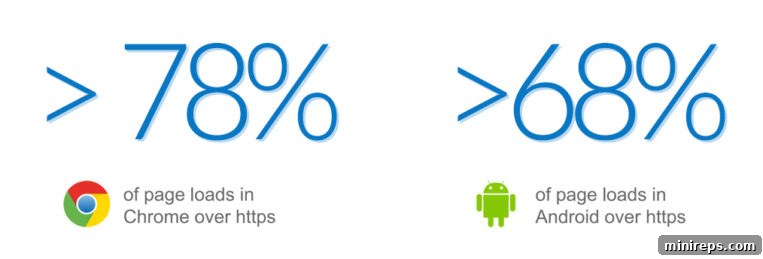
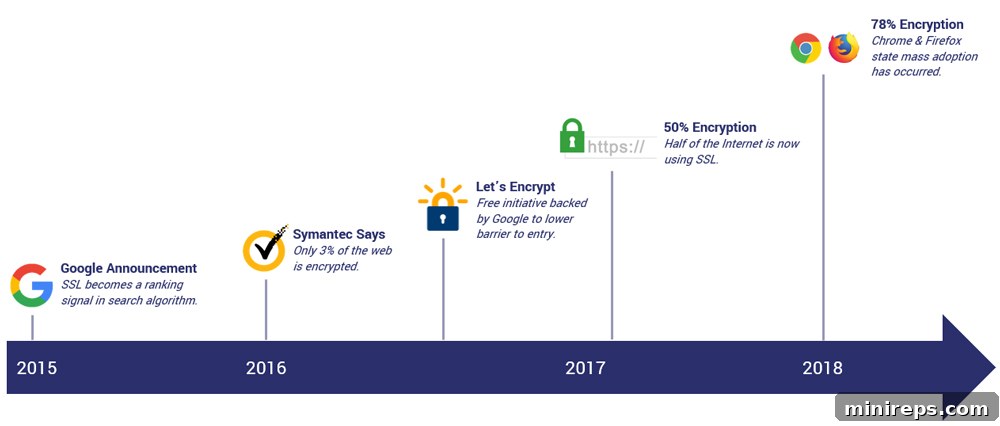
In today’s interconnected digital landscape, encountering a website operating over HTTP has become an increasingly rare and often alarming occurrence. Such instances immediately raise questions about a site’s integrity, its commitment to user privacy, and the overall professionalism of the brand behind it. This critical shift in web standards isn’t accidental; it’s largely driven by major players like Google, which began actively penalizing HTTP sites in search rankings and browser warnings. As a direct result, we’ve witnessed a monumental surge in SSL certificate adoption. Statistics paint a clear picture: over 78% of all page loads in Google Chrome, and more than 68% of page loads on Android devices, now proudly utilize HTTPS, demonstrating a widespread commitment to secure web browsing.
The transition from HTTP to HTTPS isn’t merely a technical upgrade; it represents a fundamental change in how we perceive and interact with websites. For businesses, it’s no longer an optional security measure but a core requirement for building trust, ensuring data protection, and maintaining a competitive edge in search engine results. This comprehensive guide will explore the profound importance of SSL certificates, their impact on user experience and SEO, and how robust solutions like those offered by Sectigo can elevate your website’s security posture.
HTTP vs. HTTPS: Understanding the Core Difference in Website Security
For years, the distinction between HTTP (Hypertext Transfer Protocol) and HTTPS (Hypertext Transfer Protocol Secure) was largely unknown to the average internet user. While visual indicators of a secure connection, such as a padlock icon in the address bar, were present, many users didn’t pay them much attention. However, this era of user ignorance is firmly in the past. Google, as a leading advocate for a safer web, has taken decisive steps to educate users and enforce security best practices across the internet.
The primary difference lies in the implementation of an SSL/TLS certificate. HTTP communicates information in plain text, making it vulnerable to interception and tampering by malicious actors. This means any data exchanged – login credentials, personal information, credit card details – could be read and exploited if intercepted. HTTPS, on the other hand, employs encryption through SSL (Secure Sockets Layer) or its successor, TLS (Transport Layer Security) certificates. When a website uses HTTPS, a secure, encrypted connection is established between the user’s browser and the web server. This encryption ensures three critical aspects of online security:
- Encryption: All data transmitted between the browser and the server is encrypted, making it unreadable to anyone attempting to intercept it. This protects sensitive information from eavesdropping.
- Data Integrity: HTTPS guarantees that the data sent and received has not been tampered with or altered during transit. Any modification would be detected, preventing malicious injection of content or changes to transactions.
- Authentication: SSL certificates verify the identity of the website, assuring users that they are connecting to the legitimate server and not a fraudulent replica. This builds crucial trust and prevents phishing attacks.
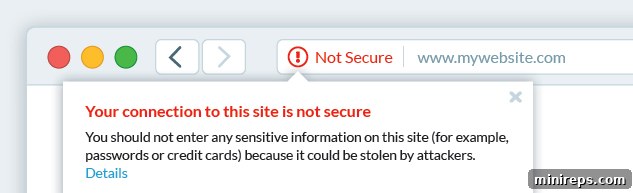
The tangible impact of this distinction is now evident to everyone. Browsers like Google Chrome prominently display a “Not Secure” warning on all HTTP websites. This clear, unmistakable alert actively deters potential visitors, signalling a lack of security and prompting them to question the trustworthiness of the site. For businesses, this warning can be devastating, leading to immediate drops in traffic, decreased engagement, and a significant blow to brand reputation.
Curious about the deeper technical distinctions between HTTP and HTTPS? 101domain provides comprehensive answers.
Google’s Mandate: Why HTTPS is Non-Negotiable for SEO and User Trust
With Google Chrome holding over 50% of the global browser market share, Google effectively dictates the operational standards of the internet. If you aim for your website to reach the broadest possible audience, adhering to Google’s rules is paramount. Driven by a vision of “HTTPS everywhere,” Google has systematically integrated website security into its core algorithms and user experience initiatives.
Initially, Google introduced HTTPS as a lightweight ranking signal. While not the most dominant factor, it provided a clear incentive for website owners to transition. This signal has steadily gained importance, reflecting Google’s unwavering commitment to user safety and privacy. As search algorithms evolve, secure websites are increasingly favored, leading to better search engine rankings, increased organic traffic, and enhanced visibility. This directly translates into a competitive advantage for businesses that prioritize security.
Beyond direct ranking signals, Google’s emphasis on HTTPS aligns perfectly with its broader E-A-T (Expertise, Authoritativeness, Trustworthiness) guidelines. A secure website demonstrates trustworthiness, a fundamental component of online credibility. Websites that fail to implement SSL not only risk lower rankings but also suffer from poor user experience signals such as high bounce rates and short session durations, which Google interprets negatively.
The Detrimental Impact of “Not Secure” Warnings on Your Business
The “Not Secure” browser warning is more than just a minor inconvenience; it’s a direct, public broadcast of distrust. Imagine someone standing outside the front doors of your physical business, holding a large sign that explicitly tells potential customers not to enter. This is precisely the digital equivalent, and its ramifications for your online presence can be severe.
When a user sees this warning, several negative outcomes are almost guaranteed:
- Loss of Trust: The warning immediately erodes confidence. Users will question the safety of providing any personal information, making purchases, or even browsing your content.
- Increased Bounce Rates: Many users will simply hit the back button rather than proceeding to a site flagged as “Not Secure.” This leads to missed opportunities and a higher bounce rate, negatively impacting your SEO.
- Reduced Conversions: For e-commerce sites, a “Not Secure” warning is a death knell for sales. Customers are highly unlikely to complete transactions or share payment details on a site perceived as insecure.
- Brand Damage: A reputation for insecurity can be incredibly difficult to overcome. It suggests a lack of professionalism and care for customer data, which can tarnish your brand image for years to come.
The good news is that this critical issue has a straightforward and accessible solution, largely thanks to Google’s initiatives to make basic encryption available to all.
Securing Your Website: Let’s Encrypt vs. Commercial SSL Certificates
Understanding the critical need for HTTPS, Google has actively supported initiatives to democratize website security. Let’s Encrypt stands out as a pioneering, free-source SSL solution that provides the bare minimum required to prevent those damaging “Not Secure” browser warnings from displaying on your site. This allows any website owner to implement basic encryption, ensuring that data is transferred securely and meeting Google’s fundamental requirement for HTTPS. Let’s Encrypt certificates are fully automated, making them an incredibly easy and cost-effective entry point for website security.
While Let’s Encrypt offers an excellent foundational layer of security, many businesses require more robust solutions to demonstrate a higher level of trustworthiness and compliance. For websites handling sensitive customer data, e-commerce transactions, or those aiming to project a strong, professional image, upgrading to a commercial SSL certificate offers significant advantages. These “more powerful solutions” provide not just encryption, but also visual security indicators and varying levels of validation that significantly enhance customer confidence.
Commercial SSL certificates come in different types, each offering distinct levels of validation and visual trust cues:
- Domain Validated (DV) SSL: This is the most basic commercial SSL, similar in functionality to Let’s Encrypt. It quickly verifies domain ownership, providing essential encryption and removing “Not Secure” warnings. Ideal for blogs, personal websites, and small businesses.
- Organization Validated (OV) SSL: OV certificates require more rigorous vetting, verifying not only domain ownership but also the legitimate existence of the organization. This provides a higher level of assurance to visitors, as it confirms that the website is operated by a verified legal entity.
- Extended Validation (EV) SSL: The highest level of SSL validation, EV certificates involve a thorough and standardized verification process of the applicant’s identity and legitimacy. When an EV SSL is active, the browser’s address bar often displays the organization’s name prominently, sometimes in green, providing an immediate and unmistakable visual cue of maximum trust and authenticity. This is crucial for large enterprises, e-commerce platforms, and financial institutions where customer trust is paramount.
By upgrading to one of these commercial SSL solutions, you not only secure your website but also visibly commit to higher security standards, reinforcing your brand’s integrity and fostering deeper trust with your audience.
Sectigo: A Global Leader in Digital Security, Formerly Comodo SSL
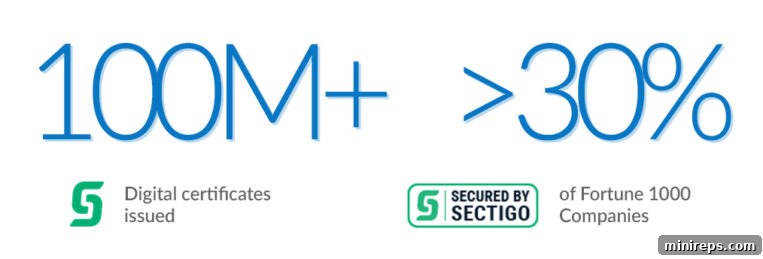
We are incredibly proud to announce and celebrate our robust partnership with Sectigo, a name that resonates with trust and innovation in the digital security landscape. Formerly known as Comodo SSL, Sectigo has evolved into the largest commercial certificate authority (CA) in the world, a testament to its unparalleled scale and reliability. With an impressive track record of issuing over 100 million digital certificates globally, Sectigo’s reach and impact on internet security are undeniable.
Sectigo, under its former identity Comodo CA, boasts over two decades of invaluable experience, having safeguarded the online presence of countless organizations, including many Fortune 1000 companies. This extensive history is not just about longevity; it signifies a deep understanding of evolving cyber threats and a consistent ability to deliver cutting-edge security solutions to diverse enterprise needs. Their expertise spans a wide array of digital certificates, including SSL/TLS, code signing, and email security, ensuring comprehensive protection for all aspects of online operations.
Our collaboration with Sectigo represents a powerful synergy. By combining their industry-leading expertise in digital certificates and advanced security technologies with our own deep understanding of domain names and web infrastructure, we’ve crafted the perfect formula to build and sustain trust online. This partnership empowers us to provide our customers with a complete suite of security solutions that not only eliminate “Not Secure” warnings but also actively contribute to increasing website conversions, fostering customer loyalty, and solidifying brand reputation.
Choosing the Right SSL Certificate for Your Website’s Needs
Selecting the optimal SSL certificate for your website is a critical decision that should align with your business goals, the type of data you handle, and the level of trust you wish to convey to your visitors. While basic encryption is a given with any SSL, the additional features and validation levels offered by commercial certificates can make a significant difference in your online credibility and success.
Consider the following factors when making your choice:
- Website Type: For a personal blog or informational site, a Domain Validated (DV) SSL or Let’s Encrypt might suffice. However, for a small business website, an Organization Validated (OV) SSL offers enhanced credibility. E-commerce stores, financial institutions, and large corporations should strongly consider Extended Validation (EV) SSL for maximum customer trust and visible assurance.
- Data Sensitivity: If your website processes sensitive information such as payment details, personal identifiable information (PII), or medical records, higher validation levels (OV or EV) are indispensable. These certificates offer stronger guarantees of identity, reducing the risk of fraud and enhancing regulatory compliance.
- Visual Trust Indicators: Do you want your customers to instantly recognize your site as highly secure? EV SSL certificates feature the distinctive green address bar or company name in the browser, providing an undeniable visual cue of authenticity and trust that significantly boosts confidence and conversion rates.
- Warranty and Support: Commercial SSL certificates often come with substantial warranties that protect end-users in case of a certificate breach. They also typically include dedicated customer support, which can be invaluable during installation or troubleshooting.
- Site Seals: Many commercial SSL providers offer dynamic site seals or trust logos that you can display on your website. These recognizable symbols further assure visitors that your site is secured by a reputable certificate authority.
Investing in the right SSL certificate is more than just a technical requirement; it’s a strategic business decision that safeguards your data, protects your customers, enhances your SEO, and strengthens your brand’s reputation in an increasingly security-conscious online world.
Seamless Integration and Sustained Security
Implementing an SSL certificate might seem like a complex technical task, but with expert guidance and robust solutions, the process is remarkably straightforward. Most hosting providers offer simple integration tools, and reputable registrars like 101domain provide comprehensive support to ensure a seamless transition to HTTPS. The installation typically involves generating a Certificate Signing Request (CSR), validating your domain or organization, and then installing the issued certificate on your web server.
Once activated, your SSL certificate works silently in the background, encrypting all traffic and protecting your users. However, security is an ongoing commitment, not a one-time setup. It’s crucial to ensure your SSL certificate is renewed before it expires to avoid any disruptions in service or the re-appearance of “Not Secure” warnings. Regular audits of your website’s security configuration and staying updated with the latest security protocols are also part of maintaining a truly secure online presence.
By partnering with a trusted provider that offers leading solutions from Certificate Authorities like Sectigo, you ensure that your website benefits from continuous, high-grade protection, allowing you to focus on your core business with peace of mind.
Don’t leave your website’s security, search rankings, or customer trust to chance. Explore our range of powerful SSL certificates today and secure your online future. Better safe than sorry is not just a saying; it’s a foundational principle for success on the modern web.