


Navigating the Digital Minefield: Understanding Homograph Cybersquatting and UDRP
In the intricate world of online brand protection, UDRP complaints often present complex challenges for brand owners. While many cases demand meticulous legal navigation, some, like the one recently reported by the ADR Forum, serve as stark, clear-cut examples of egregious infringement. This particular proceeding stands out not only for the undeniable nature of the violation but also because it highlights a sophisticated and increasingly prevalent form of digital brand impersonation: homograph cybersquatting. For businesses and brand custodians, understanding such cases is crucial for developing robust strategies to safeguard their invaluable digital assets in an ever-evolving threat landscape. This article delves into the specifics of this compelling case, offering vital insights into homograph attacks and the power of the UDRP framework.
The Bloomberg Case: Unmasking a Homograph Cybersquatting Attempt
The digital realm is a constant battleground for brand identity, and the case involving Bloomberg Finance L.P. vividly illustrates the cunning tactics employed by cybersquatters. Bloomberg Finance L.P., a global financial powerhouse with an instantly recognizable brand, initiated a complaint with the Forum. Their objective was clear: to secure the transfer of the disputed domain name, XN–BLOOMBEG-M0D.COM, which was a blatant and deceptive imitation of their esteemed BLOOMBERG.COM domain.
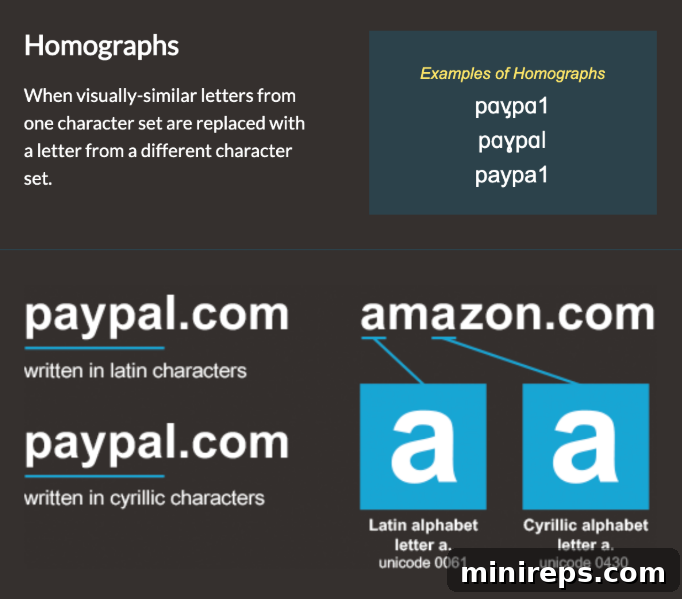
At the heart of this dispute was a “homograph” domain name. For those unfamiliar, a homograph in the context of domain names refers to a URL that employs visually similar characters from different character sets (like Cyrillic, Greek, or Latin extended) to mimic a legitimate domain. The intent is to create a URL that looks almost identical to a well-known brand’s address, fooling unsuspecting internet users into thinking they are visiting the authentic site. In this particular instance, the only discernible difference between the infringing domain and Bloomberg’s legitimate mark was a subtly altered “r” character, replaced by its homographic counterpart (ɾ). This minute alteration renders the domain confusingly similar, if not practically indistinguishable, to the untrained eye. This level of deception underscores the insidious nature of homograph attacks and the urgent need for heightened vigilance among brand owners.
The subtle change is evident when juxtaposed:
bloombeɾg.com vs bloomberg.com
Understanding Homograph Attacks: A Deeper Dive
Homograph attacks represent a sophisticated evolution of traditional cybersquatting. Attackers leverage the visual similarities between characters from different international character sets (Unicode) to create domain names that are virtually indistinguishable from legitimate brand websites. This technique is often used in phishing scams, malware distribution, or simply to siphon off traffic intended for the genuine brand, causing significant reputational and financial damage. The deceptive nature of homographs makes them particularly dangerous, as the average user’s eye struggles to detect the subtle differences.
The Cyrillic alphabet is a primary tool for homograph domain spoofing attacks, offering a wide array of characters that bear an uncanny resemblance to their Latin counterparts. Common examples include Cyrillic ‘а’ looking like Latin ‘a’, ‘с’ like ‘c’, ‘е’ like ‘e’, ‘о’ like ‘o’, ‘р’ like ‘p’, ‘х’ like ‘x’, and ‘у’ like ‘y’. These seemingly minor character substitutions can transform a trusted URL into a malicious gateway, leading users to fraudulent sites without their knowledge. The underlying technology enabling these domains is called Internationalized Domain Names (IDNs), which allow domain names to be registered in non-Latin scripts. While IDNs were created to make the internet more accessible globally, they have unfortunately become a powerful weapon in the hands of malicious actors.
The danger of homograph attacks extends beyond simple typosquatting, where users mistakenly type a slightly different domain name. Homographs are intentionally crafted to appear identical, exploiting how our brains process visual information. This makes them incredibly effective for spear-phishing campaigns targeting specific individuals or organizations, as well as broader campaigns designed to capture a large volume of unsuspecting users.
The UDRP Complaint: Proving Digital Infringement
The Uniform Domain Name Dispute Resolution Policy (UDRP) provides a streamlined, administrative process for resolving disputes concerning abusive domain name registrations. For a complainant to succeed in a UDRP proceeding, they must establish three critical elements, as mandated by ICANN (Internet Corporation for Assigned Names and Numbers) policy. In the Bloomberg case, each of these elements was demonstrably met, leading to a clear victory for the brand owner.
-
Complainant must prove the domain name is identical or confusingly similar to a trademark or service mark in which the Complainant has rights.
Bloomberg Finance L.P. held unquestionable rights to its BLOOMBERG and BLOOMBERG.COM trademarks, registered as early as 1987. The disputed domain name, XN–BLOOMBEG-M0D.COM (which translates to bloombeɾg.com), was a Unicode homograph version of these established marks. The intentional inclusion of the generic top-level domain (gTLD) “.com” further intensified the confusing similarity, failing to distinguish the infringing domain from Bloomberg’s revered brand. The panel recognized that the visual and phonetic resemblance, despite the subtle character substitution, was overwhelmingly designed to confuse internet users and mislead them into believing an association with the Complainant. -
Complainant must prove the Respondent has no rights or legitimate interest in respect of the domain name.
This element is often the easiest to establish in cases of clear cybersquatting, especially when the respondent fails to engage. The disputed domain name, registered in 2015, had no evidence of legitimate use. It was merely parked or undeveloped, clearly not serving as a bona fide offering of goods and services, nor was it used for legitimate noncommercial fair use. Furthermore, Bloomberg Finance L.P. had never authorized the Respondent to use its mark in any capacity. Crucially, the Respondent’s failure to submit a response to the UDRP complaint left no room for doubt or any alternative explanation regarding their potential rights or legitimate interests. Without a response, there was no evidence to suggest that the Respondent was commonly known by the domain name or had any justifiable claim to it. This absence of a defense strongly supported Bloomberg’s assertion of no legitimate interest. -
Complainant must prove the domain name was registered and is being used in bad faith.
Bad faith is often inferred from a combination of circumstances. Homographs are inherently a form of advanced typosquatting designed to capitalize on internet users’ potential misdirection or inability to discern subtle character differences. The very nature of the homograph domain indicated a deliberate attempt to benefit from the reputation and traffic associated with Bloomberg’s well-known mark. The fact that the Complainant’s mark is globally recognized, combined with the domain name’s striking resemblance, served as compelling evidence of both registration and use in bad faith. The Respondent’s choice of a homographic imitation strongly suggested an intent to create confusion and exploit Bloomberg’s goodwill. The absence of any response from the Respondent further cemented this theory of bad faith, leaving the panel to conclude that the registration was purely opportunistic and abusive. They intended to divert traffic and potentially engage in illicit activities under the guise of the Bloomberg brand.
The Finding: A Decisive Transfer of the Homograph Domain
After a thorough review of the evidence and considering the clear framework of the UDRP policy, the panelists arrived at a unanimous decision. They concluded that the homograph domain, XN–BLOOMBEG-M0D.COM, indeed violated ICANN Policy and constituted a direct infringement upon the established trademark rights of Bloomberg Finance L.P. The Respondent’s complete failure to submit a response was a pivotal factor, simplifying the proceeding and eliminating any potential counterarguments. This lack of engagement served as an implicit admission of guilt and further strengthened the Complainant’s position.
This case serves as a powerful reminder of two crucial aspects of brand protection: the insidious nature of homograph cybersquatting and the importance of swift, decisive action. As guardians of digital assets, we consistently advise our clients on the paramount importance of not only responding to UDRP complaints promptly if they are respondents but also initiating claims without delay when their intellectual property is threatened. Proactive monitoring and timely enforcement are indispensable for securing ownership and control over your digital identity.
Ultimately, all three elements required under the UDRP were unequivocally met by Bloomberg Finance L.P. Consequently, the Panel ruled that the disputed domain name must be transferred from the Respondent to the Complainant. This outcome is a significant victory, reinforcing the efficacy of the UDRP in combating increasingly sophisticated forms of cybersquatting and safeguarding brand integrity in the digital age. It underscores the principle that domain names must not be used to deceive or exploit established brand equity.
Protect Your Brand in the Digital Landscape
In an era where digital presence is synonymous with business reputation, safeguarding your domain names and intellectual property is more critical than ever. The rise of sophisticated threats like homograph cybersquatting demands a proactive and comprehensive approach to brand protection. Don’t wait for infringement to occur; arm yourself with the right services and expertise to protect your digital assets effectively.
Comprehensive Domain Name Services
Leverage our global reach and extensive capabilities to gain unparalleled insights and support for your domain name portfolio. We empower you to make informed decisions, ensuring your brand is always securely managed and protected across all digital frontiers.
Advanced Monitoring & Enforcement
Our cutting-edge monitoring solutions and dedicated team of expert analysts work tirelessly, 24/7, to detect potential infringements. Should a threat emerge, we provide in-house solutions and strategic enforcement actions to swiftly address and resolve the issue, protecting your brand’s integrity.
Security & Technology Partnerships
As a leading provider of domain name and web technology solutions, security is at our core. We offer a comprehensive suite of complementary services and collaborate with best-in-class technology partners to provide you with robust security measures when you need them most, ensuring peace of mind for your digital presence.