


In today’s interconnected digital landscape, a company’s domain names are far more than just web addresses; they are critical digital assets, foundational to its online identity, brand reputation, and business continuity. Many enterprise customers frequently approach us with a fundamental question: “Who within our organization should bear the responsibility for managing our domain portfolio?” This isn’t merely a logistical query; it sparks a long-standing debate that touches upon departmental roles, technical expertise, and strategic oversight.
Should this crucial task fall under the purview of the Marketing department, given their direct involvement with website content and online brand presence? Or does it align more closely with the technical expertise typically found within Development (Dev) or Information Technology (IT) teams, who possess the necessary understanding of web infrastructure and network protocols? Perhaps, some might suggest, it’s just another administrative chore to be handled by the general Admin team, alongside other miscellaneous tasks.
While the definitive answer to who precisely shoulders the responsibility for domain administration may indeed vary depending on an organization’s unique structure, size, and strategic priorities, there is one non-negotiable principle we consistently advocate for all our clients: the strategic management of your domain names must always remain an internal function. Delegating this core responsibility to external parties, or failing to establish robust internal processes, introduces significant risks that can jeopardize your entire digital operation. Effective domain management is an investment in your company’s future, safeguarding its online presence and intellectual property against potential threats and disruptions.
The Critical Importance of Internal Domain Management: A Cautionary Scenario
To truly grasp the gravity of external domain management, consider a common, yet potentially catastrophic, scenario that many businesses unwittingly walk into:
Imagine your enterprise decides to engage external web developers or a freelance tech consultant to establish your online presence. This comprehensive service typically includes registering your crucial domain names, configuring complex DNS (Domain Name System) settings, and ensuring your website and associated services are fully operational. At first glance, this seems like an incredibly efficient and hands-off solution, particularly for businesses without dedicated internal resources for such specialized tasks. The “tech guy” handles everything, freeing up your team to focus on core business activities. Awesome, right?
Yes, it’s efficient, until suddenly, your trusted external domain administrator goes completely quiet. Perhaps he experiences a life-altering event – a spontaneous decision to abandon technology and embark on a global journey of self-discovery, or a less dramatic but equally impactful personal crisis. The specific reason matters less than the alarming consequence: you’ve lost contact with the individual who holds the keys to your entire digital kingdom.
In such a situation, time is of the essence. You urgently need to log in to your registrar account, update contact information, renew expiring domains, or modify critical DNS records. But without direct access, you face a terrifying realization: you don’t know where your domains are registered, nor do you have the necessary login credentials. You might not even be certain if you can truly trust your registrar, or if the external party used their own accounts for registration.
The nightmare doesn’t end there. You might only discover this critical lapse when it’s too late – your domain has already expired. Worse still, a malicious actor or a “domain squatter” swoops in, registers your lapsed domain, and holds it hostage, demanding a substantial ransom for its return. This can lead to your website going offline, email services ceasing, significant financial losses due to lost business and recovery costs, severe damage to your brand reputation, and potential legal disputes over intellectual property. The point is unequivocally clear: entrusting sole domain administrative access to a single individual outside your direct organizational control is an unacceptable business risk. Your enterprise’s digital resilience hinges on internal ownership and control of these vital assets.
Four Pillars of Strategic Domain Administration for Your Enterprise
Effective domain administration demands meticulous attention to detail and a proactive approach. While a domain administrator might typically spend an average of 250 hours annually on domain name management, implementing the following best practices can significantly streamline processes, reduce administrative burden, mitigate risks, and help your organization rein in unnecessary costs. These strategies are designed to enhance security, ensure legal ownership, and optimize the efficiency of your domain portfolio management.
1. Always Designate Your Company Name as the Legal Owner in the Organization Field
When you undertake the registration of domain names, you are legally mandated by ICANN (the Internet Corporation for Assigned Names and Numbers) to provide accurate registrant contact information, commonly referred to as WHOIS contact details.
Understanding WHOIS Contact Information:
WHOIS is a public database that allows users to retrieve information about domain name registration records. This data typically includes administrative contact details, billing contact information, and technical contact specifics. All results displayed in a WHOIS lookup are retrieved from registries and registrars in real-time. While some information is publicly accessible, other sensitive data might be shielded, depending on your chosen domain privacy protection settings and your registrar’s adherence to data protection regulations like GDPR policy.
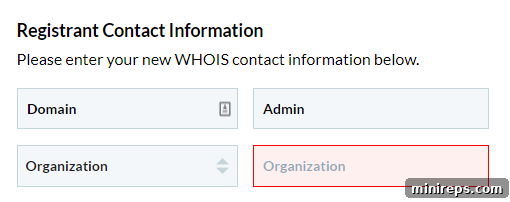
A crucial detail often overlooked by many is the significance of the “Organization” field within the registrant contact information. When this field contains a company name, that entity is recognized as the legal owner of the domain. The individual’s first and last name, while necessary for contact, holds secondary legal importance. This is a critical distinction because employees, including domain administrators, naturally move on from companies over time. If a domain is registered under an individual’s personal name and the “Organization” field is left blank, that individual effectively becomes the legal owner of a corporate asset.
This oversight is a common pitfall that can lead to significant legal and operational complications for businesses. Should that employee depart, the company may find itself in a precarious position, lacking clear legal ownership or control over its vital domain names. This situation can necessitate costly and time-consuming legal battles to reclaim what should inherently be a corporate asset. Therefore, our unwavering advice is to always, without exception, populate the “Organization” field with your official company name, ensuring that your domain names are legally recognized as corporate property from day one.
2. Implement a Team Distribution Email Address for All Domain Communications
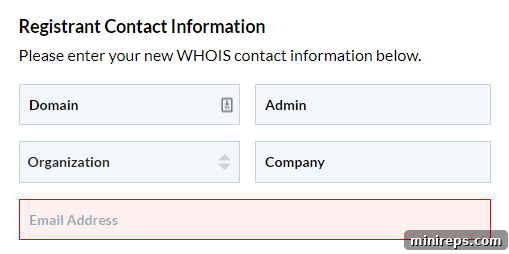
In the realm of domain administration, a cardinal rule is to never, under any circumstances, assign a single individual’s email address as the primary contact for domain management. This creates a critical single point of failure and introduces unnecessary risk. Instead, establish a dedicated team distribution email address, such as `[email protected]`, which is exclusively used for all domain-related correspondence and notifications.
This distribution list should include multiple key personnel within your organization – individuals from IT, marketing, legal, and even finance – who require oversight or direct involvement in domain matters. By doing so, you ensure that critical email notifications, such as renewal reminders, security alerts, and transfer requests, are seen by many “eyes.” This multi-person approach provides essential redundancy and continuity. Should your primary domain administrator leave the company unexpectedly, multiple employees will still have immediate access to vital email communications and account information, preventing disruptions and ensuring timely action. This also significantly enhances security, as no single person holds sole access to critical notifications.
Furthermore, to facilitate efficient collaborative management while maintaining security, many reputable registrars, including 101domain, offer advanced user management features. These platforms allow account owners to create multiple user profiles under a main account, each with customized access permissions. This means your lead domain administrator, your technical support specialist, and your finance guru can all have their own individual logins. Each user can then access a personalized dashboard tailored to the specific features and functions they require, without exposure to unnecessary tools or sensitive information. This granular control not only fosters greater collaboration and shared responsibility but also significantly bolsters the overall security posture of your domain portfolio by adhering to the principle of least privilege.
3. Proactive Strategies to Avoid Unnecessary Domain-Related Charges
Minimizing operational costs is a priority for every enterprise, and domain management is no exception. While it sounds straightforward, the first step to avoiding unforeseen charges is a thorough understanding of the various fees a domain administrator might potentially incur. Proactive awareness and careful planning are key to keeping your domain management budget in check.
- Redemption Fee: The Cost of Lapsed Domains
If a domain name is allowed to expire, most registrars provide a grace period during which it can be renewed without incurring additional penalties. However, if this grace period is missed, the domain enters a “redemption period.” During this phase, which typically lasts around 30 days, the domain can still be recovered, but only by paying a substantial redemption fee. This fee is a standard industry practice across nearly all registrars and registries, and it is invariably steep, often many times the cost of a regular renewal. Your domain administrator should implement robust internal reminders and auto-renewal features to avoid ever reaching the redemption stage, as these charges can be a significant and avoidable expense. Timely renewals are paramount for business continuity and cost savings. - Name Server Change Fees: A Less Common but Costly Surprise
When you initially register a domain name, your registrar will typically inquire about where you intend to manage your nameservers. By default, most users manage their nameservers and DNS records directly with the registrar. However, if you choose to host your nameservers and DNS records with an external provider (e.g., for advanced DNS features or integration with other services), it’s crucial to make this selection during the initial checkout process. Some domain registries, particularly for certain country-code Top-Level Domains (ccTLDs) or specialized domains, impose a fee for subsequent nameserver changes. To circumvent these charges, your domain administrator must thoroughly familiarize themselves with both your chosen domain name registrar’s policies and the specific domain registry’s rules *before* completing the registration. Planning your DNS strategy upfront can prevent unexpected costs down the line. - Ownership Change Fees: Navigating Transfers and Mergers
Similar to nameserver changes, some domain registries also levy a fee for formal changes in domain ownership. While this particular charge may be unavoidable if your organization is actively involved in buying or selling domain names, or undergoing corporate restructuring, mergers, or acquisitions, it reinforces the crucial advice discussed earlier: always list your company name in the “Organization” field during registration. While individual employees and domain administrators may change roles or leave the company, the legal entity of the company should consistently remain the permanent and undisputed owner. This practice minimizes legal complexities and potential fees associated with proving ownership during internal transitions or external disputes, ensuring that your valuable digital assets are securely tied to your business, not an individual.
4. Embrace Multi-Year Renewals for Strategic Advantage and Efficiency
Among the myriad tasks a domain administrator faces, managing domain renewals often tops the list for its time-consuming nature and critical importance. Proactive and strategic renewal management is fundamental to preventing service disruptions and safeguarding your online presence. Our strongest recommendation is to leverage multi-year renewals, especially for your mission-critical domain names.
The vast majority of domain names can be renewed for terms extending up to 10 years. Opting for these longer renewal periods offers a multitude of strategic benefits:
- Significant Time Savings: By renewing for multiple years, you drastically reduce the frequency of renewal cycles, freeing up administrative time that would otherwise be spent tracking individual expiry dates, processing annual payments, and responding to repeated notifications. This allows your team to focus on more strategic initiatives.
- Cost Efficiency: While not always a direct discount, multi-year renewals often lock in current pricing and protect against potential future price increases from registrars or registries. More importantly, they eliminate the hidden costs associated with last-minute scrambles, potential redemption fees, and the opportunity cost of business disruption.
- Enhanced Business Continuity: Long-term renewals provide an invaluable layer of security against accidental lapses. The longer a domain is secured, the lower the risk of it expiring unnoticed, which could lead to website downtime, email outages, and substantial reputational damage. It ensures uninterrupted online operations for your core services.
- Streamlined Administration: Managing a large domain portfolio can be complex. Multi-year renewals simplify this by standardizing expiry dates or extending them far into the future, making portfolio oversight much cleaner and less prone to errors.
Ultimately, time is money in enterprise operations. The less cognitive load and administrative effort required to manage domain renewals, the more resources your team can allocate to value-generating activities. To further enhance this efficiency and reduce the risk of any domain slipping through the cracks, we strongly advise consolidating your entire domain portfolio with a single, reputable domain provider. This centralizes management, streamlines billing, and simplifies support. Coupled with enabling auto-renew functionality for all domains, this strategy provides a robust framework that ensures consistent online presence, protects your brand, and optimizes your domain management efforts for the long term.
Comprehensive Domain Name Services
We are globally recognized for our extensive reach and advanced capabilities. Access the specialized services and expert support you need to make informed decisions and ensure your brand’s continuous protection across the digital world.
Advanced Monitoring & Enforcement
Our sophisticated monitoring solutions, backed by a team of dedicated analysts, operate 24/7 to safeguard your digital assets. Should any threat arise, we offer in-house solutions to swiftly address and resolve issues, protecting your brand integrity.
Our Trusted Security & Technology Partners
As a leading provider focused on domain name and web technology security, we offer a broad spectrum of complementary services and collaborate with best-in-class partners, ensuring you have access to robust solutions whenever your business requires them.