


Navigating UDRP Disputes: Understanding and Avoiding Reverse Domain Name Hijacking (RDNH)
In the complex landscape of domain name disputes, the Uniform Domain Name Dispute Resolution Policy (UDRP) serves as a critical mechanism for trademark holders to protect their intellectual property. However, not every UDRP complaint results in a successful domain name transfer. In fact, many UDRPs fail, often leading to a denial of the transfer request and sometimes even a severe finding against the Complainant: Reverse Domain Name Hijacking (RDNH).
This comprehensive guide, presented by 101domain, delves into the intricacies of UDRP failures, illustrating common pitfalls for Complainants and providing essential strategies for Respondents to defend against unwarranted claims. We will explore what constitutes RDNH, how to identify it, and the significant implications for all parties involved in a domain dispute.
What is Reverse Domain Name Hijacking (RDNH) and How Can You Identify It?
As previously discussed in our series, UDRPs are specifically designed to safeguard trademark holders from the abusive and bad-faith registration of domain names. To succeed in a UDRP complaint, a Complainant must convincingly demonstrate three crucial conditions:
- The disputed domain name is identical or confusingly similar to a trademark or service mark in which the Complainant has rights.
- The Respondent (domain name holder) has no rights or legitimate interests in respect of the domain name.
- The domain name has been registered and is being used in bad faith.
While these conditions appear straightforward, Complainants frequently initiate proceedings without adequately meeting all three, often leading to their claims being denied. When such a complaint is filed with ulterior motives—namely, to unjustly seize a domain name from its rightful owner—it can be deemed Reverse Domain Name Hijacking.
Common Mistakes Leading to Denied UDRP Disputes and Potential RDNH Findings
One of the most frequently observed errors by Complainants is the failure to thoroughly check the registration date of the disputed domain name. This date is paramount in assessing whether the domain was registered in “bad faith.” UDRP panelists consistently rule that there can be no finding of bad faith registration if the domain name was registered *before* the Complainant secured rights to their trademark. It’s a fundamental principle: one cannot register a domain in bad faith intending to target a trademark that didn’t exist at the time of registration. This oversight alone can undermine an entire UDRP claim.
Another prevalent mistake involves asserting that a domain name is confusingly similar to merely a *part* of a trademarked term, especially when that part is a generic word or phrase on its own. Trademarks grant exclusive rights to specific brands, but they do not typically grant ownership over generic words. Attempting to claim a generic term through a UDRP, even if it forms part of a larger trademark, often indicates a lack of understanding of trademark law and can signal an overreaching attempt to acquire a domain name.
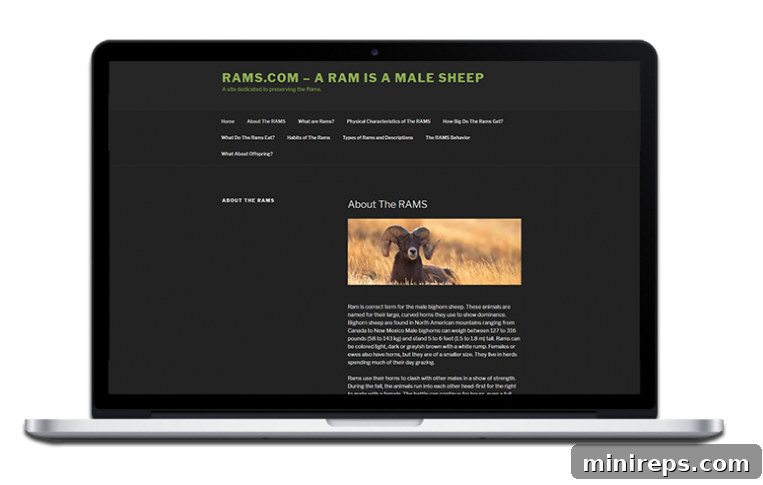
A classic illustration of this “generic term” issue is the website rams.com. This domain name is used for its generic meaning, referring to male sheep. While a significant number of internet users visiting rams.com might be searching for the Los Angeles Rams football team, the team holds no legitimate right to claim this domain through a UDRP based solely on the generic term “rams.” The football team successfully operates its official online presence using therams.com, demonstrating how brand owners must adapt when generic terms are legitimately held by others.
What Happens If a Complainant Files a UDRP Knowing It Doesn’t Meet All Conditions?
When a Complainant initiates a UDRP complaint despite being aware that it cannot satisfy the three essential conditions, or does so primarily to harass the domain owner, UDRP panelists may determine that it represents an attempted case of Reverse Domain Name Hijacking (RDNH). The Internet Corporation for Assigned Names and Numbers (ICANN), the governing body for UDRP, defines RDNH as “an attempt to deprive a registered domain-name holder of a domain name in bad faith.” This means that the Complainant, rather than the Respondent, is acting in bad faith.
The implications of an RDNH finding are significant, even if they do not involve monetary sanctions. Section 15(e) of ICANN’s Rules for Uniform Domain Name Dispute Resolution Policy clearly states:
If after considering the submissions the Panel finds that the Complaint was brought in bad faith, for example in an attempt at Reverse Domain Name Hijacking or was brought primarily to harass the domain-name holder, the Panel shall declare in its decision that the complaint was brought in bad faith and constitutes an abuse of the administrative proceeding.
While the UDRP policy does not permit monetary sanctions or award legal fees, an RDNH finding serves as a powerful deterrent against future abuse. It publicly flags the Complainant’s actions as an abuse of the administrative process, potentially impacting their reputation and credibility in future legal or administrative proceedings. Such findings reinforce the boundaries of the UDRP and emphasize its purpose: to address clear instances of bad-faith registration, not to facilitate opportunistic domain seizures. The case of Intelligentsia Coffee & Tea, Inc. v. Ashantiplc Ltd/ NamingRights.com, LLC, D2012-2075, exemplifies how panels use RDNH findings to deter future misuse.
For more detailed information or assistance with UDRP matters, please contact 101domain’s expert team.
7 Key Questions to Determine Reverse Domain Name Hijacking
For domain name holders facing a UDRP complaint, understanding the indicators of RDNH is crucial for mounting a robust defense. 101domain Corporate Brand Services has developed an invaluable infographic to guide Respondents in identifying whether a UDRP complaint might be an attempt at Reverse Domain Name Hijacking (RDNH).
This infographic breaks down critical questions that Respondents should ask themselves and their legal advisors when evaluating a complaint. These questions help assess the Complainant’s motivations and the legitimacy of their claims, empowering Respondents to effectively challenge unjust attempts to appropriate their domain names. For instance, questions might cover whether the trademark predates the domain registration, if the Complainant has a history of aggressive domain acquisition, or if settlement offers were unreasonably low before filing the UDRP.
Click Here to download the comprehensive RDNH Infographic and equip yourself with the knowledge to defend your domain.
Case Study: A UDRP Complaint Lacking Supporting Evidence
The strength of any UDRP complaint rests on the factual evidence presented. Before a UDRP complaint is officially filed, all facts, allegations, and supporting evidence must be meticulously evaluated. This pre-filing assessment is paramount, as insufficient or unsubstantiated claims are often the primary reason for UDRP denials and frequently lead to findings of Reverse Domain Name Hijacking. A complaint based on speculation or mere assertion, without concrete proof, is destined to fail.
A compelling example of a UDRP that dramatically lacked supporting evidence can be found in the case: Color Image Apparel, Inc. v. WHOIS Privacy Services by DOMAINCA / unitedeurope consulting.
The Panel has carefully reviewed the documents and statements submitted by the parties but found no element that could reasonably justify the Complainant’s claims, as the Complainant has failed to submit any evidence to demonstrate how the Respondent could have been aware of the Complainant’s trademark at any time, has not provided any evidence of the asserted well-known character of its trademark or any other element from which the Panel could infer that the Respondent registered the disputed domain name with the Complainant’s trademark in mind. Moreover, no evidence has been submitted of any use of the disputed domain name made by the Respondent in bad faith, as the disputed domain name has been pointed to a pay-per-click website showing generic links unrelated to the Complainant and its trademark.
In this case, the Complainant failed on multiple fronts. They could not demonstrate the Respondent’s awareness of their trademark, nor did they provide proof of the trademark’s “well-known” status. Crucially, there was no evidence of bad-faith registration or use by the Respondent, who was merely using the domain for a pay-per-click site with generic, unrelated links. This case serves as a stark reminder that allegations alone are insufficient; robust, verifiable evidence is essential to meet the UDRP’s stringent requirements. To review the full details of this case, please visit WIPO’s case archive.
How is Reverse Domain Name Hijacking (RDNH) Determined?
An RDNH finding is not merely a rejection of a UDRP complaint; it’s a declaration by the panelist(s) that the complaint itself was brought in bad faith and constitutes an abuse of the administrative proceeding. Such a determination can be made independently by the panelist(s) if the evidence overwhelmingly suggests the Complainant’s abusive intent.
However, Respondents should proactively request a finding of RDNH if they observe any of the following actions by the Complainant, as these strongly indicate an attempt at Reverse Domain Name Hijacking:

Filing the complaint to harass the domain name holder. This often involves a pattern of aggressive tactics, unsubstantiated threats, or multiple attempts to acquire a domain name without legitimate grounds. The intent is to pressure the Respondent into relinquishing the domain out of sheer exhaustion or fear of legal costs, as seen in Aspen Grove, Inc. v. Aspen Grove (Case No. D2001-0798).

Filing a UDRP complaint after failed negotiations. When a Complainant unsuccessfully attempts to purchase a domain name at a low price, and then immediately resorts to a UDRP, it can signal an attempt to use the policy as a leverage tool rather than a genuine dispute resolution mechanism. This tactic was highlighted in Futuris Automotive Interiors (Australia) Pty Ltd v. X9 Interactive LLC (Case No. D2011-0596).

Deceiving the panelist(s) by using false statements or omitting material facts. This is perhaps the most egregious form of bad faith. If a Complainant deliberately misrepresents facts, submits forged evidence, or strategically withholds crucial information that would undermine their case, they are clearly attempting to manipulate the UDRP process, as demonstrated in JJGC Industria E Comercio de Materiais Dentarios S.A. v. Yun-Ki Kim (Case No. D2013-1838).
WIPO’s Formal Reasons for Findings of RDNH
The World Intellectual Property Organization (WIPO), a leading UDRP provider, has compiled a comprehensive overview of jurisprudential principles concerning RDNH. Their detailed analysis outlines specific reasons panels have cited for making RDNH findings. These include:
- Facts clearly demonstrating the Complainant knew it could not succeed as to any of the required three conditions. This implies a deliberate disregard for UDRP policy requirements, often coupled with an opportunistic motive to seize a domain.
- Facts clearly demonstrating that the Complainant ought to have known it could not succeed under any fair interpretation of facts reasonably available prior to the filing of the complaint. This covers situations where due diligence would have easily revealed the weakness of the complaint, indicating gross negligence or willful blindness.
- Unreasonably ignoring established policy precedent, notably as captured in the WIPO Overview. Complainants are expected to be familiar with prevailing UDRP jurisprudence. Disregarding well-established principles to pursue a baseless claim can lead to an RDNH finding.
- The Complainant’s failure to disclose that a case is a UDRP refiling. Hiding the fact that a complaint has been previously filed and failed indicates an attempt to mislead the panel and suggests an abusive intent.
- Basing a complaint on only the barest of allegations without any supporting evidence. As highlighted in the Color Image Apparel case, a complaint devoid of substantial, verifiable evidence is fundamentally flawed and indicative of a bad-faith filing.
What is WIPO?
To deepen your understanding of these principles, please visit the WIPO Jurisprudential Overview 3.0, which offers authoritative guidance on UDRP decisions.
You’ve invested time, effort, and resources into building your business and cultivating a strong brand identity. Now, the crucial step is to secure and protect these invaluable assets in the digital realm.
101domain is your trusted partner, dedicated to helping you understand and skillfully navigate the complexities of domain dispute resolution processes. Our expertise ensures that your interests as a trademark holder are robustly protected. We provide tailored advice on how to proceed, regardless of the unique challenges of your situation. Moving beyond traditional hourly billing, we offer a transparent, flat-rate fee for UDRP services, giving you cost predictability and peace of mind.
As a recognized industry leader with access to the largest number of country code Top-Level Domains (ccTLDs), our UDRP and dispute resolution services form a cornerstone of our extensive Domain Name Management and comprehensive Brand Enforcement Services. Optimize your brand protection strategy and save significantly by transitioning to one of our corporate managed plans, which often include multiple UDRP/URS filings and a host of other benefits designed for enterprise-level brand security.
Whether you are seeking to recover a domain name that is rightfully yours, or defending against an unfair claim, 101domain possesses the expertise and resources to guide you through every step of the process. We empower you to reclaim and protect your digital presence, ensuring your brand integrity remains uncompromised.
Contact Us Today for Expert Assistance: +1.888.982.7940