

In the vast and rapidly expanding digital universe, your domain name is more than just a web address; it’s the cornerstone of your brand identity, a critical digital asset representing your business, reputation, and online presence. However, this expansive digital frontier, often perceived as unregulated, poses significant challenges for brand owners. Without diligent monitoring and a robust protection strategy, your valuable trademarks can fall prey to illicit activities like cybersquatting, leading to severe reputational damage, financial losses, and confusion among your customers.
Fortunately, established policies and procedures are specifically designed to help companies reclaim or manage domain names that infringe upon their trademarks. The domain dispute resolution process offers a streamlined, cost-effective, and efficient alternative to the often time-consuming and expensive traditional court litigation. This article will delve deep into understanding these mechanisms, particularly the Uniform Domain-Name Dispute-Resolution Policy (UDRP) and the Uniform Rapid Suspension System (URS), and highlight the critical importance of proactive brand protection in safeguarding your digital footprint.
Understanding the Threat: Cybersquatting and Trademark Infringement
Cybersquatting refers to the malicious practice of registering, trafficking in, or using a domain name with the bad-faith intent to profit from the goodwill of someone else’s trademark. This can manifest in various forms:
- Typosquatting: Registering domain names that are common misspellings of popular brands (e.g., “Amazone.com” instead of “Amazon.com”).
- Brand Impersonation: Registering domain names identical or confusingly similar to a well-known brand, often to deceive consumers or extort money.
- “Warehousing” Domains: Registering numerous domain names containing famous trademarks, hoping to sell them back to the legitimate trademark owner at an inflated price.
- Phishing/Malware Sites: Using confusingly similar domain names to host deceptive websites designed to steal user credentials or distribute malicious software.
The impact of cybersquatting on businesses can be devastating. It can lead to a significant diversion of web traffic, diluting your brand’s equity, creating consumer confusion, and eroding trust. Moreover, these unauthorized domains can be used to spread misinformation, host counterfeit products, or engage in fraudulent activities, directly harming your brand’s reputation and bottom line.
Navigating the Domain Dispute Resolution Landscape: UDRP and URS
When faced with a cybersquatting incident, trademark owners have clear courses of action. The primary non-court-based mechanisms are the Uniform Domain-Name Dispute-Resolution Policy (UDRP) and the Uniform Rapid Suspension System (URS). While they both aim to protect trademark rights, they differ in scope, cost, speed, and the remedies they offer.
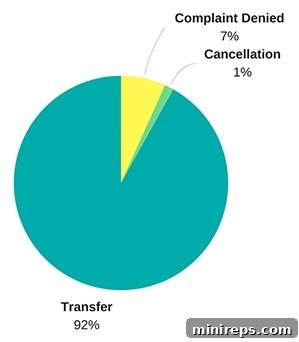
The Uniform Domain-Name Dispute-Resolution Policy (UDRP)
The UDRP is a globally recognized policy established by the Internet Corporation for Assigned Names and Numbers (ICANN) to resolve domain name disputes concerning generic Top-Level Domains (gTLDs) and many country-code Top-Level Domains (ccTLDs). It provides a mandatory administrative proceeding that offers a cheaper and faster alternative to traditional litigation.
To succeed in a UDRP complaint, the complainant must prove three essential elements:
- The domain name is identical or confusingly similar to a trademark or service mark in which the complainant has rights.
- The registrant (domain holder) has no rights or legitimate interests in respect of the domain name.
- The domain name has been registered and is being used in bad faith.
Proving “bad faith” is often the most critical and challenging element. Examples of bad faith include registration primarily to sell the domain to the trademark owner for profit, registration to disrupt a competitor’s business, or using the domain to intentionally attract internet users for commercial gain by creating confusion with the complainant’s mark.
If successful, the UDRP panel can order the cancellation of the domain name or its transfer to the complainant.
The Uniform Rapid Suspension System (URS)
Introduced more recently, the URS is designed for clear-cut cases of trademark infringement where the evidence of bad-faith registration and use is overwhelmingly apparent. It offers an even faster and lower-cost option than UDRP for the most egregious instances of cybersquatting.
The key differences and benefits of URS include:
- Speed: URS cases are typically resolved much quicker than UDRP cases.
- Cost: It generally involves lower administrative fees.
- Standard of Proof: URS requires a higher standard of proof – clear and convincing evidence – that the domain name registrant has no legitimate rights or interests and registered the domain in bad faith.
- Remedy: Unlike UDRP, which can lead to transfer or cancellation, URS typically results in the suspension of the domain name for the remainder of its registration period. This means the domain cannot be used but isn’t necessarily transferred to the complainant.
URS is particularly useful for quickly disabling malicious or infringing websites that pose immediate threats to consumers or brand reputation.
All domain registrars are mandated to abide by the outcomes of both UDRP and URS decisions, ensuring that once a determination is made, the domain will be canceled, suspended, or transferred as decided by the panel.
The International Dimension of Trademark Protection
Securing your trademark within your home country is a fundamental step, but in the age of global connectivity, it offers limited protection internationally. The internet transcends national borders, making trademark law significantly more complex when dealing with disputes in a global space. A domain name registered in one country can easily be accessed and cause confusion in another, highlighting the urgent need for an international perspective on brand protection. This is why policies like UDRP, with their global reach for gTLDs, are so vital.
A comprehensive domain strategy must consider potential infringements across various jurisdictions and a multitude of new Top-Level Domains (TLDs). Relying solely on national trademark registrations leaves your brand vulnerable to international cybersquatters who can exploit geographical differences in legal protection.
Key Elements for a Successful Domain Dispute Claim
At the core of any successful domain dispute resolution process is proving two essential factors: that you possess legitimate trademark rights and that the infringing domain was registered and is being used in bad faith. While a registered trademark provides the strongest basis for a claim, common law trademark rights (arising from consistent use in commerce) can also be relevant in some jurisdictions.
Elaborating on “bad faith,” this typically involves demonstrating intent to:
- Offer to sell the domain name to the trademark owner for valuable consideration in excess of documented out-of-pocket costs directly related to the domain name.
- Prevent the owner of the trademark from reflecting the mark in a corresponding domain name.
- Disrupt the business of a competitor.
- Intentionally attempt to attract, for commercial gain, Internet users to your website or other online location, by creating a likelihood of confusion with the complainant’s mark as to the source, sponsorship, affiliation, or endorsement of your website or location or of a product or service on your website or location.
Conversely, the registrant can defend their position by demonstrating legitimate rights or interests, such as having made demonstrable preparations to use the domain name in connection with a bona fide offering of goods or services, being commonly known by the domain name, or making legitimate noncommercial or fair use of the domain name.
Global Trends in Domain Disputes
To provide context on the global landscape of cybersquatting, statistics from organizations like WIPO (World Intellectual Property Organization) offer valuable insights into where domain disputes originate. Analyzing data on complainants and respondents helps to identify regions with higher rates of infringement or greater vigilance in brand protection.
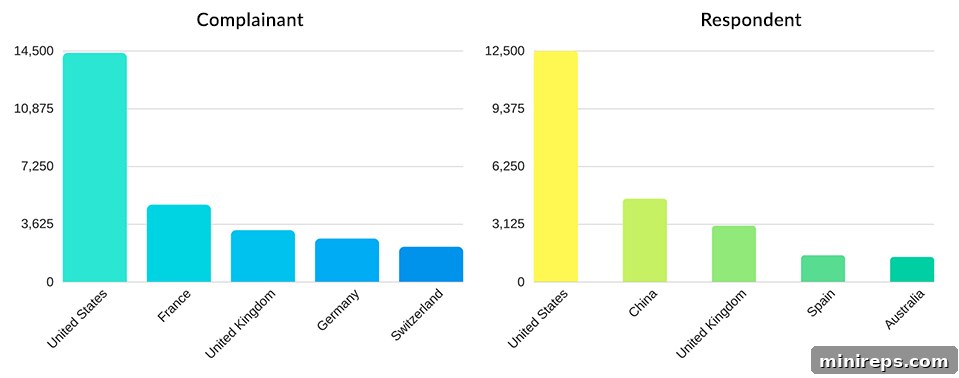
Source for the data: WIPO Domain Name Dispute Resolution Statistics
The WIPO statistics consistently show a significant volume of cases, reflecting the ongoing struggle to protect trademarks online. Year after year, the majority of UDRP/URS cases result in decisions favoring the complainant, leading to the transfer or suspension of infringing domain names. This underscores the effectiveness of these policies when applied to legitimate cases of cybersquatting and provides a strong incentive for brand owners to pursue their rights.
When the Domain Dispute Resolution Process Doesn’t Work: The Nissan Case Study
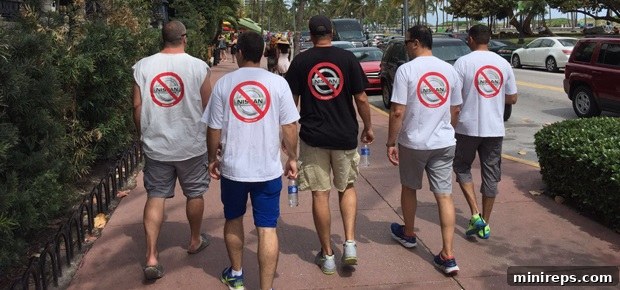
Image Source: Nissan.com
While UDRP and URS are powerful tools, they are not a panacea, as illustrated by the protracted legal battle between Nissan Motors and Uzi Nissan, the owner of Nissan Computer. This complex case, focusing on the domain nissan.com, serves as a crucial example of when a domain dispute resolution process might not yield the desired outcome for a trademark holder.
The core of Nissan Motors’ challenge lay in its inability to prove “bad faith” on the part of Uzi Nissan, who registered nissan.com back in 1994. Several factors supported Uzi Nissan’s legitimate rights and interests:
- The respondent’s personal name is Uzi Nissan, making the domain name relevant to his identity.
- His multiple businesses, including Nissan Foreign Car, Nissan International, and Nissan Computer Corp, were all named and actively operating long before Nissan Motors became widely known by its current name in the U.S. (they were previously known as DATSUN).
- In 1995, Uzi Nissan successfully obtained a trademark for “Nissan” and his corresponding logo from the State of North Carolina for his computer business.
- Further solidifying his digital presence, he registered nissan.net in 1996 to expand his business operations.
This battle, which commenced in 1999—five years after Uzi Nissan registered nissan.com—has dragged on for over two decades. The key takeaway here is that the domain dispute resolution process, particularly UDRP, is specifically designed to circumvent lengthy and costly court cases like this, which inflict substantial financial, time, and emotional burdens on both parties. However, Nissan Motors lacked the clear-cut evidence of bad faith required for a successful UDRP or URS complaint. Despite years of litigation, it appears Nissan Motors has been unable to prove its case and likely never will.
This case powerfully demonstrates that a trademark, while invaluable, does not grant an automatic right to seize domain names from another legitimate business, especially when that business has prior legitimate rights or interests. The principle of “first come, first served” still holds significant weight in domain registration, particularly when coupled with demonstrable legitimate use. It underscores the critical importance of being proactive in securing your primary domain names early.
Monitoring Your Digital Assets: Be Proactive, Not Just Reactive
The lesson from cases like Nissan is clear: proactive brand protection is paramount. Domain names are not merely technical identifiers; they are crucial digital assets intricately woven into the very DNA of your brand. A robust domain strategy is no longer a secondary consideration but a core component of your overall business plan.
Effective brand protection necessitates continuous monitoring and enforcement across the entire digital landscape. This includes:
- Monitoring New TLD Launches: Stay informed about and register defensive domains within new generic Top-Level Domains (gTLDs) as they become available to prevent others from claiming them.
- Trademark Monitoring: Continuously scan the web for unauthorized use of your trademark in domain names, social media handles, and online content.
- Competitor Monitoring: Keep an eye on competitor activities, including their domain registrations and online campaigns.
- Geographical Monitoring: Implement monitoring across different geographic regions and associated ccTLDs to ensure international protection.
- Typo and Phonetic Monitoring: Look for variations, misspellings, or phonetic equivalents of your brand name that could be used for cybersquatting or phishing.
By actively monitoring your brand’s presence, you can identify potential infringements early, preventing brand dilution, reputation damage, and costly disputes. This proactive approach saves resources in the long run and helps maintain the integrity and value of your brand.
Engaging with expert domain management services can significantly enhance your brand protection efforts. Specialists in domain dispute resolution processes are well-versed in the intricacies of UDRP and URS procedures. They can provide strategic advice, conduct thorough investigations, and represent your interests, ensuring the most favorable outcome with minimal disruption to your business operations.
At 101domain, we take immense pride in our 100% success rate for UDRP/URS cases. Our expert account managers possess extensive knowledge and experience in navigating the complexities of the domain dispute resolution process, from initial assessment to successful enforcement. We are dedicated to helping businesses identify the most effective course of action to secure their digital assets and guarantee a positive outcome.
Don’t wait for infringement to occur. Be proactive, protect your brand, and secure your digital future. Contact us today for a comprehensive consultation and take the first step towards robust online brand protection.