

In today’s digital age, the journey of a potential customer often begins with a search query. Whether they are in the initial research phase, comparing various products, or ready to make a purchase, individuals consistently turn to search engines for information and guidance. This fundamental reliance on platforms like Google, Bing, and other engines is precisely why the landscape of search results is incredibly competitive. Businesses and marketers worldwide are engaged in a relentless pursuit to elevate their brand’s visibility, striving to appear “above the fold” to capture maximum exposure and, ultimately, clicks. Achieving this coveted position requires a strategic and multifaceted approach to Search Engine Optimization (SEO). While many factors influence search rankings, focusing on core principles can significantly boost your chances of standing out. Here are three crucial SEO ranking tips designed to help your business not only appear in search results but also compel users to choose your listing over the competition.

1. Cultivate a Professional Branded Domain
Your domain name serves as your digital identity and is often the very first impression potential customers have of your brand in search engine results. When scanning a list of search outcomes, internet users instinctively look for cues that signal relevance, professionalism, and trustworthiness. A well-chosen domain name not only helps users identify with your brand but also contributes significantly to your overall search engine optimization efforts and online credibility. Opting for a custom domain, rather than hosting your website on a generic third-party subdomain (e.g., mywebsite.wordpress.com vs. mywebsite.com), is one of the most straightforward yet impactful ways to project a polished and professional image. Your domain name should unequivocally represent your brand, speaking solely to your identity and offerings without being diluted by association with another platform.
Beyond simply having a custom domain, its strategic selection plays a pivotal role. Aligning your brand with your product or service at the domain level, incorporating keyword-rich and industry-specific elements, can instantly communicate your purpose to search engines and users alike. Consider the power of a domain that not only includes your brand name but also hints at your niche or expertise. For instance, if a user is searching for “artificial intelligence podcasts,” several factors in the search results can influence their click decision. A domain like “twiml.ai” or “aitalks.fm” immediately conveys the content type, fostering trust and relevance before the user even clicks. The original example highlights a scenario where “this week in machine learning” podcast might use “twiml.ai” for a stronger, more direct association with their content, improving immediate recognition.

Top-Level Domains (TLDs) – the suffix after the dot – are no longer limited to familiar options like .com or .org. The emergence of new domain extensions, such as .tech, .io, .store, .blog, and industry-specific options like .fm for radio/podcast-related content or .ai for artificial intelligence, provides unprecedented opportunities. These specialized TLDs can offer instant context and enhance your brand’s message. For example, a podcast using a .fm domain immediately signals its audio-centric nature, resonating with users seeking similar content. Similarly, a technology startup using a .tech or .io domain instantly communicates its focus. By registering a domain that strategically aligns with your brand and provides internet users with a clear insight into your content or service before they even click, you significantly increase the likelihood of attracting qualified traffic. Explore these new domains and popular domain industry hacks to find a unique and impactful online address for your business.
2. Harness the Power of Review Stars and Social Proof
In the decision-making process, few elements carry as much weight with a prospective buyer as genuine social verification. Beyond price, the collective endorsement of satisfied customers is a potent driver of trust and conversion. Modern consumers don’t just buy into products or services; they invest in experiences and the communities surrounding brands. Integrating customer reviews and testimonials prominently on your website and, crucially, within your search engine results, is an exceptional way to communicate credibility and appeal to potential buyers. It’s akin to saying, “Hey, come see what we’re about; people genuinely love what we do and the value we provide.” This form of social proof acts as a powerful differentiator in a crowded search landscape.
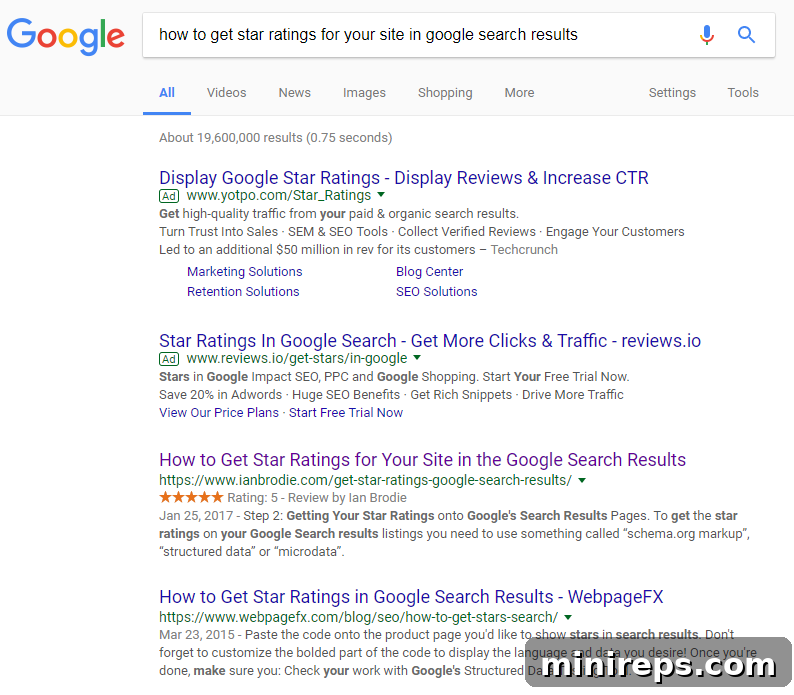
The visual presence of review stars directly within Google search results (often referred to as rich snippets) can dramatically increase your listing’s Click-Through Rate (CTR). These vibrant star ratings immediately draw the eye, signaling to searchers that your business is reputable and trusted by others. A listing with a 4.5 or 5-star rating instantly stands out, conveying a level of quality and reliability that text-only listings simply cannot match. This psychological effect is immense; users are far more likely to trust recommendations from peers (even anonymous ones) than direct advertising or brand claims. Implementing review stars requires structured data markup (Schema.org) on your website, which tells search engines how to interpret your review content. While it might sound technical, many platforms and plugins offer straightforward ways to add this markup. For a detailed guide on how to implement this effectively and get review stars added to your listing in Google search results, you can refer to this excellent article.
Beyond the technical implementation, actively soliciting and managing customer reviews is a critical ongoing strategy. Encourage satisfied customers to share their experiences on your website, Google My Business profile, and other relevant review platforms. Respond to all reviews, both positive and negative, demonstrating your commitment to customer satisfaction and continuous improvement. The consistent accumulation of positive reviews not only enhances your search visibility but also reinforces your brand’s reputation, building a cycle of trust that attracts more customers. Social proof, through visible review stars, is an indispensable asset in compelling searchers to click on your business.
3. Optimize Your Content for On-Page SEO Excellence
Optimizing your content for search engines is an ongoing, essential practice that involves meticulously refining the elements on your web pages to be more discoverable and appealing to both search algorithms and human readers. Effective on-page SEO ensures that when a user searches for specific terms, your content is readily identified as a relevant and authoritative resource. For every page on your website and every blog post you publish, it’s crucial to identify and target 2-3 primary keywords or key phrases. These keywords should accurately reflect the core topic of your content and align with what your target audience is searching for. Once identified, these keywords should be strategically integrated into various elements of your page to signal relevance to search engines without sacrificing readability or user experience. For best SEO ranking tips, incorporate your keywords thoughtfully in the following critical places:
- The Page/Content Title (Title Tag): This is perhaps the most important on-page element. Your title tag, which appears in the browser tab and as the clickable headline in search results, should be compelling, concise (ideally under 60 characters), and include your primary keyword as close to the beginning as possible. It serves as a direct message to both search engines and users about your page’s content.
- Headings within Your Content (H1, H2, H3, etc.): Structure your content logically using headings. Your main heading (H1) should ideally contain your primary keyword, while subheadings (H2, H3, etc.) should break up the text, improve readability, and incorporate variations of your keywords or related long-tail keywords. This hierarchical structure helps search engines understand the topic and subtopics of your page.
- The Domain Name and URL Structure: As discussed, your domain name itself is a powerful signal. Furthermore, ensure your individual page URLs are clean, descriptive, and keyword-rich (e.g., yourwebsite.com/seo-ranking-tips rather than yourwebsite.com/p=123). Clear URLs improve user experience and provide an additional SEO boost.
- The Page’s Meta Description: While not a direct ranking factor, the meta description is your opportunity to persuade users to click on your listing. It’s the short snippet of text that appears under your title in search results. Craft an enticing, keyword-inclusive description (around 150-160 characters) that accurately summarizes your page’s content and encourages a click. Keywords in the meta description are often bolded by Google, increasing visibility.
- Image Alt Text: Every image on your page should have descriptive alt text. This text serves two crucial purposes: it makes your website accessible to visually impaired users (read by screen readers) and provides search engines with context about the image content. Include relevant keywords in your alt text where appropriate and natural, describing the image accurately.
- Content Body & Keyword Density: Aim for a natural integration of your keywords within the main body of your text. While there’s no magic number, striving for 2-3 occurrences per keyword per page or piece of content is a reasonable guideline, ensuring the keyword appears sufficiently for search engines to recognize relevance without overstuffing. Focus on writing high-quality, valuable content that naturally includes your target keywords and related semantic terms (LSI keywords).
The key to successful on-page optimization is balance. You want to use your keywords strategically and frequently enough for search engines to easily find and understand your content, but without resorting to “keyword stuffing.” Keyword stuffing, which involves unnaturally forcing keywords into your text, harms readability, frustrates users, and can lead to penalties from search engines. Instead, prioritize creating engaging, informative, and user-centric content that naturally incorporates your keywords and provides genuine value to your audience. When your content is truly helpful and well-optimized, it creates a positive experience for both users and search engines, paving the way for improved rankings and increased organic traffic.