


In today’s hyper-connected digital landscape, businesses with a robust online presence face an incessant battle. They must tirelessly support legitimate user traffic while simultaneously fending off a relentless barrage of external threats. This challenge intensifies daily, as cybercriminals continually innovate, developing increasingly sophisticated methods to breach networks and deploy diverse forms of malware. The sheer volume and complexity of these attacks make robust cybersecurity not merely an option but a critical necessity for survival and sustained growth.
Fortify Your Defenses: How DNS Firewalls Reduce Enterprise Risk
Operating a large-scale business online inherently involves a significant level of risk. However, with a proactive strategy and a comprehensive suite of security tools, organizations can dramatically enhance their ability to safeguard critical infrastructure and protect sensitive user data. Among these essential tools, DNS firewalls stand out as a fundamental component of any enterprise’s cybersecurity strategy. Neglecting to implement one could leave your business and, more importantly, your customers, dangerously exposed to a multitude of cyber threats.
This article delves deep into the operational mechanics of DNS firewalls, exploring their indispensable role in modern network security and elucidating the substantial value they add to an organization’s IT toolkit. We’ll uncover how these crucial defenses act as a first line of protection, filtering malicious traffic before it even reaches your servers, thereby bolstering your overall security posture.
Understanding the Fundamentals of DNS
Every digital journey a user undertakes to reach your company’s website begins with the Domain Name System (DNS). When a user types a URL—such as yourcompany.com, example.ai, or any other top-level domain—into their browser, the browser initiates a request to resolve that human-readable address into a machine-readable Internet Protocol (IP) address. This foundational process is managed by DNS endpoints, which act as the internet’s phonebook, mapping domain names to their corresponding IP addresses.
In essence, web addresses are user-friendly aliases for the complex numerical IP addresses that servers and networks use to communicate. Without DNS, navigating the internet would involve memorizing long strings of numbers, a task both impractical and inefficient.
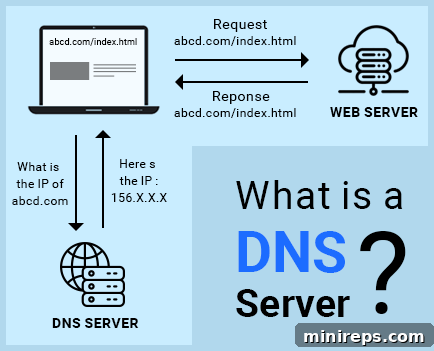
The DNS endpoint continuously tracks and updates the intricate relationship between domain names and IP addresses, ensuring that they remain perfectly synchronized. This task is far more challenging than it initially appears, primarily because web traffic originates from every corner of the globe, connecting to one of thousands of distributed DNS endpoints. Maintaining this global directory requires immense infrastructure and constant vigilance.
From an enterprise perspective, IT staff bear the crucial responsibility of ensuring all DNS records across the organization are meticulously maintained and up-to-date. Depending on the scale and architectural complexity of your network, your organization might even need to operate its own internal DNS servers to efficiently route traffic to various internal and external destinations. This level of control is vital for performance and security within larger corporate environments.
Securing DNS names and their associated routing paths is paramount. A company’s domain name often represents one of its most valuable digital assets, serving as a cornerstone of its brand identity and online presence. Any compromise to this critical link can severely impact reputation, operational continuity, and customer trust.
The Evolution of Protection: DNS Firewalls in the Cloud
Firewalls, as essential security perimeters, can be strategically deployed at various layers of an IT infrastructure, tailored to meet the specific requirements of an enterprise’s network. In the nascent days of the internet, most firewalls were physical hardware appliances. These devices were typically installed at the network’s edge, acting as gatekeepers through which all incoming and outgoing external traffic had to pass before reaching internal systems.
However, with the paradigm shift towards cloud computing across nearly every industry, firewall technologies have progressively transitioned towards a more software-centric, cloud-native approach. Today, a multitude of leading vendors offer sophisticated cloud-based firewall services designed to seamlessly integrate with and augment existing infrastructure. When evaluating hosting providers, it is crucial to inquire about the specific firewall protection and premium DNS services they offer. For instance, reputable providers like 101domain have forged partnerships with industry leaders such as Cloudflare, the world’s largest global cloud platform, to deliver advanced DNS services that include robust firewall capabilities.
Cloud-based DNS firewalls offer distinct advantages over their traditional hardware counterparts. They provide unparalleled scalability, allowing businesses to expand their online presence without significant hardware investments. Furthermore, they offer geographically distributed protection, ensuring low-latency access and consistent security for a global user base. This shift to the cloud not only simplifies management but also ensures that organizations benefit from cutting-edge threat intelligence and continuous updates, keeping them resilient against emerging cyber threats without the burden of maintaining complex on-premise solutions.
Unpacking the Mechanics: How DNS Firewalls Operate
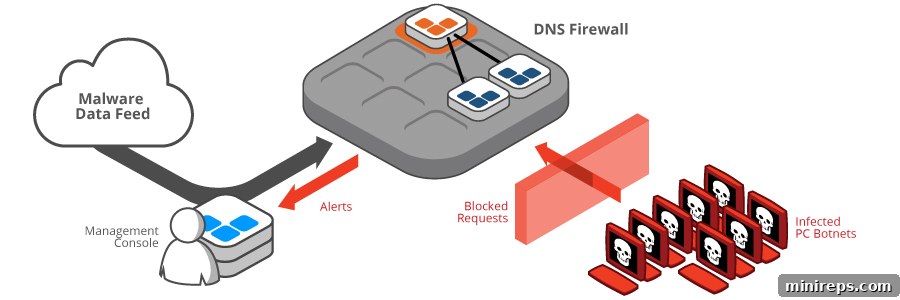
At its core, a DNS firewall functions as a specialized cloud utility engineered to meticulously filter traffic at the DNS layer, thereby safeguarding internal systems from malicious intent. As explained by Cloudflare support, the operational principle involves rerouting an organization’s DNS entries to the firewall vendor’s authoritative nameservers. Once traffic is directed through these nameservers, every incoming web request undergoes rigorous scrutiny against a predefined set of security policies, rules, and constantly updated threat intelligence feeds. If a request violates any of these established criteria or is flagged as suspicious, it is immediately blocked, preventing potentially harmful connections from ever reaching your network.
It’s important to note a potential area of conflict: the interaction between a DNS firewall and a Virtual Private Network (VPN). If not properly configured, a VPN tunnel can bypass the DNS firewall’s protection, leading to what’s known as a “DNS leak.” Such leaks can expose your actual IP address and allow malicious traffic to circumvent the firewall, creating a critical vulnerability. To prevent DNS leaks, it is imperative to consult the documentation for both your VPN and DNS firewall services or contact their respective support teams for guidance on proper configuration. While many VPNs offer user-friendly applications for Windows, setting them up on other operating systems, such as macOS, can sometimes require manual configuration, increasing the likelihood of misconfiguration and potential conflicts with your firewall. Reputable providers offer VPNs recommended for Mac operating systems that prioritize compatibility and ease of use.
Resolving these configuration conflicts should not pose an insurmountable challenge for experienced IT personnel. However, it is a crucial detail that must not be overlooked. A DNS firewall that is compromised by leaks effectively defeats its primary purpose, leaving your network vulnerable despite the investment in security. Proper integration ensures that both security layers work in harmony, providing a comprehensive defense.
Countering Cyberattacks: A Multi-Layered Approach
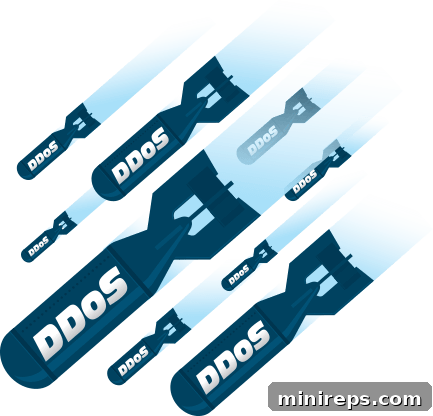
One of the most significant risks for large enterprise public sites is the threat of a Distributed Denial of Service (DDoS) attack. In such an attack, cybercriminals orchestrate a massive influx of fake traffic, typically generated by a network of hijacked computers (known as a botnet), to overwhelm web servers and render them inaccessible to legitimate users. This type of cyber attack not only disrupts services but can also severely damage brand reputation and result in substantial financial losses.
Cybersecurity experts widely concur that implementing a firewall at the DNS layer of your network represents the most effective strategy for mitigating and stopping DDoS attacks. A DNS firewall possesses the unique capability to analyze traffic levels and patterns from diverse sources, enabling it to swiftly identify and respond when an attack is being executed. By filtering out malicious DNS queries before they can even reach your infrastructure, a DNS firewall acts as a critical choke point, preventing the overwhelming flood of illegitimate traffic.
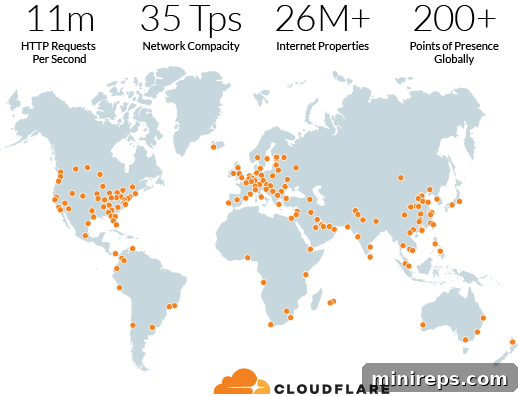
Leading DNS firewall providers leverage globally distributed server networks to provide this robust protection. These extensive networks enable enterprises to efficiently load balance global traffic and effectively manage spikes in requests, whether legitimate or malicious. For example, Cloudflare, with over 165 data centers strategically located in 75 countries worldwide, plays a vital role in delivering website content faster to a global audience while simultaneously providing superior DDoS mitigation capabilities. Their distributed infrastructure ensures that even massive attacks can be absorbed and filtered far from your origin servers, maintaining service availability.
Beyond DDoS: Addressing Additional Cyber Attack Threats
While blocking a DDoS attack is a significant victory, it represents only one crucial piece of the much larger and intricate cybersecurity puzzle. Ensuring comprehensive online safety demands a multifaceted approach, extending far beyond external volumetric attacks, for both individual users and vast enterprises. Cybercriminals are constantly seeking ingenious ways to circumvent firewall rules and infiltrate corporate networks, often as a prelude to executing more damaging attacks.
Once inside a network, attackers can deploy various forms of malware, such as ransomware, which encrypts critical local data and holds it hostage until a ransom payment is made. DNS firewalls play a critical role here by blocking access to known malicious domains associated with ransomware command-and-control (C2) servers, effectively disrupting the attack chain. They can also prevent initial infection by blocking users from visiting sites known to host exploit kits or drive-by downloads.
Companies frequently make the erroneous assumption that all significant threats to their organization originate from outside their network perimeter. In reality, a substantial number of security incidents begin with social engineering tactics. Hackers have discovered that employees and insiders are often the most vulnerable links, susceptible to various forms of trickery, phishing, and manipulation. If a member of your organization falls victim to identity theft or a sophisticated phishing scam, it could jeopardize your entire infrastructure and critical databases. The potential for damage is immense.
To underscore this growing vulnerability, consider the concerning statistic that 60% of college students admit to potential cell phone or internet addiction, coupled with a casual attitude towards internet safety. This demographic represents tomorrow’s workforce, raising pertinent questions about the foundational understanding of cybersecurity risks. Are future employers being inadvertently set up for data breaches on an even more massive scale than what currently exists? Without robust, multi-layered defenses like DNS firewalls to mitigate human error and provide automated protection, this scenario becomes increasingly plausible, underscoring the urgent need for comprehensive security education and technological safeguards.
DNS firewalls provide a crucial layer of defense against these varied threats. They can block access to known phishing sites, malicious domains used in spear-phishing campaigns, and C2 servers that ransomware or other malware attempts to communicate with. By preventing these connections at the earliest possible stage, DNS firewalls significantly reduce the attack surface and enhance the overall resilience of an enterprise network.
Intelligent Defense: DNS Firewalls as a Smart Solution
It is important to recognize that not all DNS firewalls are created equal; they vary significantly in their capabilities and operational philosophies. Some solutions prioritize extensive flexibility and customization, which can be highly beneficial for organizations possessing a large IT staff with specialized expertise in network security. These types of firewalls empower administrators to configure intricate manual policies, fine-tune filtering rules, and precisely determine the exact levels of traffic and types of requests their network can safely sustain.
However, an increasing number of agile organizations and those seeking advanced, proactive protection are now gravitating towards smarter, more autonomous solutions. Specifically, cloud-based DNS firewalls powered by artificial intelligence (AI) and machine learning (ML) algorithms are gaining widespread preference. The reality is that human administrators, no matter how diligent, are simply incapable of manually tracking and analyzing each and every web request that enters or attempts to enter a vast network. The sheer volume and velocity of modern cyber threats make such a task impossible.
This is where AI and ML shine. These intelligent systems can process colossal amounts of data in real-time, identify anomalous patterns, detect emerging threats (including zero-day attacks), and automatically adapt their defenses. Most organizations feel significantly more secure with an AI-driven firewall in place, continuously monitoring traffic, intelligently identifying malicious intent, and preventing DNS attacks with minimal human intervention. This shift allows IT teams to focus on strategic initiatives rather than reactive threat mitigation, ensuring a more robust and future-proof security posture.

The predictive capabilities of AI and ML allow these smart firewalls to move beyond reactive blocking of known threats. They can identify the characteristics of malicious traffic even if the specific domain hasn’t been blacklisted yet, offering proactive protection against evolving attack vectors. This makes them an indispensable asset in the ongoing fight against cybercrime.
Final Thoughts: Securing Your Digital Future with DNS Firewalls
DNS lookups are far more than a technical detail; they are a critical, underlying mechanism that underpins the functionality and efficiency of the modern internet. Your company’s domain name serves as the primary and most accessible gateway for external users to connect with your website, services, and brand. Consequently, ensuring fast, reliable, and secure DNS responses is paramount to delivering a positive user experience, fostering trust, and maintaining your online reputation. Unfortunately, this foundational aspect of the internet also presents a tempting target for hackers, who frequently seek to exploit DNS vulnerabilities as an integral part of broader, more sophisticated cyberattacks.
DNS firewalls emerge as an exceptionally effective and indispensable security tool in this volatile landscape. By meticulously monitoring and filtering all incoming traffic at the DNS layer, they act as a vigilant gatekeeper, proactively blocking malicious requests and preventing attacks from penetrating your network. This crucial preventative measure ensures that your website remains stable, highly available, and reliable, even in the face of concerted cyber threats. They protect against direct attacks like DDoS, and also serve to mitigate the impact of phishing, malware, and other advanced persistent threats by blocking communications with known malicious infrastructure.
In today’s interconnected world, every enterprise website, regardless of size or industry, should prioritize and implement a premium DNS solution that includes robust DNS firewall capabilities. This isn’t just about technical security; it’s about protecting your invaluable brand identity, safeguarding your digital assets, ensuring business continuity, and preserving the trust of your customers. A well-implemented DNS firewall is not merely an added layer of defense; it is a strategic investment in the long-term security and resilience of your entire digital presence.