
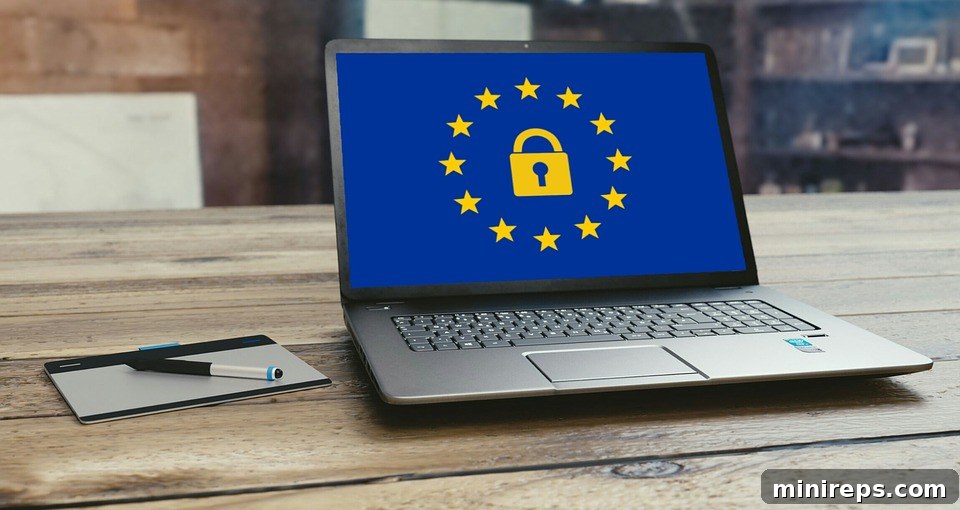
Navigating the Digital Landscape: Understanding the General Data Protection Regulation (GDPR)
In our increasingly interconnected world, the discussion around online data privacy has never been more critical. Every digital interaction, from browsing a website to making an online purchase, generates a trail of personal information. While we instinctively know the importance of safeguarding this data and advocating for robust privacy measures, the practicalities of understanding how and where our information is stored and used often remain a mystery. The European Union, with its landmark General Data Protection Regulation (GDPR), has stepped forward to address this crucial challenge, setting a new global benchmark for the future of data privacy and empowering individuals with unprecedented control over their digital footprint.
The GDPR represents the EU’s comprehensive and significantly strengthened second attempt to protect the personal data of individuals residing within its borders. Its predecessor, the Data Protection Directive, adopted in 1995, aimed to regulate the processing of personal data across the EU member states. This initial effort outlined fundamental principles such as notice, purpose specification, consent, disclosure limitations, and access rights concerning data collection and usage. However, despite its good intentions, the Directive often lacked the necessary enforcement mechanisms and accountability, leading to a rather lax implementation characterized by vague “opt-out of cookies” prompts and lengthy, often unread, terms and conditions. This approach placed the onus largely on individuals to protect themselves, an increasingly unmanageable task in a complex digital environment.
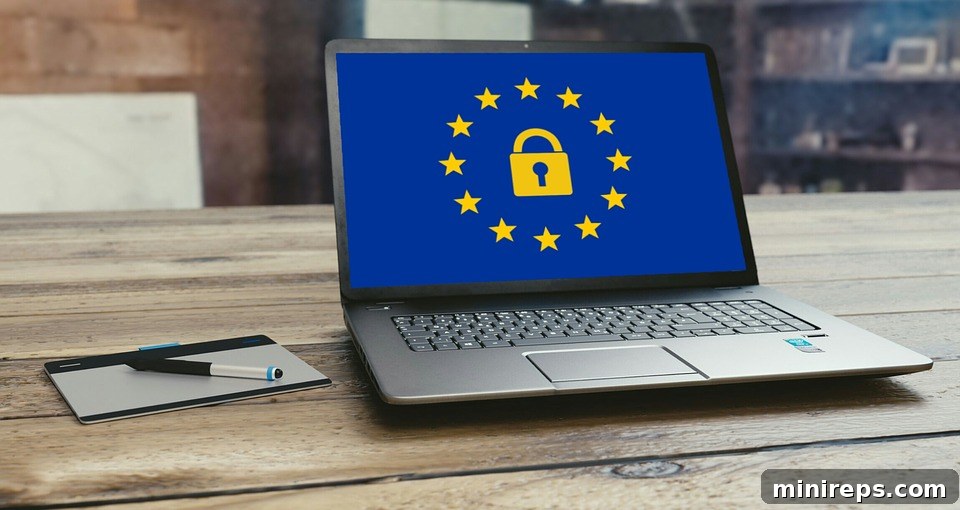
The GDPR, which shares the same overarching mission as the Data Protection Directive – to safeguard personal data – came into full effect on May 25, 2018, but this time, it arrived with substantial enforcement power. To ensure genuine compliance and foster a culture of data responsibility, the GDPR introduced severe penalties for violations. Organizations found in breach of the regulation face hefty fines, potentially reaching up to 4% of their annual global turnover or 20 million euros, whichever amount is greater. For multinational corporations, such a fine could be a significant setback, but for smaller businesses and emerging brands, even a single instance of non-compliance could lead to financial ruin and irreparable damage to their reputation. This stringent penalty structure underscores the EU’s commitment to making data privacy a top priority for all entities processing EU citizens’ data, regardless of their geographic location. Furthermore, the regulation mandates the appointment of designated Data Protection Officers (DPOs) for many organizations, acting as internal experts and watchdogs to oversee compliance, indicating a proactive rather than reactive approach to data protection.
The Foundational Pillars of GDPR: Collection and Retention
At its core, the GDPR is built around two fundamental principles that dictate how organizations must handle personal data: its collection and its retention. These principles aim to instill greater transparency, accountability, and user control throughout the data lifecycle.
1. Data Collection: Shifting from Opt-Out to Explicit Opt-In Consent
The primary objective of the GDPR’s data collection ordinance is to enhance the safety and security of internet users, a mission universally supported. The regulation fundamentally alters the paradigm of data collection, moving away from implied consent to requiring explicit user permission. Instead of merely offering individuals an option to opt-out of data collection, companies are now legally obligated to obtain clear, affirmative opt-in consent from EU internet users before collecting and storing any of their personal data. This means consent must be freely given, specific, informed, and an unambiguous indication of the individual’s wishes. Pre-ticked boxes or vague statements are no longer sufficient.
Beyond the “how,” the GDPR also meticulously addresses the “what,” “why,” and “how” of data usage. Organizations must clearly articulate:
- What data is being collected: A precise list of data points (e.g., name, email, IP address, browsing history).
- Why it is collected (for what purpose): Specific, legitimate reasons for data processing (e.g., order fulfillment, personalized advertising, website analytics).
- How it is being used and shared: Transparency about processing activities and any third parties with whom the data might be shared.
This stringent requirement applies universally to anyone residing within the EU and the EU economic zone, irrespective of whether they are permanent residents or temporary visitors. For businesses, this means understanding their global user base and implementing robust mechanisms to identify EU users and manage their consent accordingly, making the compliance challenge truly international in scope.
Furthermore, the GDPR specifies several lawful bases for processing personal data, with consent being just one. Other bases include processing necessary for the performance of a contract, compliance with a legal obligation, protection of vital interests, performance of a task carried out in the public interest, or for the legitimate interests of the controller (provided these do not override the rights and freedoms of the data subject). Businesses must clearly identify and document the lawful basis for every data processing activity they undertake.
2. Data Retention: The Principle of Storage Limitation and User Control
The second critical aspect of the GDPR is data retention, encapsulated by the principle of storage limitation. This dictates that personal data should only be kept for as long as necessary for the specific purposes for which it was collected. This principle challenges the common practice of indefinitely hoarding data, encouraging organizations to regularly review and purge unnecessary information. The appropriate time frames for “necessary business usage” can vary significantly across different departments and data types within an organization.
For instance, a marketing department might only require user data for a relatively short period to run a specific campaign or analyze immediate trends, leading to a quick turnover of certain datasets. Conversely, an accounting department might be legally required to store financial transaction data for extended periods (e.g., seven years or more) to comply with tax regulations and auditing standards. The GDPR compels businesses to establish clear data retention policies, complete with defined periods and justified reasons for keeping data, thereby promoting data minimization and reducing the risk of data breaches involving stale or irrelevant information.

The topic of data retention gained particular prominence with the highly publicized Facebook/Cambridge Analytica data scandal. In summary, this incident involved the illicit acquisition and use of personal data from approximately 50 million Facebook users. This data, initially collected through a seemingly innocuous personality quiz without proper informed consent, was subsequently sent to and utilized by Cambridge Analytica to create psychological profiles and target potential voters during the 2016 US presidential election. Despite Facebook asking Cambridge Analytica to delete the data, a critical failure in oversight meant the social media giant did not adequately verify that the data had, in fact, been purged, leaving its continued existence and potential misuse an open question. This scandal served as a stark, real-world illustration of the dangers of inadequate data retention policies, the perils of insufficient consent mechanisms, and the profound impact of data misuse on individuals and democratic processes.
Empowering the Individual: New Digital Rights Under GDPR
If there’s a silver lining to such high-profile data scandals, it’s the heightened awareness among internet users regarding their online footprint and digital rights. The GDPR directly capitalizes on this by granting EU users powerful new rights over their personal data, fundamentally altering the power dynamic between individuals and data-holding organizations. Central to these are the “right to erasure” (often called the “right to be forgotten”) and the “right to data portability.”
Under the GDPR, EU users can formally request that their personal customer data history be either completely deleted from a company’s systems or transferred to another service provider. The company in question is legally mandated to comply with such a request within 30 days, a deadline that underscores the urgency and importance of these rights. This provision empowers users to take active control of their personal data, allowing them to correct inaccuracies, limit processing, or even sever ties with companies that no longer align with their privacy preferences.
Beyond these, the GDPR also enshrines other crucial rights:
- Right to Access: Individuals can request confirmation of whether their personal data is being processed, where, and for what purpose.
- Right to Rectification: The right to have inaccurate personal data corrected or completed if it is incomplete.
- Right to Restriction of Processing: The right to block or suppress processing of personal data.
- Right to Object: The right to object to processing based on legitimate interests or the performance of a task in the public interest/exercise of official authority, including profiling; and to object to processing for direct marketing purposes.
The Global Ripple Effect and Future of Online Business
The GDPR is not merely a European regulation; its profound influence extends globally, effectively changing the way in which businesses operate online worldwide. Any company, irrespective of its location, that processes the personal data of EU residents must comply. This extraterritorial reach has prompted organizations across every industry and continent to reassess their data handling practices, update privacy policies, invest in data security, and train their staff on new compliance requirements. From technology giants to small e-commerce startups, every entity now faces unique challenges in finding the delicate balance of doing what’s best for customers – protecting their private data and respecting their digital rights – all while ensuring full compliance with the GDPR. The May 25, 2018 deadline marked a significant inflection point, ushering in an era where data privacy is no longer an afterthought but a core pillar of responsible business conduct.
Moreover, the GDPR has inspired similar comprehensive data privacy laws in other jurisdictions, such as the California Consumer Privacy Act (CCPA) in the United States and the Lei Geral de Proteção de Dados (LGPD) in Brazil, among many others. This indicates a global trend towards stronger data protection and greater individual empowerment. For businesses, compliance is no longer just about avoiding fines; it’s increasingly about building and maintaining trust with their customer base. In an age where data breaches are common and privacy concerns are paramount, a strong commitment to GDPR compliance serves as a powerful differentiator, signaling a company’s dedication to ethical data stewardship and customer-centric values. The journey toward optimal data privacy and security is an ongoing one, requiring continuous vigilance, adaptation, and an unwavering commitment to respecting the digital rights of every individual.