


Millennials and Gen Z: Revolutionizing the Modern Job Search Landscape
The contemporary professional landscape is undergoing a significant transformation, largely spearheaded by the Millennial and Gen Z generations. These trailblazing cohorts are not just seeking employment; they are redefining what it means to work, demanding a deeper connection between their careers and their personal values. Gone are the days when a static, paper-based resume was the sole gateway to opportunity. Today’s job seekers prioritize work-life balance, seek out companies who genuinely invest in their employees’ growth and well-being, and are increasingly drawn to roles that offer rich experiences, opportunities for travel, and compelling social perks, sometimes even valuing these over a higher salary. This shift in priorities has spurred a wave of innovation in job hunting tactics, with online resumes and digital portfolios emerging as powerful tools. Professionals are now leveraging website resumes and other creative approaches to ensure their unique skills and personalities capture the attention of top-tier employers.
Beyond Stereotypes: Understanding the Millennial and Gen Z Workforce
It’s common for various generations to engage in playful (and sometimes not-so-playful) banter about the habits and characteristics of younger generations. Millennials, often grouped with their younger counterparts, Gen Z, have at times been unfairly labeled as entitled, self-centered, or lacking a strong work ethic. While every generation has its nuances, it’s crucial to look beyond these generalizations to appreciate the profound impact these generations are having on the global workforce. They are digital natives, innovators, and problem-solvers, often with a keen awareness of social issues and a strong desire to make a tangible difference in the world. Their innate aptitude for technology, coupled with a drive for authentic self-expression, positions them uniquely to navigate and indeed, redefine, the professional landscape.
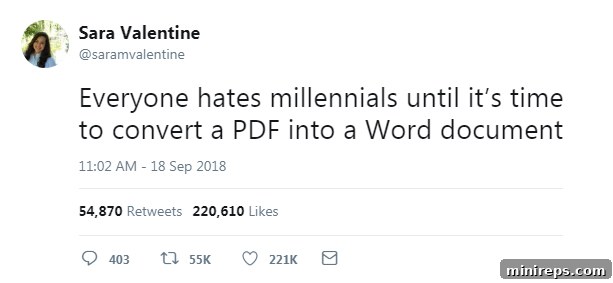
Consider the story of my younger cousin, a recent graduate from Syracuse University in New York. After a well-deserved summer enjoying a respite from academic responsibilities back in her hometown of Massachusetts, she embarked on her job search journey in the highly competitive New York City market. She understood that simply submitting a traditional resume would likely get lost in the overwhelming volume of applications from other recent graduates. To truly stand out, she knew she needed an innovative approach, one that would effectively communicate not just her qualifications, but also her personality and potential.
This personal anecdote highlights a broader trend: the necessity for job seekers to differentiate themselves in an increasingly crowded talent pool. The old paradigm of a one-size-fits-all resume is rapidly becoming obsolete. Instead, personal branding, digital presence, and creative showcasing of skills are becoming paramount. This is where the power of online resumes and digital portfolios comes into play, offering a dynamic platform for individuals to present their authentic selves and make a memorable impression on potential employers.
The Rise of Website Resumes: Your Dynamic Online Portfolio
Website resumes, or online portfolios, represent a significant evolution in how job seekers present themselves. Far beyond a simple PDF, these personal websites provide an immersive platform for ambitious professionals to showcase their work, elaborate on their experiences, and convey their unique personality in a way that is impossible on a static sheet of paper. For many roles, particularly in creative, tech, and marketing fields, companies actively request a portfolio of work, making a website resume an indispensable tool.
The advantages are manifold. Firstly, they demonstrate an applicant’s technological proficiency and adaptability – skills highly valued in today’s digital economy. Secondly, they offer unlimited space. Historically, resumes were strictly limited to one or two pages. A website eliminates this constraint, allowing candidates to delve deeply into projects, provide context, and include multimedia elements like videos, case studies, and interactive graphics. This comprehensive approach gives potential employers a much richer understanding of an applicant’s capabilities and achievements.
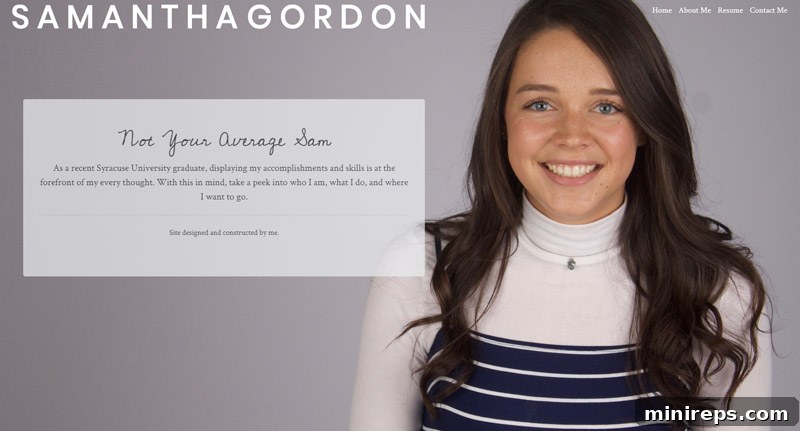
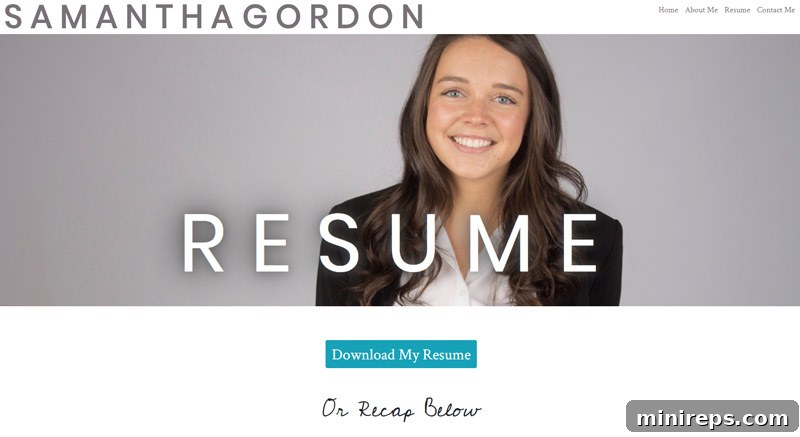
My cousin, for instance, created a sleek, four-page website. It featured a captivating home page, a detailed “about me” section that truly brought her story to life, a comprehensive resume page, and a clear contact section. This structure allowed her to curate a professional yet personal narrative. Website resumes are particularly beneficial for those applying for jobs in the technology and creative industries, as they inherently showcase design aesthetic, user experience understanding, and a taste of the applicant’s technical skillset. However, their utility extends to virtually any field, allowing professionals to demonstrate initiative, creativity, and a forward-thinking approach to their career development. Brands today seek to hire authentic individuals, and an online resume provides a powerful avenue for this authenticity to shine through.
Beyond simply listing credentials, a well-designed website resume serves as a living, breathing testament to an individual’s professional journey and aspirations. It allows for detailed project descriptions, testimonials, and even blog posts or thought leadership pieces, positioning the applicant as an expert in their field. Furthermore, a personal website gives job seekers complete control over their narrative and brand image, ensuring that their online presence accurately reflects their professional identity. This level of curated presentation significantly enhances an applicant’s appeal, helping them to stand out in a competitive job market where first impressions are everything.
The Art of the Creative Resume: Making an Unforgettable Impression
While website resumes offer a robust digital platform, the broader trend among modern job seekers is towards highly creative and non-conventional resume formats that capture immediate attention. These innovative approaches recognize that a resume is, at its core, a marketing tool for one’s personal brand.
We’ve all heard the legendary stories. There’s the individual in San Francisco who ingeniously disguised himself as a Postmates delivery person to hand-deliver his resume, cleverly nestled inside a box of irresistible donuts, directly to top decision-makers. Who could possibly resist such a thoughtful and delicious delivery? This brilliant marketing tactic ensured his application stood out from the pile. Then there’s the unforgettable fellow who built a unique website specifically to land him an internship with the acclaimed artist Chance The Rapper – a move that became truly legendary in career lore. These aren’t just quirky stunts; they are strategic demonstrations of creativity, resourcefulness, and a profound understanding of how to capture attention in a saturated market.
One aspect for which Millennials and Gen Z are both criticized and praised is their deep engagement with developing and curating their digital brand image. Older generations might sometimes view this emphasis on online presence as self-centered or superficial. However, these younger professionals can teach us invaluable lessons about the importance of personal branding in the modern era. In today’s interconnected world, your online identity often precedes you. A strong, consistent personal brand across platforms like LinkedIn, personal websites, and even controlled social media, can significantly enhance your professional credibility and open doors to opportunities.
Creative resumes, whether in the form of interactive websites, video applications, or cleverly designed physical packages, are more than just a means to list qualifications. They are opportunities to tell a compelling story, to showcase soft skills like innovation, communication, and problem-solving, and to demonstrate a genuine passion for a particular role or industry. They are a powerful signal to employers that the applicant is not just seeking a job, but is actively invested in making a unique contribution.
Website resumes, therefore, are just one facet of a broader movement where Millennials and Gen Z are actively reimagining and redefining the traditional work paradigm. They are challenging conventional hiring processes and pushing the boundaries of what a job application can and should be, all in an effort to present their most authentic and compelling professional selves to the world. This ongoing evolution in job search strategies reflects a dynamic workforce that values innovation, individuality, and impact.
The Future of Job Applications: Beyond the Traditional Resume
As technology continues to advance and the global workforce becomes increasingly interconnected, the methods for applying to jobs are destined to evolve even further. Website resumes and creative applications are not just fleeting trends; they are foundational shifts reflecting a new era of professional identity and communication. They signify a move away from generic applications towards personalized, engaging narratives that truly distinguish candidates.
Consider the broader implications: a website resume can be continually updated, reflecting new achievements and skills in real-time. It acts as a central hub for all professional information, linking to LinkedIn profiles, online projects, published articles, and social media presence, creating a holistic view of the applicant. This comprehensive digital footprint is invaluable for employers looking to understand not just what a candidate has done, but who they are as a professional.
In a world increasingly driven by digital interaction, the ability to effectively present oneself online is a critical skill. Website resumes hone this skill, allowing individuals to demonstrate their command of digital tools and their capacity for self-promotion in a professional context. They empower job seekers to take control of their career narrative, rather than relying solely on the rigid structure of a traditional document that might not fully capture their essence or potential.
Ultimately, the adoption of website resumes and creative application tactics by Millennials and Gen Z is a testament to their proactive and adaptable nature. They understand that in a rapidly changing job market, innovation is not just an advantage, but a necessity. These methods are paving the way for a more dynamic, transparent, and engaging hiring process, benefiting both job seekers who can better express their unique value, and employers who gain a deeper, more authentic understanding of their potential hires.
A Question for Our Readers:
In your opinion, are website resumes and digital portfolios truly the new standard for job applications? Would a thoughtfully crafted online resume give a candidate a distinct advantage when you are considering them for a position, compared to applicants who only submit traditional documents?