
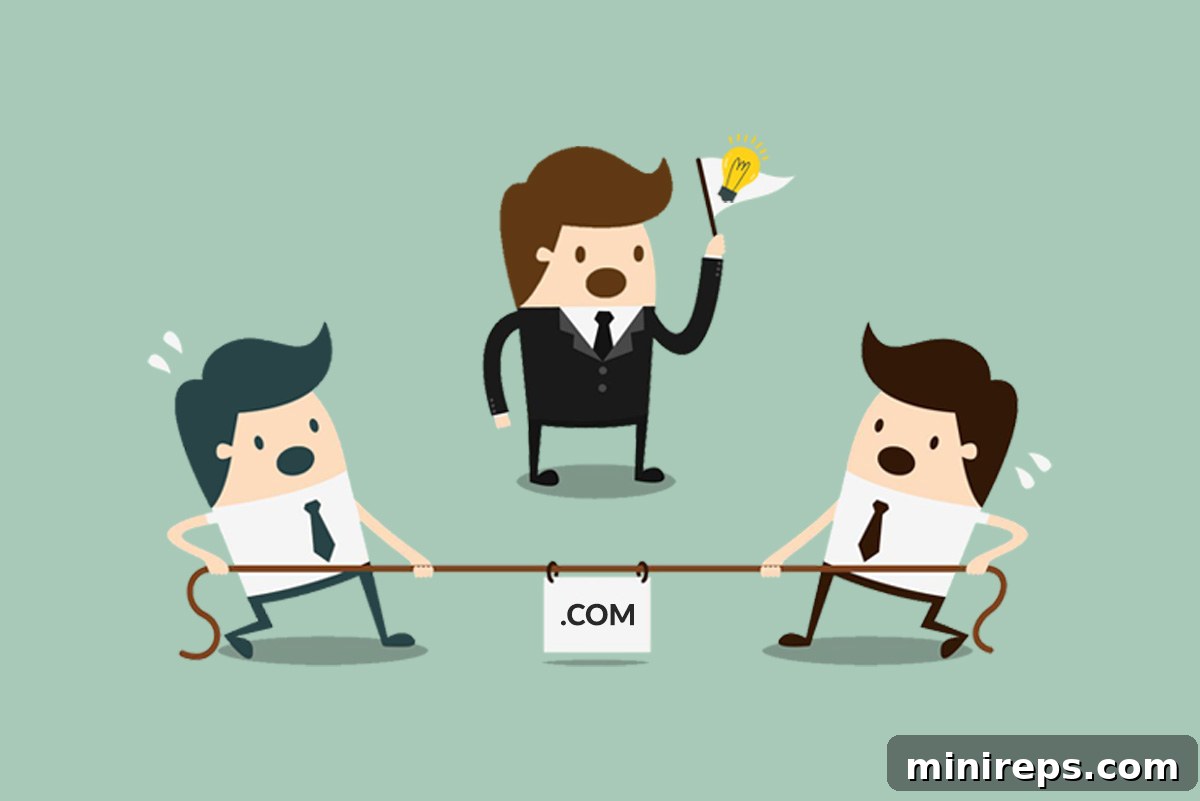

Embarking on the journey of a startup is an exciting venture, filled with critical decisions that shape its future. Among the most pivotal of these is selecting a company name. Far from a trivial choice, this decision forms the bedrock of your brand identity, influencing everything from marketing strategies to customer perception. Yet, a common oversight that can lead to significant hurdles is failing to consider the availability of your **startup domain extensions** early in the process. Imagine investing countless hours into perfecting a name, only to discover that every desirable domain name is already taken. This scenario can leave you with an undesirable web address that fails to resonate with your business mission, hinders brand recall, and ultimately struggles to attract new customers. Therefore, prioritizing domain availability alongside your naming strategy is not just advisable; it’s absolutely essential for laying a strong foundation for your digital presence.
The Critical Steps to Securing Your Startup’s Digital Identity
Launching a startup involves a meticulous sequence of steps, and integrating domain name considerations early on can save immense time, effort, and potential rebranding costs down the line. A proactive approach ensures that your brand’s online presence aligns seamlessly with its offline identity.

1. Brainstorm Your Startup Idea and Name Concepts
Before diving into domain searches, clearly define your startup’s core concept, target audience, and unique selling proposition. This foundational understanding will guide your naming process. Brainstorm names that are memorable, easy to spell, relevant to your industry, and reflect your brand’s values. Consider both descriptive and evocative names, and explore variations that might offer more flexibility.
2. Check Domain Name Availability – And Act Fast!
Once you have a shortlist of potential names, immediately check their availability as domain names. Utilize reputable domain registrars or online tools to perform quick searches across various extensions. This step is non-negotiable. If your ideal domain name is available, do not hesitate. The digital landscape is a competitive space, and desirable domains can be snatched up in a matter of hours or even minutes. Delaying this crucial purchase could mean losing your perfect web address to a competitor or a cybersquatter.

3. Secure Your Startup Domain Extensions Promptly
Once you confirm availability, proceed with purchasing your chosen **startup domain extensions**. This immediate action solidifies your digital footprint and prevents others from acquiring what rightfully belongs to your brand. Beyond just your primary domain, consider registering several related extensions as a proactive measure for brand protection and future expansion.
Embracing Modern Domain Extensions: Beyond the .COM
While the .COM domain has long been the gold standard, the digital age has introduced a vibrant array of new generic Top-Level Domains (gTLDs) that offer unique branding opportunities, especially for startups. These innovative extensions are not just trending; they can significantly enhance your brand’s identity and memorability in specific niches.
Domains like .IO, .AI, .APP, and .DEV are rapidly gaining traction and are becoming synonymous with the startup world. Let’s delve into why these extensions are capturing the attention of innovators:
- .IO and .AI: From Country Codes to Tech Powerhouses
Originally designated as country code Top-Level Domains (ccTLDs) for the British Indian Ocean Territory and Anguilla, respectively, .IO and .AI have transcended their geographical origins. The .IO domain, which you’ve likely seen in countless tech company URLs, has become a popular choice for startups due to its association with “Input/Output,” a fundamental concept in computing. This makes it a natural fit for tech companies, software services, and hardware innovators. Similarly, the .AI domain has skyrocketed in popularity amidst the Artificial Intelligence boom, becoming the preferred choice for companies operating in AI, machine learning, and robotics. These extensions convey a sense of modernity and specialization, instantly signaling a company’s focus to its audience. - .APP and .DEV: Google-Owned and Industry-Specific
On the other hand, .APP and .DEV are distinct as they are owned and operated by Google. This ownership instills a level of trust and inherent security, as Google enforces HTTPS encryption across all websites using these domains. This commitment to security is a significant advantage for startups and users alike. The .APP domain, launched in 2018, is perfectly suited for mobile applications, software-as-a-service (SaaS) platforms, and any business with a strong app-centric offering. Meanwhile, the .DEV domain, which debuted shortly after, is a magnet for developers, coding bootcamps, development agencies, and tech communities, clearly communicating their expertise to their target audience. These Google-backed extensions are among the hottest **startup domain extensions** on the market, offering clear branding and security benefits.
By opting for these relevant and forward-thinking domains, your startup can project an image of innovation and industry leadership. Your startup could be the next Google, starting with a domain that truly speaks to your mission.
Crafting a Robust Digital Fortress: A Multi-Domain Strategy for Startups
Securing a single, primary domain name is a good start, but a comprehensive digital strategy demands more. For optimal brand protection and market reach, startups should adopt a multi-domain approach. This involves registering your core brand name across various relevant domain extensions, creating a robust digital fortress around your brand.
If you’re fortunate enough to acquire your desired .COM domain, it’s highly recommended to also register the same name with additional domain endings. Consider these strategic registrations:
- Country-Specific Domain Extensions: If you plan to expand your business into international markets, registering country domain extensions (ccTLDs) like .CO.UK for the United Kingdom, .DE for Germany, or .CA for Canada, is crucial. This not only protects your brand in those regions but also signals local relevance to customers, potentially boosting SEO in specific locales.
- New Generic Top-Level Domains (gTLDs): Beyond .IO, .AI, .APP, and .DEV, explore other new domains that directly relate to your product, service, or industry. Examples include .TECH for technology firms, .SHOP for e-commerce, .LIVE for streaming services, or .CO for general business. These extensions can help you achieve a more precise and memorable online identity.
- Brand Protection Variations: Proactively secure common misspellings, hyphenated versions, and the plural form of your company name or key terms. For instance, if your company is “Innovate,” consider registering “Innovates.com” or “InnovateTech.com.” This defensive registration strategy prevents competitors or malicious actors from registering similar names and siphoning off traffic, confusing customers, or engaging in brand dilution.
By implementing a multi-domain strategy, you are not just buying domain names; you are expanding your real estate in the digital world. This proactive measure minimizes the chances of having to compete with other companies for confusingly similar **startup domain extensions**, solidifies your brand’s presence, and enhances its overall discoverability and protection in the vast online ecosystem.
Want to know which domains every new startup should have? Find out now and fortify your brand!
Register Your Startup Domain Trademark: The Ultimate Shield
While purchasing **startup domain extensions** is a fundamental first step, it must be paired with another equally critical action: registering your trademark. A trademark provides an additional, robust layer of legal protection for your company name, logo, and slogans, ensuring your brand identity remains uniquely yours.
It’s vital to understand that trademark rules differ significantly across the globe. Not all countries abide by the same legal frameworks, which can lead to complex situations. In some regions, the principle of “first to file” may give priority rights to the entity that first registers a domain name, irrespective of an existing trademark for that term elsewhere. This highlights the paramount importance of registering your mark in all relevant jurisdictions and across as many extensions as you believe could lead to confusing similarity, or for which you have a strategic reason for ownership.
As a general rule of thumb, establishing a trademark for your company and domain name offers unparalleled security and ownership rights. It significantly deters others from attempting to register your domain name for extortion purposes, a practice known as cybersquatting. Should someone purchase a domain name identical or confusingly similar to your trademarked term with the intent to resell it to you at an inflated price, they would be infringing on your trademark. This legal backing provides you with the means to reclaim your domain and seek damages, protecting your brand’s integrity and investment.
Therefore, integrating trademark registration into your initial startup checklist, right alongside domain acquisition, is a non-negotiable step for long-term brand security and legal peace of mind. Consult with intellectual property legal experts to navigate the complexities of international trademark law and ensure comprehensive protection for your burgeoning brand.
Timing is Everything: Seizing Your Startup Domains
In the fast-paced world of domain names, the adage “if you are not first, you’re last” holds profound truth. The window of opportunity to secure your ideal domain name can be incredibly narrow. If your preferred name isn’t available when you finally search for it, you’re immediately faced with a difficult compromise: either alter your carefully chosen business name or settle for less-than-ideal **startup domain extensions**.
This is precisely why the acquisition of domain names for your startup should be among the very first actions you take once your core idea is solidified. As soon as a name concept emerges, check its domain availability. If the name and its corresponding domain are available – fantastic! Proceed with immediate registration. However, if your perfect domain is already taken, all is not lost. You then have several strategic options:
- Explore Alternative Extensions: As discussed, modern gTLDs offer excellent branding opportunities and might provide an ideal fit if the .COM is unavailable.
- Consider Variations: Adding a keyword, a geographical indicator, or a short prefix/suffix (e.g., “get[YourBrand].com” or “[YourBrand]HQ.com”) can often yield an available and still desirable domain.
- Acquiring an Existing Domain: If your dream domain is owned but appears to be undeveloped or held by an individual, you can explore acquiring your domain name through a domain broker or by directly contacting the owner. This process can be more complex and potentially costly, but for a truly critical domain, it might be a worthwhile investment.
The cost of waiting far outweighs the minimal expense of early domain registration. A domain name is more than just a web address; it’s a critical asset that impacts your brand’s credibility, memorability, and SEO performance. By prioritizing timing, you secure your digital cornerstone, allowing you to build your brand without the constraint of a compromised online identity.
Want to buy your dream domain name from someone else? We’ll show you how! Don’t let a taken domain stop your vision.
When Your Domain Isn’t Available: Should You Change Your Business Name?
Discovering that your carefully chosen company name doesn’t have an available, matching domain can indeed put a startup in a challenging position. The decision of whether to stick with your original business name and find an alternative domain, or to pivot and rename your company to align with an available domain, requires careful strategic consideration.
For online businesses, especially those operating purely digitally, having a company name that precisely matches your website address is incredibly important. This consistency fosters strong brand recognition, simplifies marketing efforts, and builds immediate trust with customers. When your domain name deviates significantly from your business name, it can create confusion, dilute brand recall, and potentially impact your search engine optimization (SEO) by making it harder for users to find you. In such cases, if the ideal domain is unattainable, a strong argument can be made for adjusting your business name to secure an exact-match domain.
However, the importance of an exact-match domain can vary depending on your business model. If your brand primarily operates offline – for instance, a manufacturing company, a local service provider, or a physical retail store – having an exact-match domain name might not be as critical. In these scenarios, customers might primarily interact with your brand through physical locations, word-of-mouth, or traditional advertising, with the website serving as a supplementary resource rather than the primary point of contact. Even then, a memorable and relevant domain is beneficial.
An intelligent workaround in situations where your ideal domain is taken is to use domain forwarding. You can register a fun, catchy, and available domain name that might be shorter or more creative, and then redirect it to a longer or less attractive primary domain that you own. This allows you to leverage the brandability of the shorter domain for marketing purposes while maintaining your core web presence. A notable example of this strategy is how Mizzen + Main utilized a clever domain forwarding tactic to enhance their brand’s online visibility and memorability.
Ultimately, the choice depends on your specific business goals, target audience, and the overall marketing strategy. It’s a balancing act between brand identity, memorability, and online discoverability. What remains unequivocally true is that behind every great idea and successful startup is a well-chosen and secured domain name. Don’t let uncertainty or procrastination jeopardize your digital future. Take control of your brand’s online destiny by securing your **startup domain extensions** without delay. Try a search today and make your startup’s online presence a reality.