

Artificial intelligence (AI) is no longer a futuristic concept confined to the pages of science fiction; it is unequivocally
The ubiquity of AI extends far beyond personal conveniences. It powers the recommendation engines of e-commerce giants, streamlines logistics for global supply chains, enhances diagnostic capabilities in healthcare, and even plays a critical role in fraud detection for financial institutions. Our smart homes, voice assistants, and personalized news feeds are all testament to AI’s ability to learn, adapt, and make decisions based on vast datasets. This widespread integration underscores a pivotal shift: AI is not just a tool; it’s becoming an integral partner in human endeavors, influencing everything from individual choices to global economies. Understanding its true scope requires us to move past simplistic notions and embrace the complexity of its current capabilities and future potential. The journey of AI is marked by both incredible breakthroughs and formidable challenges, demanding careful consideration and proactive engagement from individuals, industries, and governments alike.

The rapid advancement of artificial intelligence has made it arguably the biggest buzzword of the decade. As its capabilities grow, so too does the public’s understanding and expectation of what it can achieve. We are witnessing a monumental transition where AI is transforming from a niche academic pursuit into a foundational technology that promises to redefine industries and human interaction. This evolution, while exciting, also brings with it a complex array of ethical, social, and economic considerations that demand our immediate attention and thoughtful deliberation. The path forward for AI development is not without its hurdles, but the potential rewards—from solving complex scientific problems to improving quality of life—are immense, propelling an urgent need for foresight and responsible innovation.
The Forecast: Navigating Challenges and Ethical Frontiers
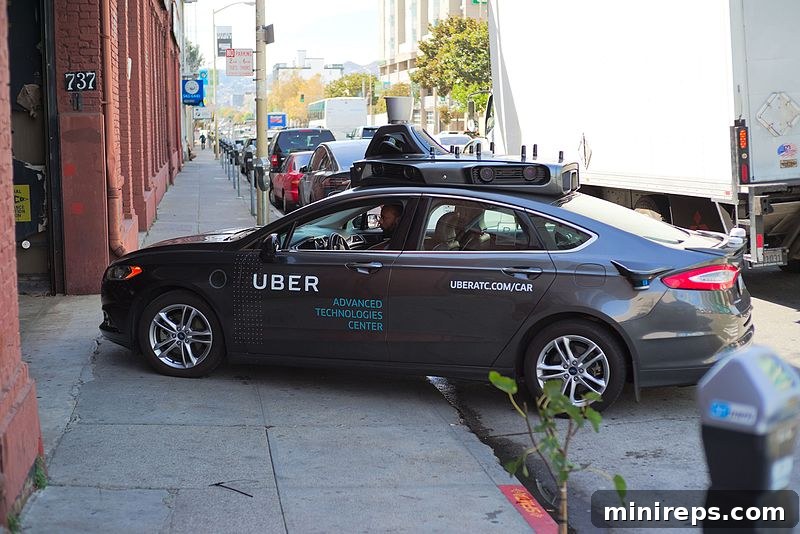
As with any groundbreaking technology, the development and integration of AI into society are inherently processes of trial and error. This reality was starkly highlighted by the tragic incident involving a self-driving Uber vehicle crash that resulted in the death of a pedestrian in Arizona. This incident served as a potent wake-up call, emphasizing that while autonomous vehicles represent a promising facet of artificial intelligence, the technology is not yet infallible. It brought to the forefront the profound ethical and safety questions that must be meticulously addressed before AI-driven systems can be deployed widely and safely.
Autonomous vehicles, though a small component of the vast AI landscape, command significant public and regulatory attention. City executives and policymakers find themselves at a crossroads: eager to embrace technological advancement to build smart cities, yet simultaneously apprehensive about the implications for public safety when machines are entrusted with critical decision-making on public roads. The Uber incident, which occurred at night when the pedestrian was not using a designated crosswalk, underscores the formidable challenges AI faces in perception and decision-making, particularly in complex and unpredictable real-world scenarios. Despite advanced sensor arrays, the system failed to adequately detect and react to the pedestrian, Elaine Herzberg. The loss of a human life in this context served as a poignant reminder that we are merely scratching the surface of understanding the full scope of AI’s capabilities and its limitations. It forces us to confront the profound moral issues embedded in AI development and the critical need for society to prepare for an increasingly intelligent future, one where accountability, ethics, and safety are paramount.
Beyond autonomous vehicles, the broader forecast for AI includes navigating a range of formidable challenges. One critical area is algorithmic bias, where AI systems, trained on biased data, can perpetuate and even amplify existing societal inequalities. This can manifest in everything from discriminatory lending practices to biased hiring algorithms. Another significant hurdle is data privacy and security; as AI systems consume vast amounts of personal data, safeguarding this information from misuse and breaches becomes increasingly complex. Furthermore, the economic implications, particularly concerning job displacement, require careful consideration and proactive strategies for workforce retraining and adaptation. The “trial and error” phase of AI development necessitates not only continuous technological refinement but also robust regulatory frameworks, transparent development practices, and extensive public engagement to build trust and ensure responsible innovation. The journey ahead demands a collaborative effort to anticipate, mitigate, and resolve these challenges, ensuring that AI serves humanity’s best interests.
The Storm: Grappling with AI’s Moral Compass
The fundamental premise of artificial intelligence involves programming machines to execute calculated decisions and actions, thereby automating mundane or complex tasks that humans prefer not to undertake, such as driving. This capability, while incredibly efficient, introduces a fascinating and often disturbing moral dilemma: robots lack emotions and cannot make decisions with the same intuition, empathy, or nuanced judgment as humans. Consider a scenario that highlights this divergence: you are driving, and suddenly, a small, adorable bunny hops directly into your path. What is your immediate reaction? For most human drivers, the instinct would be to swerve, almost without conscious thought, to avoid hitting the animal, often disregarding the potential, albeit minor, risks to themselves. This act of self-sacrifice, driven by an emotional response or an innate moral compass, is something a purely calculated intelligence would struggle to comprehend or replicate without explicit programming.
The core challenge lies in defining and embedding a moral compass into self-driving machines. If AI systems are to operate in complex human environments, they must possess a framework for ethical decision-making. This moves beyond simple rules and delves into profound philosophical questions about what constitutes the “greater common good.” In scenarios akin to the tragic Uber incident, or even our hypothetical bunny situation, AI technology must make instantaneous, life-or-death decisions. Should the AI prioritize the safety of its passengers, potentially at the cost of a pedestrian, an animal, or multiple innocent bystanders? This is a sophisticated iteration of the classic “trolley problem,” where a difficult choice must be made between two undesirable outcomes. In a society already grappling with human-on-human violence, introducing machines that might be programmed to make decisions resulting in fatalities presents a profound ethical quandary for which humanity is arguably ill-prepared. The mere thought of AI systematically choosing to sacrifice lives, even to save others, raises chilling questions about accountability, the value of life, and the very nature of morality when translated into algorithms.
The complexities extend to how we define and weigh human values. For instance, how do we program AI to understand the sanctity of human life, the value of individual rights, or the importance of compassion? Different ethical frameworks—such as utilitarianism (maximizing good for the greatest number) versus deontology (adhering to moral duties and rules)—offer conflicting guidance. Implementing these frameworks into AI algorithms is not straightforward, as real-world situations are rarely black and white. Moreover, who decides which ethical framework takes precedence, and what are the implications if these choices lead to unforeseen or undesirable outcomes? The “storm” of AI’s moral dilemmas requires not just technological solutions but a deep, interdisciplinary dialogue involving ethicists, philosophers, policymakers, and the public, to collectively shape the ethical boundaries within which artificial intelligence must operate. Without a robust and universally accepted ethical framework, the widespread adoption of highly autonomous AI could unleash a torrent of moral and legal ambiguities that society is currently ill-equipped to handle.
The Calm: Embracing Opportunities and Responsible Innovation

Despite the challenges and ethical storms that AI presents, its potential to foster a brighter tomorrow is undeniably vast and transformative. We can only begin to imagine the revolutionary impact it will have across numerous industries, fundamentally reshaping how we work, live, and interact with the world. Consider the profound implications for sectors like trucking and logistics, where AI-powered optimization can streamline routes, reduce fuel consumption, and enhance supply chain efficiency, leading to significant economic and environmental benefits. In manufacturing, AI drives automation, predictive maintenance, and quality control, boosting productivity and minimizing waste.
Perhaps one of the most promising areas is healthcare. AI is already revolutionizing drug discovery by rapidly analyzing vast datasets to identify potential compounds and accelerate research timelines. It enhances diagnostics, helping doctors detect diseases like cancer earlier and more accurately through advanced image recognition. Personalized medicine, tailored to an individual’s genetic makeup and lifestyle, is becoming a reality with AI’s ability to process complex biological data. Robotic surgery, assisted by AI, offers greater precision and minimizes invasiveness, leading to faster recovery times for patients. Beyond these, AI contributes to environmental conservation through climate modeling, optimizing renewable energy grids, and monitoring biodiversity. In education, it can personalize learning experiences, adapt curricula to individual student needs, and automate administrative tasks, freeing educators to focus on teaching.
Looking towards the future of artificial intelligence, it is absolutely crucial that we collectively come together and proactively embrace this technology. While it is understandable and indeed wise to approach new technologies with caution and a conservative mindset, outright denial or an attempt to keep AI out of our cities and societies will only be a temporary measure. A new generation of artificial intelligence is upon us, bringing with it a powerful mix of excitement for its potential and understandable nerves about its implications. As a society, our imperative is to welcome this era with open dialogue, informed discussion, and comprehensive preparation. This means establishing robust ethical guidelines, fostering responsible development practices, investing in education and retraining for the workforce, and ensuring the safety and well-being of our citizens as we navigate this opportunistic new era.
Ultimately, the trajectory of artificial intelligence rests in our hands. We, the humans, are the architects and teachers of AI, responsible for programming its algorithms, feeding it data, and shaping its decision-making parameters. The unfortunate Uber accident, for instance, also highlighted the critical role of human oversight: a “safety driver” was present but distracted at a pivotal moment. This underscores that AI’s future is a shared responsibility, requiring us to eliminate distractions, exercise vigilance, and be held accountable for the ethical and practical frameworks that will define our coexistence with artificial intelligence. By actively participating in its development and integration, we can steer AI towards a future that maximizes its benefits while mitigating its risks, creating a world where intelligence, both artificial and human, collaborates for the greater good.
The Domain: Crafting Digital Identity in the AI Era
In the rapidly expanding landscape of artificial intelligence, a distinctive online presence is paramount for companies, startups, and researchers operating in this cutting-edge field. Thanks to the .AI domain, establishing such an identity has become remarkably straightforward and highly relevant. While the .AI domain extension has long been the country code top-level domain (ccTLD) for Anguilla, a Caribbean island, its significance transcended its geographical origin when the tech community, particularly AI startups, began adopting it for a new, powerful meaning: Artificial Intelligence. This strategic appropriation transformed .AI into one of the most sought-after and recognizable domain endings for anything related to AI, signifying innovation and forward-thinking in the digital realm.
The appeal of .AI lies in its immediate association with artificial intelligence, providing an intuitive and memorable web address for businesses and projects in this sector. This trend mirrors the earlier popularity of the .IO domain, which became synonymous with the “Silicon Valley” tech scene. Originally the ccTLD for the British Indian Ocean Territory, .IO gained traction among startups and developers for its evocative connection to “Input/Output” – a fundamental concept in computing technology. Just as .IO became the de facto domain for many innovative tech companies, .AI has solidified its position as the preferred choice for AI-focused entities, clearly signaling their niche and expertise to a global audience. These domain choices are not merely technical decisions; they are strategic branding moves that convey credibility and alignment with specific technological movements.
The rise of specialized top-level domains (TLDs) like .AI and .IO reflects a broader evolution in the internet’s naming conventions, moving beyond traditional .com, .net, and .org. This trend allows businesses to craft more descriptive and industry-specific online identities. For example, Google owns and operates .APP and .DEV domains, which are specifically tailored for application developers and development-related projects, respectively. These TLDs offer clear, concise, and professional branding opportunities that resonate with target audiences. For any startup or established company venturing into AI, securing a .AI domain is more than just registering a web address; it’s about claiming a digital space that instantly communicates their core business, enhances their brand identity, and positions them at the forefront of the artificial intelligence revolution. In an increasingly competitive digital landscape, a strong, relevant domain name is a critical asset for visibility, branding, and establishing an authoritative presence in the world of AI.