
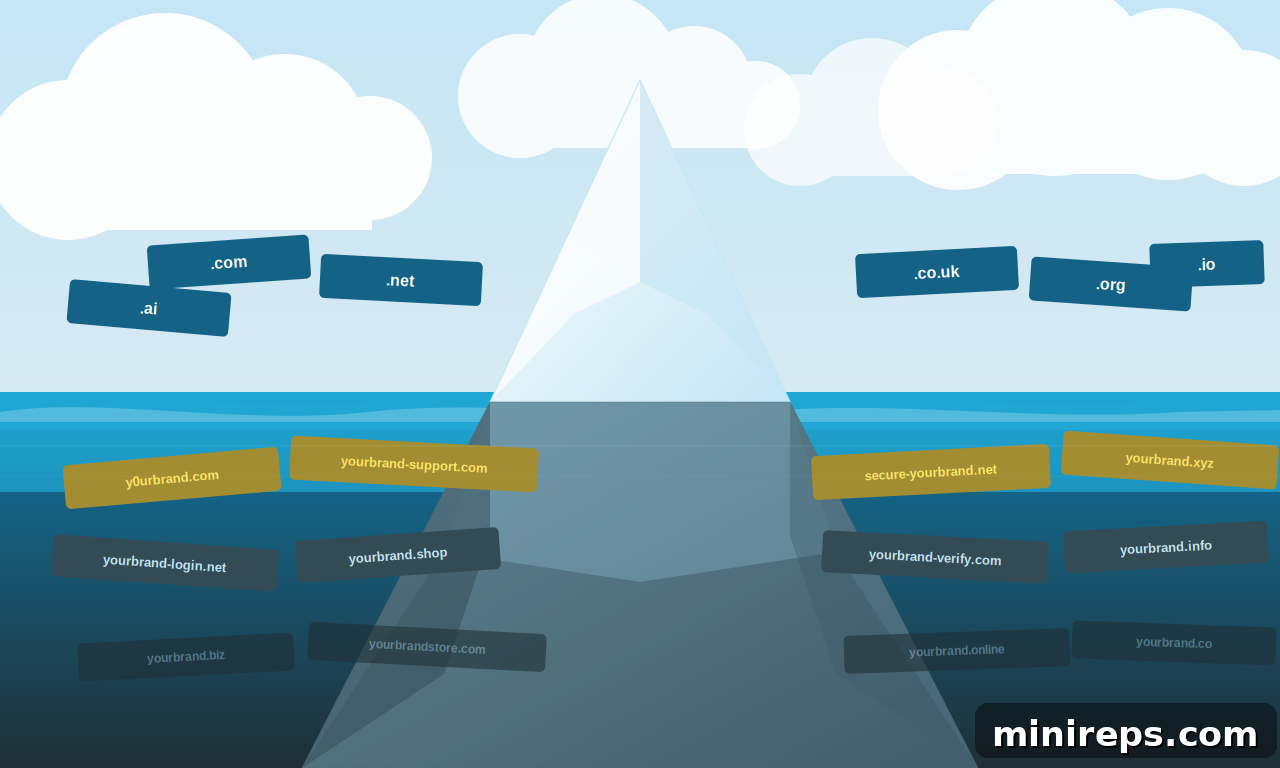
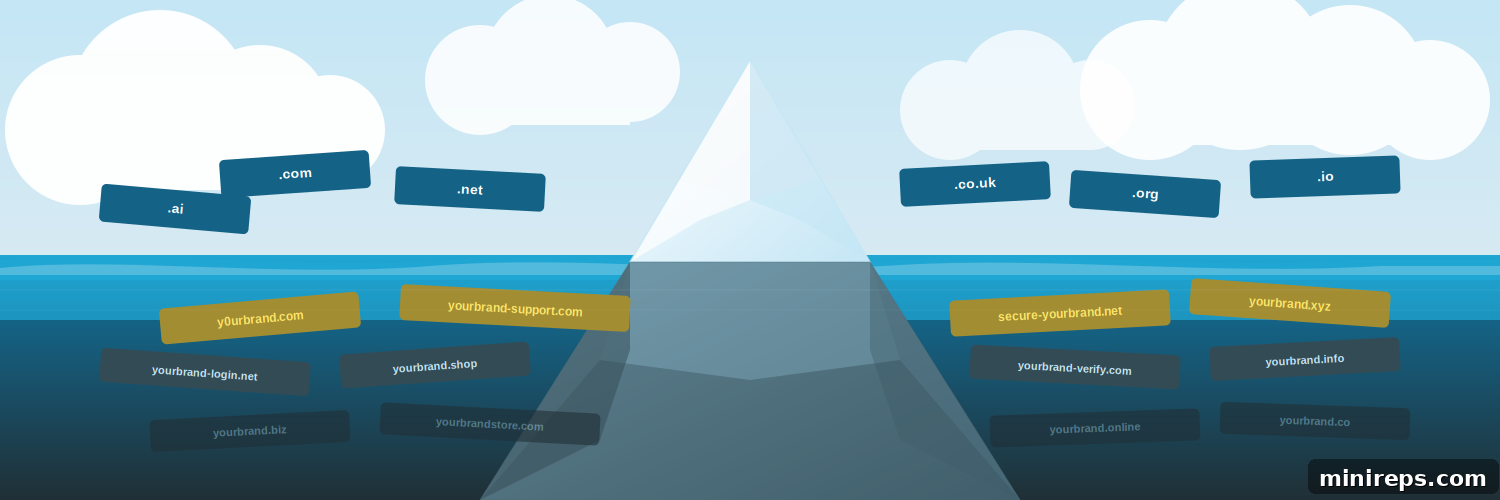
Your brand operates across two domain portfolios: the one you actively manage and a growing shadow portfolio you likely don’t know about. Trademark squatters, lookalike phishing domains, and expired assets picked up by bad actors form a hidden ecosystem that undermines trust, exposes employees and customers to fraud, and creates legal and financial liability — often before your team even learns of the threat.
Too often organizations learn about this exposure the hard way: through customer complaints, security incidents, or legal notices. By then, reputational and financial damage has already occurred. This is the difference between reactive and proactive brand protection — and the gap is wider than many enterprises realize.
You can’t protect what you can’t see
Real brand protection starts with accepting that your current visibility is almost certainly incomplete. Trademark abuse, counterfeiting, and impersonation frequently go unnoticed because attackers use subtle variations of your domains to deceive users.
Fraudsters register domains that mimic yours by swapping letters, using different top-level domains, or appending words like “support.” Customers can land on these sites, employees may receive phishing emails, and your reputation suffers as a result.
The hard reality: Just because you don’t see it doesn’t mean it isn’t happening.
Recent industry data highlights how pervasive domain abuse has become. Reported phishing attacks have increased dramatically since 2021, with domain names repeatedly identified as the primary infrastructure exploited by criminals. New generic top-level domains now account for a rising share of phishing domains, making domain-based abuse one of the fastest-growing attack surfaces for brand impersonation.
Social media often serves as the initial lure — fake profiles, scam ads, and impersonation draw victims in. But the real harm happens on malicious domains where credentials and payments are harvested. Your organization can intervene most directly at the domain level, where damage occurs.
The hidden cost of an unmanaged portfolio
Viewing domain management merely as IT overhead underestimates the potential impact. A domain registration may cost $10–$15, but a counterfeit site on a lookalike domain can divert millions in revenue, incur substantial legal fees, and inflict long-term brand damage. Phishing campaigns from domains that have expired or been abandoned can compromise customer accounts, invite regulatory scrutiny, and create costly liabilities.
The true risk lies not in the domains you control, but in those you’ve overlooked, let expire, or don’t yet know about — and in the time between when a threat appears and when you detect it.
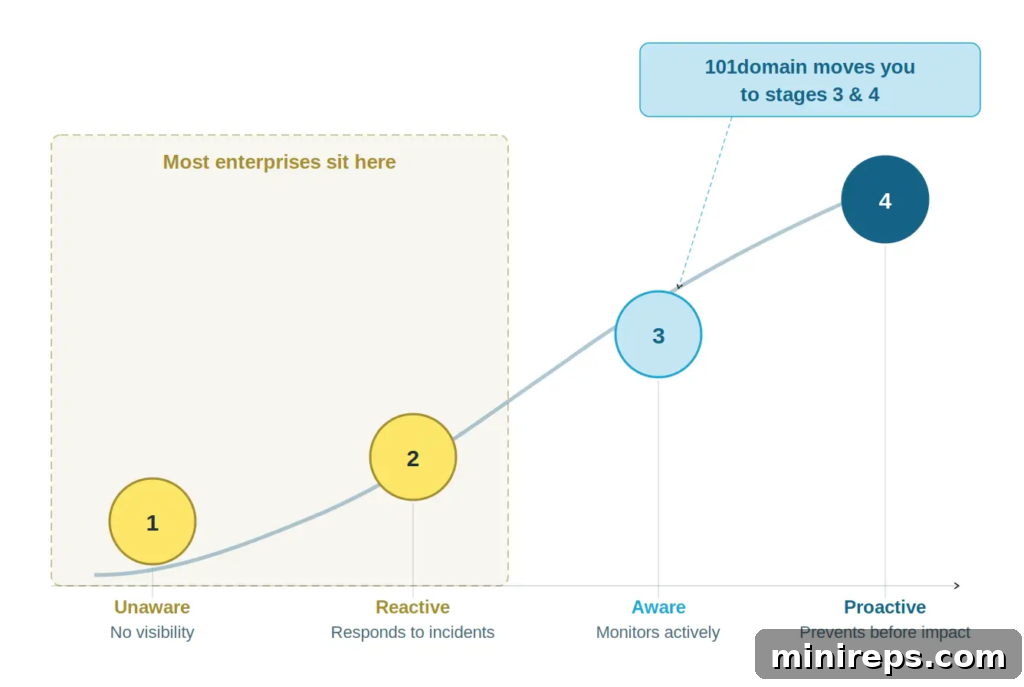
The brand maturity gap: Most enterprises sit between Unaware and Reactive on the brand protection curve. Moving to Proactive is less a technical upgrade and more a strategic financial decision.
Organizations that treat domain portfolio management as a strategic discipline consistently outperform peers on intellectual property protection and incident response. The investment to improve visibility and controls is modest compared with the exposure of doing nothing.
From reactive to proactive: A five-step path forward
Advancing your brand protection maturity doesn’t require a complete overhaul. It requires a clear process, the right tools, and partners who can operationalize the work. The following five steps provide a practical path forward.
Step 1 — Centralize and audit your domain inventory
Create a single inventory of every domain you own, identify logical variations you should own but don’t, and implement expiration and renewal controls so domains never fall through the cracks.
Step 2 — Take action against identified threats
Visibility is necessary but not sufficient. You need enforcement capabilities: coordinated domain dispute filings, takedown procedures, and legal workflows that move quickly when abuse appears. Using experienced enforcement services can reduce billable hours and speed resolution.
Step 3 — Shift from reactive to continuous monitoring
Proactive protection requires continuous monitoring for lookalike registrations, infringing content, and malicious domain activity — with response times measured in hours, not weeks. Monitoring should extend beyond domains to trademarks, web pages, social media, and marketplaces.
Step 4 — Enforce foundational security on every domain you own
Apply registry lock, DNSSEC, and strong account protections like single sign-on and two-factor authentication across your portfolio. These controls prevent unauthorized transfers, DNS hijacking, and credential-based account takeovers that can escalate neglect into crisis.
Step 5 — Run quarterly portfolio reviews
Brand protection is ongoing. Quarterly reviews keep your inventory accurate, access controls current, and the window of exposure narrow. API integrations and regular account reviews help maintain hygiene and surface new risks early.
Why choose a corporate-focused provider
Enterprise-grade domain management differs from consumer registrars. A corporate platform combines security controls with managed services and experienced personnel who understand complex portfolios. Dedicated account support, solutions engineering, and domain specialists can act quickly when risks emerge.
A comprehensive corporate brand protection program covers the lifecycle:
• Portfolio audit and gap analysis
• Defensive registration strategy
• Continuous monitoring for lookalike and infringing domains
• Coordinated takedowns and domain dispute services
• Registry lock, DNSSEC, and strong account security
• Regular hygiene reviews and API-powered portfolio management
When domain management is treated as a strategic function, organizations reduce exposure and respond faster to threats.
Start with a portfolio audit
The quickest way to understand your brand liability is to see it. A domain availability and portfolio audit reveals the shadow domains and gaps you may not know exist. This audit is the baseline for building a proactive protection program.
Begin with a structured portfolio review to surface blind spots, establish continuous monitoring, and implement foundational security controls that reduce risk and shorten response times.
Domain Name Services
Global reach and enterprise support help you make informed decisions to keep your brand protected across domains and digital channels.
Monitoring & Enforcement Services
Dedicated monitoring and analysts work continuously to identify problems and provide in-house solutions to resolve abuse quickly.
Security & Technology Partners
Complementary services and best-in-class partners support a security-focused approach to domain and web technology management when you need them.