
Registering a domain name is the first practical step for any business that wants an online presence. As an organization grows, however, domain management evolves from a simple administrative task into a critical component of security, compliance, and global operations. Many leaders discover that the registrar they used to buy their first .com address isn’t designed to support an enterprise-scale portfolio or the governance required to protect a brand worldwide.
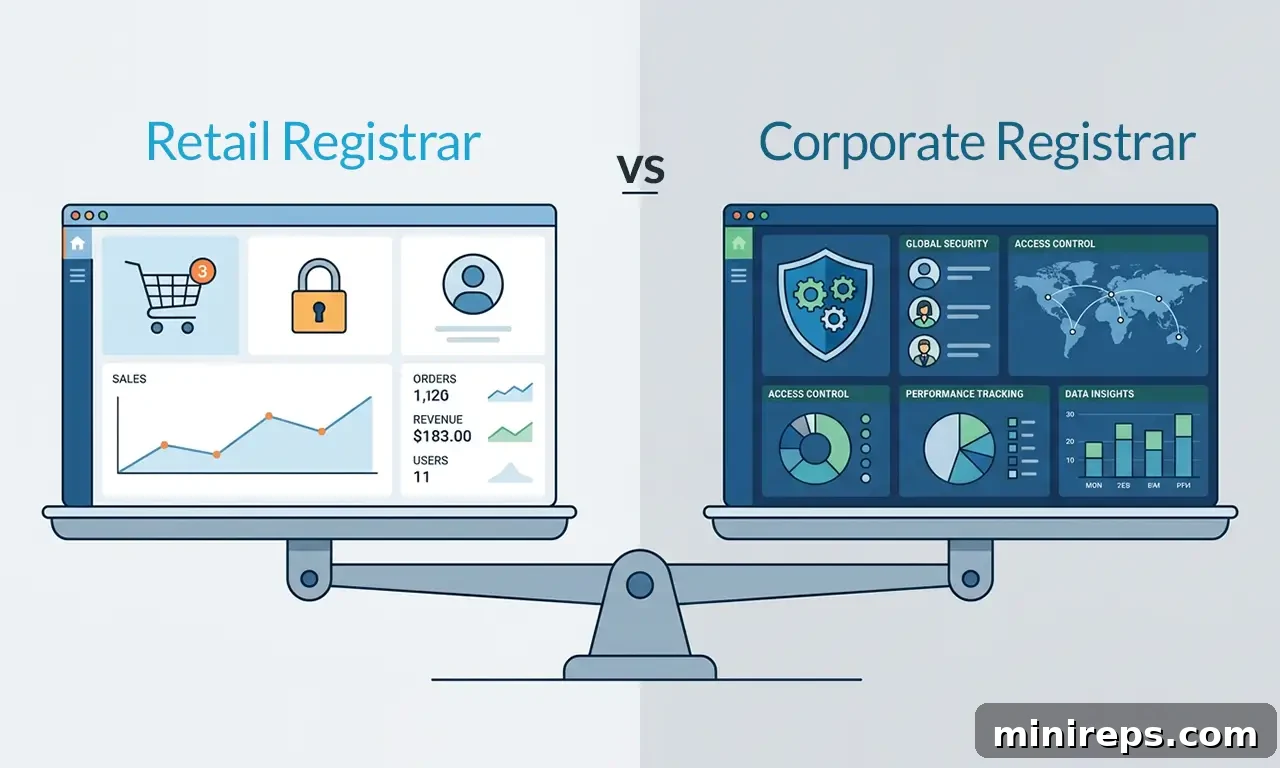
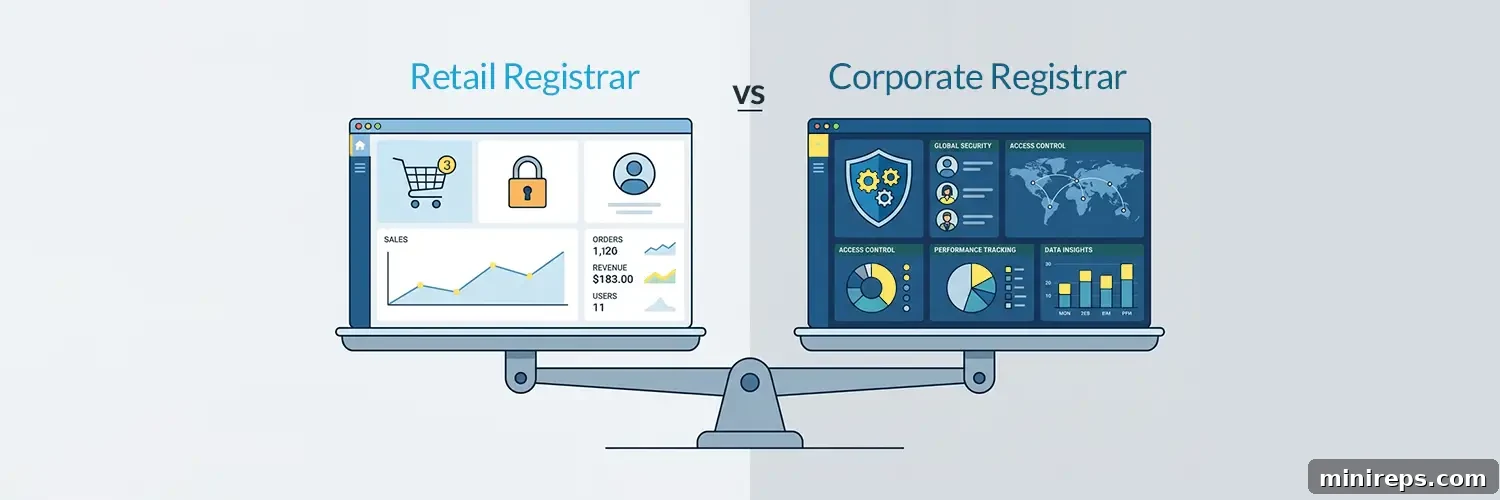
In the domain ecosystem, registrars generally fall into two broad categories: retail and corporate. Knowing the strengths and limitations of each helps you choose a partner that matches your organization’s scale, security needs, and long-term strategy.
The retail registrar: Designed for simplicity and scale
Retail registrars are widely recognized consumer brands often advertised directly to individuals and small businesses. They are optimized for ease of use, low cost, and speedy setup—ideal for personal projects, freelancers, and small companies that only need a handful of domain names.
These providers typically operate a self-service model with highly automated workflows. Account management, renewals, and support are largely handled through online dashboards, FAQs, chatbots, or ticket systems. Pricing tends to be competitive, and the onboarding process is straightforward. However, retail registrars generally offer basic security features and may prioritize cross-selling of services such as shared hosting, website builders, and email.
For organizations that must manage large portfolios, meet complex international registry rules, or actively defend a brand against phishing and cybersquatting, retail offerings can become limiting. They often lack the granular access controls, enterprise-grade authentication, and proactive monitoring tools that larger enterprises require.
The corporate registrar: Built for enterprise brand protection
Corporate registrars are purpose-built to address the needs of organizations that run extensive, high-value domain portfolios. These platforms emphasize governance, compliance, and defense—helping legal teams, IT departments, and brand managers reduce risk and maintain control at scale.
Expect white-glove account management, tailored support, and security controls such as Registry Lock, Single Sign-On (SSO) integration, role-based access, and multi-user workflows to prevent unauthorized changes or accidental expirations. Corporate registrars typically provide continuous monitoring for threats like phishing, typosquatting, and trademark infringement, alongside tools for defensive domain registration and portfolio rationalization.
That said, traditional enterprise-focused registrars can come with trade-offs: pricing models may be complex, and long contract terms or limited flexibility can hinder agile programs. Selecting a corporate registrar should therefore weigh service level, transparency, and the ability to integrate with existing security and IT processes.
The 101domain difference: The ultimate global partner
Some providers aim to bridge the gap between retail convenience and corporate-grade protection. 101domain positions itself as such a partner, offering enterprise-level security and compliance while maintaining pricing transparency and operational flexibility.
Rather than relying solely on automated support, 101domain assigns a dedicated Account Executive to enterprise customers. This human point of contact focuses on each organization’s unique portfolio, monitors brand liabilities, and coordinates rapid responses when issues arise. That blend of personal service and technical capability can be important during time-sensitive incidents or complex international registrations.
On the technical side, 101domain highlights a broad global reach, supporting a large number of domain extensions and jurisdictions. They also provide programmatic access—APIs and server tools—so IT teams can integrate domain management into existing workflows, automation pipelines, and security tooling. For organizations adopting AI-driven agents or sophisticated DevOps practices, programmatic interfaces make it possible to incorporate domain status and DNS configuration into automated processes.
In addition to registration and account services, managed security offerings commonly paired with enterprise registrars include advanced DNS protection, email authentication tooling, and attack surface monitoring. These services help reduce the risk of impersonation, phishing, and other abuse that can damage customer trust and brand reputation.
Choosing the right registrar matters. For startups and small projects, a retail registrar provides an efficient, cost-effective path to get online. For mid-market and enterprise organizations, a corporate-focused partner delivers the governance, security, and global reach needed to protect a brand and support complex international operations. Providers that combine clear pricing, attentive account management, programmatic tools, and managed security services offer a practical middle ground—delivering corporate-level protections without sacrificing agility.