
In the dynamic world of e-commerce and direct-to-consumer brands, competition is fierce, and companies are constantly seeking innovative ways to capture market share. While many brands focus on traditional marketing and product differentiation, some adopt a more audacious, head-on approach. One such notable example is Jeremy’s Razors, a relatively new entrant that has openly declared its intent to challenge the established brand Harry’s. This provocative strategy, far from being subtle, is deeply ingrained in Jeremy’s Razors’ marketing, from their website to their video campaigns and even their choice of domain names. The battle between these two razor companies offers invaluable insights into the critical importance of brand protection in an increasingly competitive and interconnected digital landscape.
The story of Jeremy’s Razors isn’t just about shaving; it’s a masterclass in aggressive market disruption and a potent reminder for all businesses about safeguarding their digital identity and brand equity. As we delve into the tactics employed by Jeremy’s Razors, we uncover crucial lessons that highlight why proactive brand protection isn’t merely a defensive measure but an essential component of long-term business strategy. Understanding these lessons can empower businesses to fortify their presence, protect their reputation, and secure their future against both direct competitors and malicious actors.
Jeremy’s Razors: A Bold Case Study in Brand Protection Challenges
The genesis of Jeremy’s Razors stems from a clear and outspoken critique of Harry’s. This is not a hidden agenda; it’s a core part of their brand identity and marketing narrative. The aggressive stance taken by Jeremy’s Razors provides a stark illustration of how easily a competitor can leverage existing brand recognition, even if it’s to disparage it, and underscores the urgent need for comprehensive brand protection strategies.
Their Website Speaks Volumes.
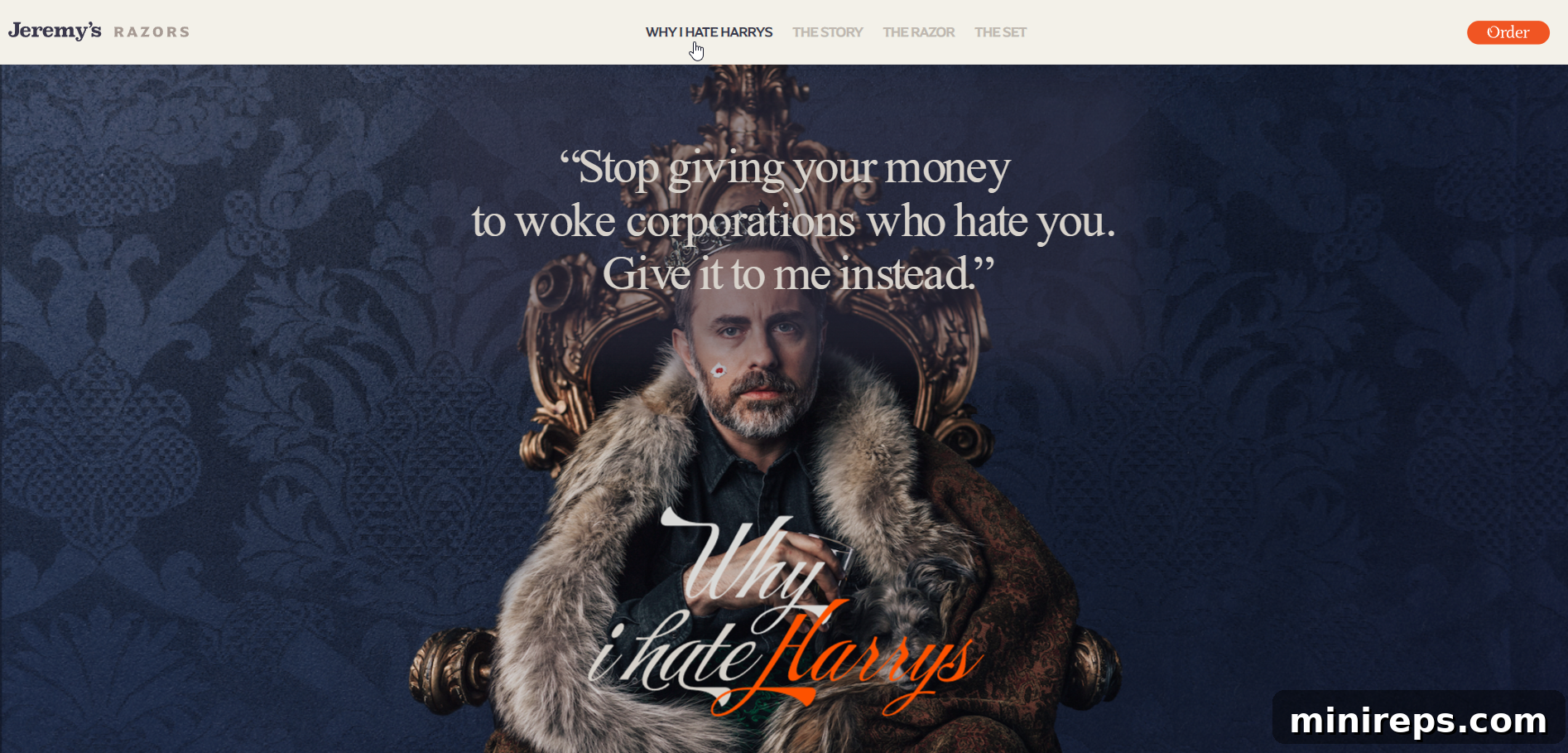
Jeremy’s Razors explicitly articulates its animosity towards Harry’s directly on its website. This isn’t just a fleeting mention; it’s a dedicated section designed to grab attention and articulate their stance. For instance, a prominent tab on the Jeremy’s Razors website is boldly titled “WHY I HATE HARRY’S.” This direct confrontation is a powerful marketing tool, drawing in consumers who may be disenfranchised with existing brands or simply curious about the controversy. From a brand protection perspective, this direct attack creates a perception challenge for Harry’s, forcing them to consider how to respond to such public declarations of rivalry. It’s a clear signal that brand discourse no longer happens solely in controlled advertising spaces but can be heavily influenced by challengers.
Emulating and Exploiting Video Marketing Styles.
Upon visiting the Jeremy’s Razors website, users are immediately greeted with a video that bears a striking resemblance to Harry’s distinctive marketing style. This imitation is intentional, designed to create an instant association and draw comparisons. More tellingly, when a user searches for “harry’s razors” on Google and navigates to the video results, the Jeremy’s Razors commercial often appears among the top results. This tactic not only capitalizes on Harry’s established search engine visibility but also leverages YouTube’s algorithm, pushing their adversarial content directly to Harry’s potential customers. This strategic placement in search results and the mimicry of marketing aesthetics are potent examples of how a challenger can hijack a competitor’s brand equity and search traffic, making robust digital monitoring and content protection crucial.
Strategic Domain Name Registration: The “ihateharrys.com” Ploy.
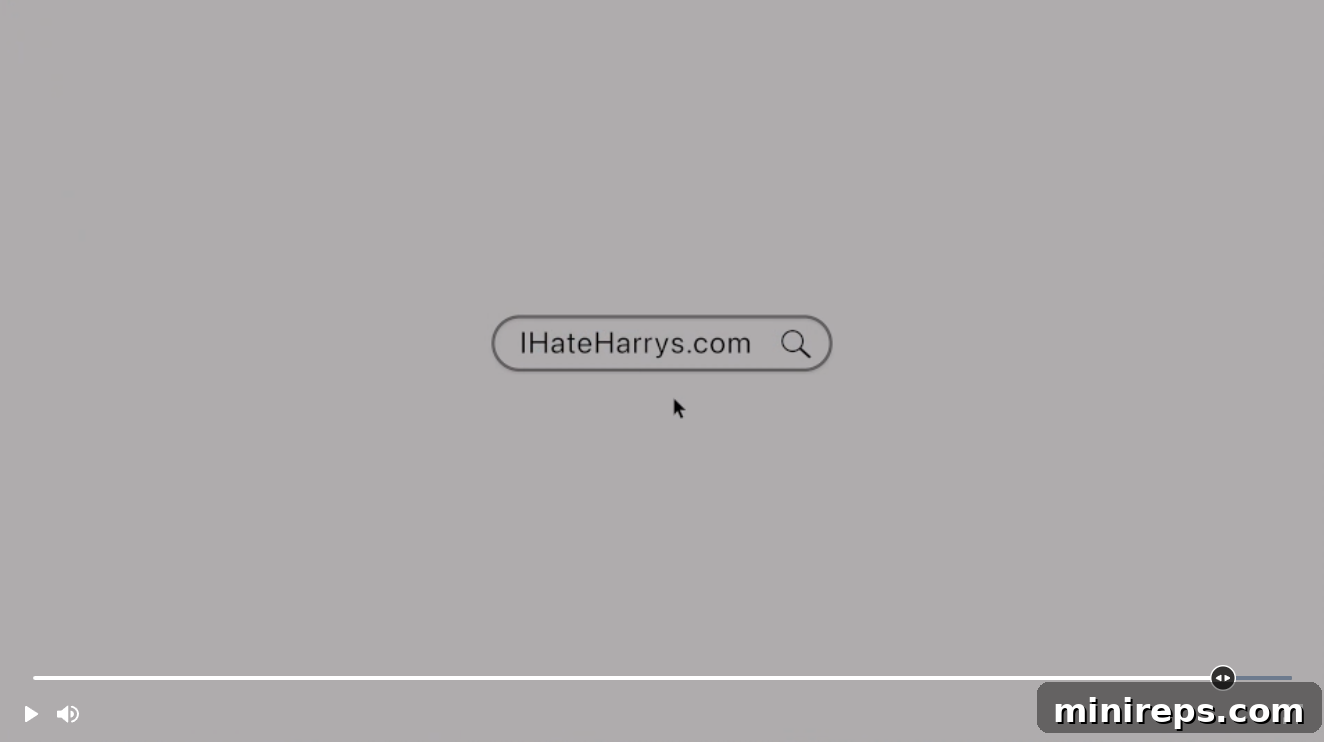
Perhaps one of the most direct and aggressive moves by Jeremy’s Razors is the registration of the domain name ihateharrys.com. This domain is prominently featured as a call to action in their marketing videos, directing viewers to visit it to pre-order their products. Crucially, this domain then redirects to jeremysrazors.com. This maneuver is a textbook example of cybersquatting, albeit with a highly specific, competitive intent. By registering a domain that explicitly targets a competitor’s brand name with negative sentiment, Jeremy’s Razors effectively intercepts traffic, capitalizes on potential dissatisfaction, and creates a memorable, albeit provocative, brand association. This aggressive domain strategy should serve as a wake-up call for any brand about the importance of securing not just their primary domain, but also defensive and even offensive variants that could be used against them.
The availability of domains like harrys.sucks further exemplifies the broader risk landscape. While Jeremy’s Razors might not have registered this particular domain at the time of writing, the very existence of such an available, disparaging domain highlights a critical vulnerability. Proactive brands must consider defensively registering domain names that could be used for negative campaigns, parody sites, or direct attacks. Failing to do so leaves a wide-open door for competitors or disgruntled individuals to establish an online presence that directly harms the brand’s reputation and potentially diverts valuable customer traffic. The lessons from Jeremy’s Razors are clear: brand protection must extend far beyond simply owning your primary URL.
101domain Brand Protection Recommendations: Safeguarding Your Digital Assets
While Jeremy’s Razors represents a bold and highly visible competitor, the online world is full of less obvious threats. From cybercriminals attempting to phish your customers to less scrupulous competitors trying to siphon your web traffic and revenue, the digital landscape is fraught with perils. Protecting your brand’s integrity, intellectual property, and online presence is paramount for sustained success. Here’s what we recommend to build a resilient brand protection strategy:
1. Defensively Register Domain Names
The old adage “prepare for the worst, hope for the best” holds true in brand protection. Defensive domain registration is your first line of defense against cybersquatting, typosquatting, and direct competitive attacks. This strategy involves registering variations of your brand name before others can seize them for malicious or opportunistic purposes. Begin by securing the most common generic top-level domains (gTLDs) such as .com, .net, .org, .biz, and .info, as these are frequently targeted. Beyond these, consider country-code top-level domains (ccTLDs) relevant to your operational regions or target markets, such as .co.uk, .de, .ca, etc. Additionally, with the proliferation of new gTLDs, it’s vital to assess and secure your brand name in those that could pose a threat, including negative connotation domains like .sucks, or industry-specific domains like .shop, .store, .tech, etc. This proactive approach prevents others from registering domains that could mislead customers, host competitor content, or engage in phishing scams using your brand name.
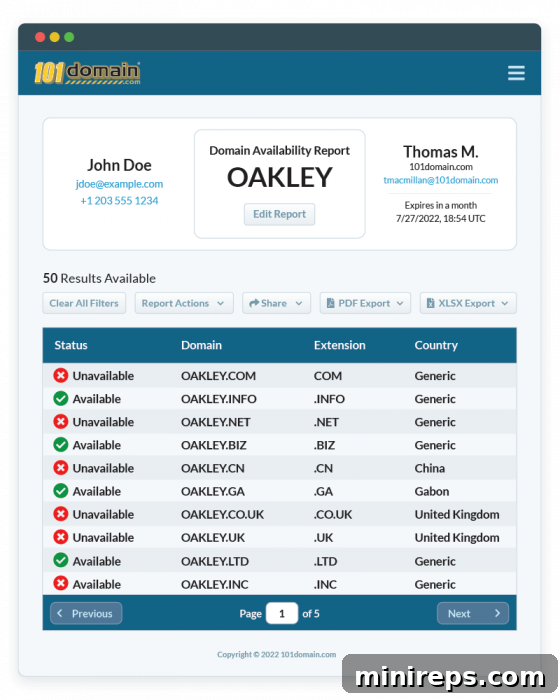
If the sheer volume of available domain names seems overwhelming, our experienced Account Executives are here to help. We can provide tailored guidance and generate a custom Availability Report specifically for your brand. This comprehensive report meticulously identifies all available and currently registered domain names pertinent to your brand terms, keywords, and potential variations, allowing you to make informed decisions and secure your digital perimeter effectively.
Request your free Availability Report today and take the first step towards robust brand protection.
2. Implement Domain Blocking Services
With thousands of domain extensions now available, individually registering and managing every possible variation of your brand name can become prohibitively expensive and incredibly time-consuming. This is where domain blocking services become an indispensable tool. A single domain block allows you to prevent unauthorized third parties from registering your trademarked term across a broad subset of domain extensions simultaneously. Instead of purchasing hundreds or thousands of individual domains, blocking services offer a cost-effective and efficient way to secure your brand across a vast digital footprint. These services typically work within specific groups of TLDs, ensuring that your core brand identity is protected from registration by cybersquatters, malicious actors, and even aggressive competitors looking to capitalize on new domain spaces. Domain blocking simplifies management, reduces costs, and provides extensive protection against digital infringement, making it a smart investment for comprehensive brand safeguarding.
RELATED ARTICLE: AdultBlock is Your Protection in the Online Adult Space
3. Set Up Robust Brand Monitoring
In today’s fast-paced digital environment, manual brand protection efforts are simply not enough. The sheer volume of online content, social media mentions, and new domain registrations makes it impossible for human teams to track everything. This is where automated brand monitoring services play a crucial role, filling the gaps and providing an essential layer of vigilance. Brand monitoring involves continuously scanning the internet for any unauthorized use of your brand name, logos, merchandise, or intellectual property. This includes tracking social media platforms, online marketplaces, app stores, dark web forums, and new domain registrations.
These services provide real-time alerts when they detect potential infringements, such as counterfeit products being sold under your brand, unauthorized use of your trademarks in advertisements, copyright violations, or even negative sentiment analysis. By quickly identifying these threats, your team can take prompt action, whether it’s issuing a cease and desist letter, initiating a UDRP dispute for a domain name, or requesting a takedown of infringing content. Proactive brand monitoring is key to protecting your reputation, preserving customer trust, and ensuring that your brand’s integrity remains uncompromised.
4. Enhance Security with a Secure Web Accelerator for Your Domains
Your website is often the primary touchpoint for your customers and the epicenter of your online business. Consequently, it’s also a prime target for cyberattacks designed to disrupt your operations and steal your business. Cyberattacks, particularly Distributed Denial of Service (DDoS) attacks, can overwhelm your servers with traffic, rendering your website inaccessible to legitimate customers. When customers cannot reach your site, they are compelled to seek alternatives, leading to direct revenue loss, damage to brand reputation, and erosion of customer loyalty. Such downtime can be catastrophic for businesses of all sizes.
Implementing a Secure Web Accelerator is a critical defense mechanism. This service typically combines the benefits of a Content Delivery Network (CDN) with robust security features, including a Web Application Firewall (WAF) and DDoS mitigation. A CDN distributes your website content across a global network of servers, speeding up load times for users worldwide. Simultaneously, the security features actively protect your website by filtering malicious traffic, identifying and blocking cyber threats, and ensuring continuous uptime even under attack. By safeguarding your website with a Secure Web Accelerator, you protect against service disruptions, maintain customer accessibility, and preserve the crucial trust your brand has built.
5. Fortify Email Security with a DMARC Policy Set to p=reject
Email remains a primary communication channel for businesses, yet it’s also a significant vector for phishing, spam, and brand impersonation attacks. Protecting your brand in the email space is as crucial as protecting your website. By adding specific records to your DNS, you can implement powerful email authentication protocols designed to combat phishing and fraud in the inbox.
DMARC (Domain-based Message Authentication, Reporting, and Conformance) is a policy that you configure for your domains, dictating how email receivers should handle messages that fail authentication checks (SPF and DKIM). Moving your DMARC policy to “p=reject” is the strongest enforcement level. This means that any email purporting to be from your domain but failing authentication will be rejected by the receiving mail server, preventing it from ever reaching an inbox. Enforcing DMARC (alongside SPF and DKIM) correctly significantly enhances email deliverability, improves recipient trust, and, most importantly, protects your brand from spoofing and impersonation by cybercriminals. It assures your customers that emails from your brand are legitimate, safeguarding your reputation and preventing costly scams.
6. Understand Your Rights and Seek Expert Counsel for Infringement
Despite implementing preventative measures, instances of brand infringement can still occur. When you suspect that someone is unlawfully using your brand, trademark, or intellectual property, it is crucial not to hesitate. Instead, you should immediately consult with experts who specialize in online brand abuse. Attempting to address complex legal and digital infringement issues without proper guidance can lead to missteps, ineffective actions, and wasted resources. It’s easy to overplay your hand or, conversely, to not act decisively enough.
The 101domain Corporate Brand Services team possesses years of invaluable experience in assisting brand owners in combating a wide range of online brand abuse. Our experts can guide you through various remedies, including issuing cease and desist letters, initiating Uniform Domain-Name Dispute-Resolution Policy (UDRP) proceedings for infringing domain names, filing Digital Millennium Copyright Act (DMCA) takedown notices for copyrighted content, and advising on broader trademark infringement strategies. Working with seasoned professionals ensures that your response is strategic, compliant, and ultimately effective in protecting your brand’s legal and commercial standing.
For immediate assistance, contact our Corporate Brand Services team at +1.888.982.7940.
Final Thoughts: Vigilance in a Competitive Landscape
The current economic climate, marked by high inflation and tightened consumer spending, creates a uniquely challenging environment for businesses. In such times, consumers often cut back on discretionary purchases, and even essential items like razors, if part of a subscription, might be among the first services to be canceled. This economic pressure intensifies competition, compelling brands to adopt more aggressive strategies to retain and acquire customers. The fundamental question for any growing business becomes: should you invest in convincing occasional buyers to choose your product when they do make a purchase, or is it more efficient to directly target your competitor’s loyal clients, who you know are consistent consumers?
The Jeremy’s Razors approach clearly favors the latter, viewing competitor clients as “low-hanging fruit.” Their strategy illustrates a growing trend where brands are no longer content to simply carve out their niche but are actively seeking to dismantle the market share of their rivals. This aggressive stance, while potentially controversial, highlights a crucial reality for all businesses: your competitors will inevitably come for you, and not always through traditional means. They will explore every digital avenue, from domain names to social media and search engine algorithms, to challenge your position and capture your customers.
Therefore, the lessons from the Jeremy’s Razors vs. Harry’s saga transcend the shaving industry. They are a powerful testament to the undeniable necessity of a proactive and comprehensive brand protection strategy in the digital age. Will your brand be prepared with robust defenses—defensive domain registrations, proactive monitoring, enhanced security, and expert legal counsel—when such challenges arise? The time to fortify your brand is now, ensuring you are not just reacting to threats, but actively safeguarding your business and its future growth against the inevitable tides of aggressive competition and cyber threats.