


In an increasingly interconnected digital world, the threat of cyberattacks looms large, constantly evolving in sophistication and frequency. One such prominent threat, Distributed Denial of Service (DDoS) attacks, has repeatedly proven its capacity to disrupt critical infrastructure and cripple online services. A stark reminder of this vulnerability occurred on October 10, 2022, when a notorious Russian hacking collective, Killnet, launched a coordinated DDoS attack that temporarily knocked offline the websites of some of the United States’ largest airports. This Monday morning assault impacted at least fourteen U.S. airports, including major hubs like Atlanta’s Hartsfield-Jackson and Los Angeles’s LAX, rendering their public-facing websites briefly inaccessible.
While these attacks did not directly impact air traffic control or internal operations, they caused significant inconvenience for travelers seeking real-time information, highlighted critical cybersecurity gaps, and demonstrated the potential for state-sponsored or politically motivated groups to disrupt public services. Killnet, known for targeting NATO countries in the wake of Russia’s invasion of Ukraine, promptly claimed responsibility for this incident, following a series of similar cyberattacks on various local government websites. This escalating trend underscores the urgent need for robust, proactive cybersecurity measures to safeguard digital assets against such pervasive and disruptive threats.
Understanding DDoS Attacks: How They Work and Why They’re a Growing Threat
Distributed Denial of Service (DDoS) attacks represent a malicious and increasingly common form of cyber threat designed to overwhelm a target server, service, or network with a flood of illegitimate internet traffic. The primary goal of a DDoS attack is to exhaust the target’s resources, making it unavailable to legitimate users and effectively shutting down access. Unlike a simple Denial of Service (DoS) attack, which typically originates from a single source, a DDoS attack leverages multiple compromised systems, creating a ‘distributed’ network of attackers, making it much harder to detect and mitigate.
The core mechanism behind most DDoS attacks involves a botnet – a vast network of internet-connected devices, such as computers, servers, or IoT devices, that have been secretly infected with malware. These infected devices, often unbeknownst to their owners, become ‘bots’ or ‘zombies’ and can be remotely controlled by an individual attacker, often referred to as a bot herder. When an attack is launched, the botnet simultaneously directs massive volumes of malicious traffic towards the target. This overwhelming flood can saturate the target’s bandwidth, exhaust its server resources (CPU, memory), or overload its network infrastructure, leading to severe performance degradation or complete service outage.
DDoS attacks can be categorized into several types based on their target layer in the OSI model:
- Volume-Based Attacks: These are the most common and straightforward, aiming to saturate the target’s bandwidth. Examples include UDP floods, ICMP floods, and other spoofed-packet floods.
- Protocol Attacks: These attacks exploit weaknesses in Layer 3 and Layer 4 protocols, consuming server resources like firewalls and load balancers. SYN floods, fragmented packet attacks, and Smurf attacks fall into this category.
- Application-Layer Attacks: Targeting Layer 7 (the application layer), these attacks are more sophisticated, consuming server resources by mimicking legitimate user behavior. Examples include HTTP floods, slowloris attacks, and DNS query floods, often requiring fewer bots to cause significant damage.
The consequences of a successful DDoS attack can be severe and far-reaching for any organization, regardless of its size or industry. They can lead to significant financial losses due to downtime, lost sales, and recovery costs. Beyond monetary impact, businesses can suffer immense reputational damage, a loss of customer trust, and even legal repercussions if essential services are disrupted. For critical infrastructure, as seen with the airport attacks, the implications extend to public safety and national security. The ease of access to botnets on the dark web and the increasing political motivations behind cyber warfare have only amplified the prevalence and complexity of these attacks, making robust DDoS protection an absolute necessity for any entity operating online.
Fortifying Your Digital Defenses: Essential Strategies to Counter DDoS Attacks
While the initiation of DDoS attacks often involves human malice, their execution is overwhelmingly automated through botnets. To effectively combat these automated threats, organizations must deploy equally sophisticated, automated defense mechanisms. This is where advanced cybersecurity solutions, such as Secure Web Accelerator powered by Cloudflare, come into play. These systems are engineered to automatically detect, analyze, and mitigate DDoS attacks in real-time, freeing businesses from the complex and resource-intensive task of manual defense. By fighting bots with bots, these solutions provide a critical layer of protection for online infrastructure.
1. Leveraging Cloudflare’s Global Anycast Network for Unmatched Resilience
The foundation of robust DDoS protection lies in the ability to absorb and distribute attack traffic before it can reach your origin server. When you integrate Secure Web Accelerator into your domain infrastructure, you are essentially positioning a massive, globally distributed cloud network between your web server and all incoming internet traffic. Cloudflare’s Anycast network acts as an intelligent filtration system, operating at the very edge of the internet. This expansive network, with data centers spanning hundreds of cities across more than 100 countries, allows incoming traffic to be routed to the closest possible data center.
In the event of a DDoS attack, this architecture enables the network to absorb and disperse the malicious traffic across its vast infrastructure, effectively diluting the attack volume to a manageable level. Instead of hitting a single point, the attack is spread across numerous points globally, preventing any one location from being overwhelmed. This “attack mitigation at scale” capability ensures that only legitimate, safe traffic is allowed to pass through to your servers, significantly reducing the likelihood of service disruption. This global distribution is available with all Secure Web Accelerator plans, providing foundational protection against even the largest volume-based attacks.
2. The Power of a Web Application Firewall (WAF)
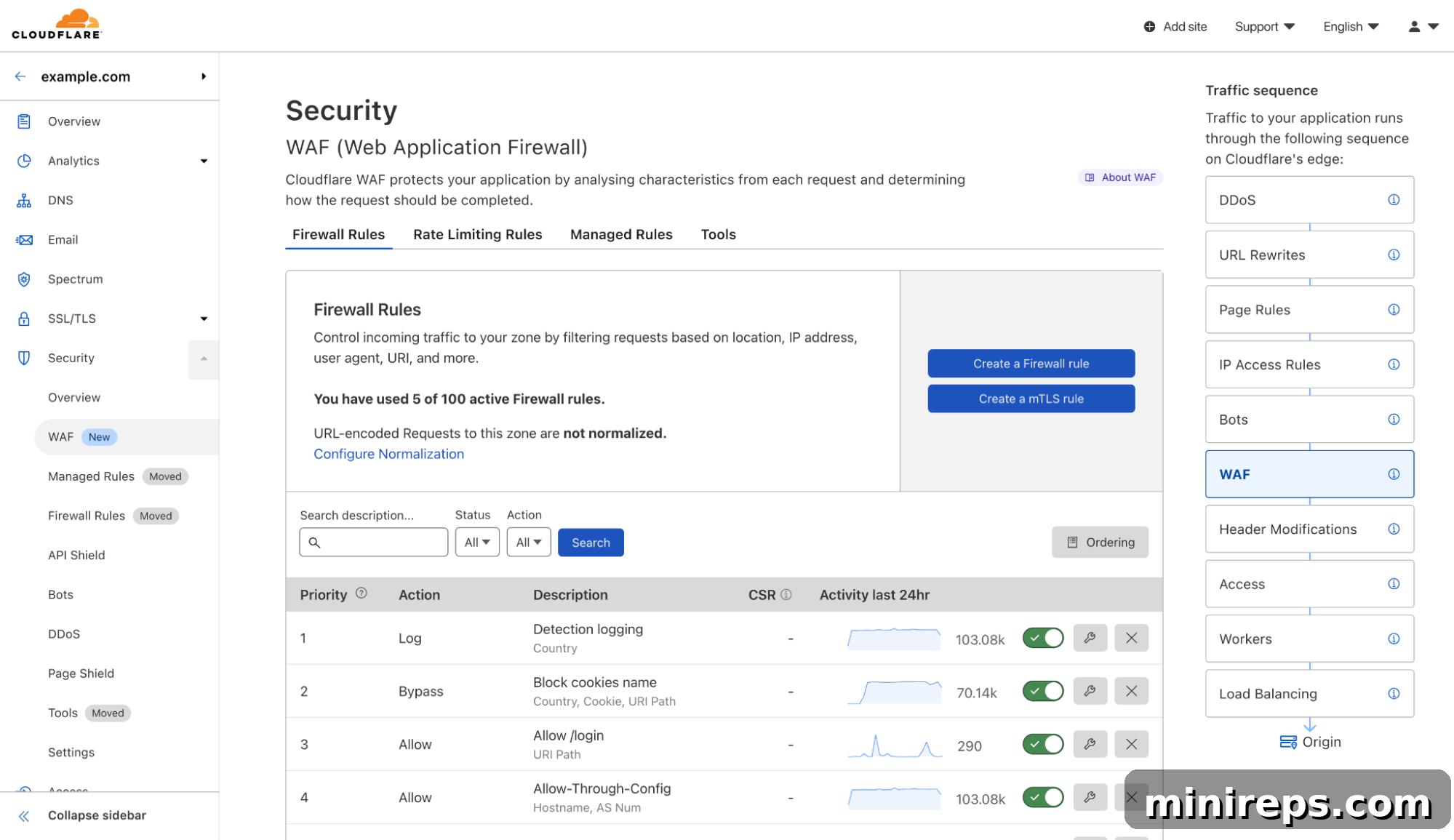
While the Anycast network excels at mitigating large-scale volume and protocol attacks, many sophisticated DDoS threats, particularly application-layer attacks (Layer 7), require a more granular approach. This is where a Web Application Firewall (WAF) becomes indispensable. Cloudflare’s always-on DDoS protection works in seamless tandem with its WAF to provide a comprehensive defense strategy against cyber threats of all kinds. A WAF sits in front of your web applications, analyzing incoming HTTP/S traffic and filtering out malicious requests before they reach your server. It acts as a shield, protecting against common web vulnerabilities such such as SQL injection, cross-site scripting (XSS), cross-site request forgery (CSRF), and exploits targeting known software weaknesses.
For application-layer DDoS attacks, the WAF is crucial as it can differentiate between legitimate user requests and malicious automated traffic designed to exhaust application resources. By applying intelligent rules, signature matching, and behavioral analysis, the WAF can block bots attempting to simulate user interactions to overload specific application functionalities. This multi-layered approach ensures that your web assets are protected not just at the network level, but also at the application layer, safeguarding critical business logic and data. Advanced WAF capabilities are typically available with Secure Web Accelerator Plus & Professional plans, offering enhanced security for demanding online environments.
3. Leveraging Cloudflare Analytics for Proactive Security Intelligence
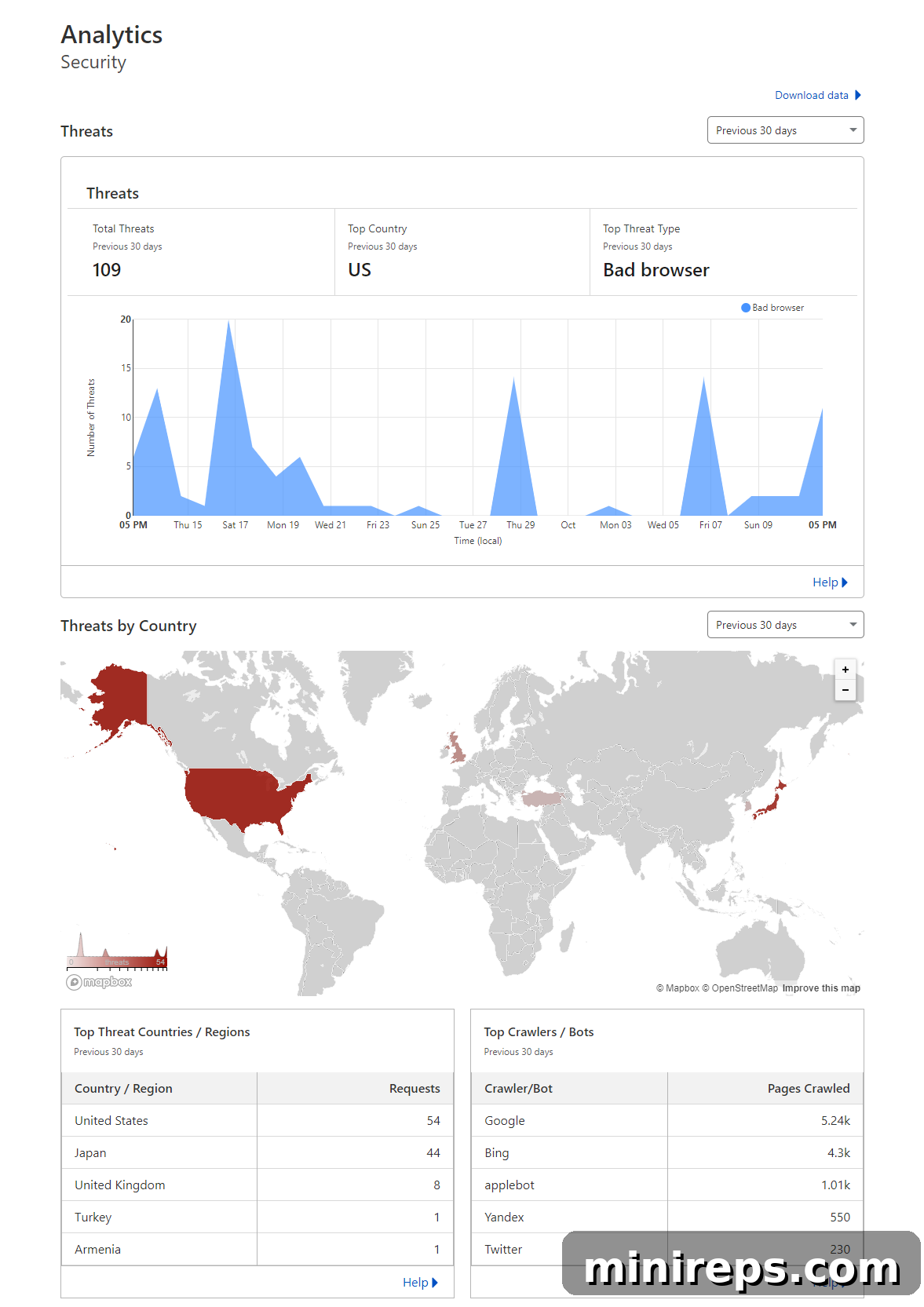
Beyond active mitigation, understanding the nature of threats and traffic patterns is vital for maintaining a strong security posture. Cloudflare Analytics provides unparalleled insights into your domain’s web traffic, observed threats, and blocked attacks, all accessible through an intuitive dashboard. This comprehensive visibility empowers organizations to gain a deeper understanding of their digital landscape.
Through detailed analytics, you can monitor legitimate traffic trends, identify unusual spikes, and analyze the types of attacks being launched against your assets. This data includes information on attack vectors, geographical origins of malicious traffic, and the effectiveness of mitigation efforts. Such insights are invaluable for refining security policies, identifying potential vulnerabilities, and making informed decisions to enhance your overall cybersecurity strategy. Real-time logging and reporting enable quick response times and proactive adjustments, turning threat data into actionable intelligence. Cloudflare Analytics, with its advanced reporting and visualization tools, is a key feature included with Secure Web Accelerator Plus & Professional plans, offering the intelligence needed to stay one step ahead of cyber adversaries.
RELATED ARTICLE: DDoS & Cyber Security Recommendations for 101domain Clients
Cloudflare DDoS Attack Mitigation at a Glance: Key Advantages
DDoS Mitigation at Scale
Cloudflare’s expansive network infrastructure, comprising data centers in over 275 cities across 100 countries, ensures that every server runs a full suite of DDoS mitigation services. This unprecedented global scale enables the network to absorb and diffuse even the largest attacks by distributing traffic across numerous points of presence, safeguarding your digital assets regardless of the attack’s origin or intensity.
Blazing Fast Mitigation
Speed is critical in DDoS defense. Cloudflare’s advanced DDoS mitigation systems are engineered for rapid response, identifying and neutralizing the vast majority of DDoS attacks in under 3 seconds. This near real-time detection and mitigation capability minimizes potential downtime and ensures that your services remain consistently available to legitimate users, even during active assaults.
Impenetrable Defense Against All Attack Sizes
Cloudflare’s network boasts an astounding capacity of 155 Tbps, enabling it to block an average of 124 billion threats daily. This includes neutralizing some of the largest and most complex DDoS attacks ever recorded. With Cloudflare, your organization gains protection against DDoS attacks of virtually any size or type, ensuring continuous operation and an unwavering online presence.

Secure Web Accelerator: Your Shield Against Cyber Threats
In today’s dynamic threat landscape, robust DDoS protection is not a luxury but a necessity for any online entity. Cloudflare has a proven track record of protecting entire corporate networks from the largest recorded DDoS attacks in history, and it can extend that same level of comprehensive security to you. Get unlimited and unmetered DDoS protection, combined with enhanced website performance, starting at an incredibly affordable rate. Safeguard your online presence and ensure uninterrupted service with an industry-leading solution.