


Mastering ccTLD Disputes: Your Essential Guide to International Domain Resolution Policies
In the expansive and interconnected digital realm, a robust online identity, prominently defined by your domain name, is an indispensable asset for any brand or business. However, the sheer volume and diversity of domain registrations worldwide inevitably lead to disputes. While generic top-level domains (“gTLDs”), such as .com, .net, or .org, primarily fall under the standardized Uniform Domain Name Dispute Resolution Policy (UDRP), country code top-level domains (“ccTLDs”) – those representing specific countries or sovereign territories like .uk or .de – operate within a distinctly more complex regulatory landscape. Understanding these critical differences is not just beneficial, but absolutely vital for safeguarding your brand and effectively resolving potential domain name infringements across international borders.
The global domain name system is a mosaic of different regulations and policies. For gTLDs, the UDRP, established by ICANN (Internet Corporation for Assigned Names and Numbers), serves as the primary and widely recognized mechanism for addressing issues like trademark infringement and cybersquatting. This policy offers an administrative, streamlined process designed to efficiently resolve clear-cut cases of abusive domain registration. Yet, when the focus shifts to ccTLDs, the rules of engagement change considerably. Unlike gTLDs, which are managed under ICANN’s overarching authority, ccTLDs are delegated to individual country or territory-specific registry operators. These operators wield significant autonomy, allowing them to formulate and implement their own operational guidelines, including their unique approaches to domain name registration and, crucially, domain name dispute resolution.
Beyond the UDRP: Navigating the Nuances of ccTLD Dispute Resolution
Should you discover a ccTLD that is infringing upon your invaluable trademark rights or being exploited for nefarious cybersquatting activities, it’s paramount to understand that the familiar UDRP framework might not directly govern the resolution process. Instead, you could be confronting an entirely different set of rules and policies, distinct from those prescribed by ICANN’s UDRP. This fundamental divergence stems from the inherent sovereignty and national interests associated with ccTLD management. Each ccTLD Registry operator is fully empowered to establish its own comprehensive rules and policies, which dictate everything from eligibility criteria for domain name registrations to the specific administrative procedures for resolving disputes.
This autonomy means that a brand owner cannot simply apply a “one-size-fits-all” strategy when confronted with a ccTLD domain dispute. The precise policy applicable to the ccTLD in question can vary dramatically, directly influencing the burden of proof required, the specific criteria for a successful outcome, and even the types of remedies available. This highly individualized and often intricate environment underscores the critical need for specialized knowledge and strategic guidance when developing a dispute resolution strategy. Without a deep understanding of these specific policies, brand owners risk missteps that could jeopardize their chances of recovery.
The Three Approaches to ccTLD Dispute Resolution Policies
ccTLD Registry operators are afforded significant flexibility in determining how they will address domain name disputes within their respective jurisdictions. Their approaches typically fall into one of three primary categories, each with its own implications for brand owners:
Option 1
Direct Adoption or Partial Integration of the UDRP: A substantial number of ccTLD registries opt to directly adopt the entire UDRP or incorporate specific, foundational elements of it into their existing local policies. This choice provides a valuable degree of familiarity and predictability for complainants who are already accustomed to the gTLD dispute resolution process, although minor local variations or additional requirements may still be present. These registries often benefit from the established principles, global recognition, and proven effectiveness of the UDRP, offering a universally understood framework for dispute resolution.
Option 2
Enacting Their Own Bespoke Dispute Resolution Policy: Conversely, many other ccTLD registries choose to devise and enact entirely unique dispute resolution policies. These bespoke policies are meticulously tailored to align with their specific national legal systems, indigenous customs, and prevailing market conditions. Such policies can diverge considerably from the UDRP in terms of the required criteria for establishing a claim, the procedural steps involved, and the available remedies. For potential complainants, this necessitates an exhaustive understanding of the specific policy’s intricacies and requirements.
Option 3
Exclusively Referring Disputes to the Court System: A smaller, yet significant, number of ccTLD registries may opt not to offer any administrative dispute resolution policy whatsoever. In such instances, all domain name disputes, including intricate cases concerning trademark infringement and cybersquatting, must be resolved through the traditional legal system of the respective country or territory. This pathway frequently involves substantially higher costs, significantly longer timelines, and the absolute necessity of engaging local legal counsel, making it a more challenging and resource-intensive route.
For a Complainant, accurately determining how these diverse policy variances will influence their chances of success when pursuing dispute resolution is absolutely critical. The chosen policy can dictate everything from the specific type of evidence required to the overall timeline of the resolution process. While 101domain does not provide direct legal advice, our unparalleled experience, cultivated over many years within the intricate domain name industry, has equipped us with a profound wealth of knowledge concerning domain name dispute affairs and their associated processes. We are expertly positioned to guide you through these complexities, helping you strategize the most effective and efficient approach for your unique situation.
The Global Appeal and Innovative Applications of Popular ccTLDs
Despite the inherent complexities introduced by varied policies, a considerable number of ccTLDs have successfully adopted the UDRP as their default dispute resolution mechanism, either in its complete form or with only minor, contextually relevant modifications. This widespread adoption contributes a valuable layer of predictability and consistency for international brand owners, simplifying their brand protection efforts. Notable examples of ccTLDs that have embraced the UDRP include popular extensions like .AI (Anguilla) and .LA (Laos). These domains, although originally designated for specific geographic locations, have garnered significant attention and widespread usage far beyond their initial intended purpose, often driven by creative marketing strategies and emergent industry associations.
Indeed, customers and businesses are increasingly utilizing ccTLDs for purposes beyond merely representing their country of origin. Many have discovered highly innovative and strategic applications for these unique domain extensions. For example, prominent technology companies in the heart of Silicon Valley have enthusiastically adopted the .AI domain, capitalizing on its immediate and strong association with “Artificial Intelligence” rather than its geographical link to Anguilla. Similarly, the .LA domain, originally designated for Laos, has found immense popularity representing the vibrant city of Los Angeles, California, and even the State of Louisiana, showcasing its remarkable versatility for local and regional branding initiatives. This trend underscores the evolving nature of domain usage and the importance of monitoring even seemingly unrelated ccTLDs for potential brand infringement.

Beyond direct UDRP adoption, many ccTLDs operate with subtle yet significant variations in their dispute resolution policies, presenting both unique challenges and strategic opportunities. For instance, the United Arab Emirates’ .AE domain operates under a distinct dispute resolution policy that, while a variation of the UDRP, incorporates a crucial difference: a Complainant is only required to prove either the registration *or* the use of the domain is in bad faith. This contrasts sharply with the standard UDRP, which strictly mandates that the Complainant prove *both* elements – registration *and* use – in bad faith. This “OR” clause makes the .AE policy potentially more advantageous for complainants, offering increased flexibility in certain dispute scenarios.
In a parallel development, another highly prominent ccTLD, the .BR domain for Brazil, has likewise adopted a dispute resolution policy that is a specialized variation of the UDRP, known as “SACI-ADM.” Grasping these subtle yet profoundly significant deviations from the conventional UDRP is absolutely paramount for any entity considering filing a complaint, as these variations can dramatically influence the potential outcome of a dispute. The specific nuances embedded within SACI-ADM, much like other localized policies, are carefully designed to reflect the particular legal and commercial environment unique to Brazil.
In stark contrast to ccTLDs that either follow the UDRP directly or incorporate a variation of it, the .CN domain, officially representing the People’s Republic of China, has made a deliberate choice not to adopt the UDRP whatsoever. Instead, China has meticulously established its own entirely separate and comprehensive dispute resolution policy, known as the “CNNIC ccTLD Dispute Resolution Policy.” This policy is specifically crafted to align with Chinese legal principles, regulatory frameworks, and cultural contexts, rendering it a distinctly different and formidable challenge for international complainants.
A significant divergence and a critical point that brand owners must meticulously note between the UDRP and CNNIC’s ccTLD Dispute Resolution Policy is the presence of a stringent statute of limitations. Under CNNIC’s policy, the window for effectively filing a complaint for a .CN domain expires precisely when that domain has been registered for more than two years. This “first in time” approach means that if a brand owner fails to act with considerable swiftness, they could irrevocably lose the opportunity to challenge an infringing domain, irrespective of the strength and validity of their underlying trademark rights. This particular clause underscores the urgent necessity for robust domain monitoring and proactive brand enforcement strategies, especially when operating within dynamic and rapidly evolving markets like China.
Ultimately, a multitude of distinct avenues and specialized mechanisms exist for disputing an abusive ccTLD domain registration that infringes upon a trademark, is being utilized for cybersquatting, or serves any other nefarious purpose. It is also crucially important to remember that not all cases of trademark infringement will mandate that you possess a specific trademark registration within the country of the disputed domain. Many progressive policies, particularly those with UDRP variations, recognize the validity of internationally known or notorious trademarks. However, the ultimate success of such a claim often hinges directly on the precise policy in question and the complainant’s ability to present compelling, policy-specific evidence. This further underscores the absolutely vital role of specialized expertise.
Therefore, any Complainant embarking on this journey must possess the specialized expertise and comprehensive knowledge required to accurately identify and thoroughly understand which specific Dispute Resolution Policy meticulously governs the ccTLD domain registration they are challenging. Misinterpreting or misunderstanding the applicable policy can unfortunately lead to costly procedural mistakes, the wasteful expenditure of invaluable resources, and, most critically, an unfavorable or even lost outcome. This is precisely where professional guidance and seasoned experience become not just helpful, but absolutely indispensable.
Illustrative International Cases: Understanding UDRP Variations in Action
To truly comprehend the practical implications and strategic considerations of these diverse ccTLD dispute resolution policies, examining real-world international cases is not only invaluable but essential. These specific examples vividly demonstrate how different policies directly impact the burden of proof required from a complainant and, ultimately, the success or failure of a complaint.
Case Study 1: eBay Inc. v. Danubia Coelho Machado (EBAYBRAZIL.COM.BR)
In the highly referenced case of eBay Inc. v. Danubia Coelho Machado, the ccTLD “EBAYBRAZIL.COM.BR” became the focal point of a dispute governed by Brazil’s specialized resolution policy, uniquely named “SACI-ADM.” This particular case serves as an excellent illustration of how a variation of the UDRP can offer more flexible and broader pathways for a Complainant to assert their rights.
Key Differences: SACI-ADM Dispute Resolution Policy vs. the Standard UDRP:
Under the .BR policy (SACI-ADM), a Complainant is afforded significantly more flexibility in establishing their rights and demonstrating bad faith, particularly when compared to the often stricter and more rigid requirements of the standard UDRP:
- Broader Trademark Recognition: A Complainant can successfully establish rights if they possess a Trademark application that was formally filed in Brazil *before* the registration date of the disputed domain. This represents a common, straightforward, and generally accepted method of proving rights.
- Recognition of Notorious Trademarks: Even in the absence of a formally registered or applied-for trademark within Brazil, a Complainant can compellingly assert rights if their Trademark is widely considered “notorious” or well-known within its specific field of activity. This crucial provision thoughtfully acknowledges the significant reputation and widespread recognition that certain brands achieve globally, even without explicit local formal registration.
- Universally Known Identifiers: Rights can also be effectively established through a universally known trade name, a recognized company name, or a civil name that is either identical or confusingly similar to the disputed domain. This provision thoughtfully expands the scope beyond mere formal trademark registrations to encompass established and recognized business identifiers.
These inclusive provisions mean that the Complainant is presented with a wider array of options to prove the first crucial condition: “The domain name is identical or confusingly similar to a Trademark or service mark in which the Complainant has rights.” This broader definition of “rights” can substantially ease the evidentiary burden on international brand owners who may not have registered their trademark in every single country where an infringement occurs.
Furthermore, under the SACI-ADM policy, the Complainant is *not* explicitly obligated to provide initial evidence to prove the second condition, which typically states: “The Respondent has no rights or legitimate interests in respect of the domain name.” While the Complainant is not required to affirmatively prove this at the outset, the Respondent is certainly fully entitled to use this argument as a core component of their defense against the disputed domain name. This effectively shifts some of the initial defensive burden onto the Respondent, requiring them to proactively demonstrate their legitimate interests.
Perhaps the most significant and distinguishing difference lies within the third condition concerning bad faith. Under SACI-ADM, the Complainant is only required to provide compelling evidence that the registration *OR* the use of the domain is in bad faith. This offers a substantial strategic advantage when compared to the standard UDRP, where the Complainant is typically mandated to prove *BOTH* elements of the third condition: “The domain name was registered *AND* is being used in bad faith.” This strategic “OR” clause in SACI-ADM makes it considerably more feasible for a Complainant to succeed if they can convincingly prove just one of these elements.
How eBay Successfully Met the Conditions in the SACI-ADM Case:
In the compelling eBay Inc. v. Danubia Coelho Machado case, eBay masterfully navigated and successfully leveraged the specific advantages of the SACI-ADM policy to achieve a favorable outcome:
- First Condition Met with Extensive Evidence: eBay Inc. unequivocally satisfied the first condition by providing extensive and undeniable evidence that it holds registered Trademarks in countless countries around the globe, including specific registrations within Brazil. This robust evidence definitively established their clear, prior rights to the globally recognized “eBay” brand.
- Second Condition Not Required: As dictated by the SACI-ADM policy, the second condition – requiring proof that the Respondent had no rights or legitimate interests – did not need to be actively proven by the Complainant. Importantly, the Respondent in this particular case failed to file any defense whatsoever, thereby implicitly failing to counter the implied lack of legitimate interest in the disputed domain.
- Third Condition Met with Simplified Proof: The third condition was effectively fulfilled by the Complainant providing clear and compelling evidence that the Respondent had illicitly reproduced eBay’s distinctive brand elements and copyrighted logo without obtaining any prior permission. While the Complainant strategically chose to present evidence demonstrating that the domain name was both registered and subsequently used in bad faith, the inherent flexibility of the “SACI-ADM” dispute resolution policy only necessitated the proof of one of these two elements. This perfectly illustrates the significant strategic advantage that policies with an “OR” clause for bad faith can offer to complainants.
To delve deeper into the intricate specifics of this compelling case and review the complete, detailed decision, we encourage you to visit the esteemed World Intellectual Property Organization (WIPO) Arbitration and Mediation Center’s comprehensive case archives: WIPO – eBay Inc. v. Danubia Coelho Machado.
Case Study 2: Al Marjan Island LLC v. Ashraf Khan (.AE)
Another recent and highly illustrative case, highlighting the practical application of UDRP variations in a ccTLD context, is Al Marjan Island LLC v. Ashraf Khan, which involved a .AE domain. This case further demonstrates how policy specifics can critically influence the outcome of a domain dispute.
In this significant dispute, the Complainant, Al Marjan Island LLC, effectively asserted their rights by presenting a clear and compelling timeline of their brand’s establishment and extensive promotional activities. They meticulously highlighted that the prestigious Al Marjan Islands project was officially launched in 2007, that the associated Trademark “MARJAN” has been rigorously promoted since 2013, and that the entire project is strategically located within the United Arab Emirates, which was also the apparent geographic location of the Respondent. This detailed evidence provided a very strong foundation for their claim of prior rights and established a clear, undeniable connection between their trademark and the region.
Furthermore, the Complainant presented compelling evidence that the disputed domain name, MARJAN.AE, was resolving to a website that had evidently expired or was non-functional. This seemingly minor detail is often a critical piece of evidence in bad faith arguments, as an expired or passively held domain can strongly indicate a lack of legitimate use on the part of the registrant, or an underlying intent to merely capitalize on a well-known trademark without offering any genuine services.
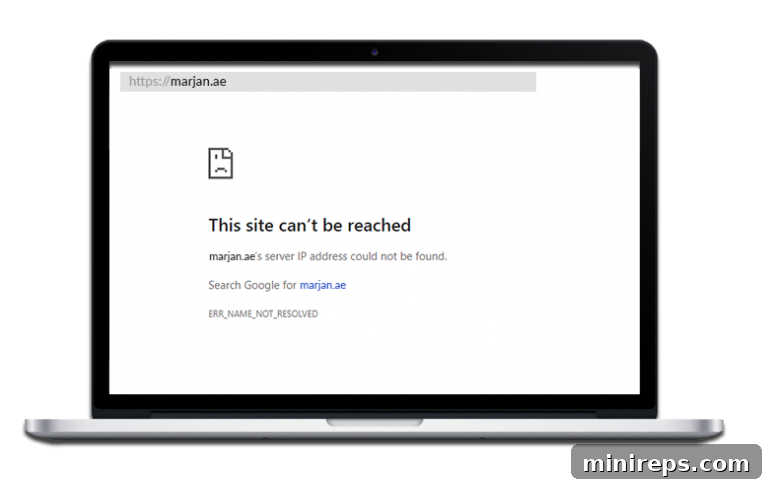
Critically, while the Complainant successfully provided robust evidence that the domain was initially registered in bad faith, they were not explicitly required to prove that the domain was actively *being used* in bad faith at the precise time of the complaint. Given that the specific .AE variation of the UDRP does not mandate that the domain be both registered *and* used in bad faith (a requirement often found in the standard UDRP), the Complainant effectively satisfied all the necessary elements according to the prevailing ccTLD policy. This crucial flexibility proved instrumental and ultimately decisive in securing a successful outcome for Al Marjan Island LLC.
Consequently, the official decision was published unequivocally in favor of the Complainant, mandating that the MARJAN.AE domain be immediately transferred to Al Marjan Island LLC. This case powerfully underscores the significant strategic advantage that ccTLD policies with modified bad faith requirements can offer to diligent brand owners, providing them with a more direct path to reclaim their digital assets.
For a detailed review of this specific case and to examine the complete findings and rationale, you can access the full decision on the WIPO website: WIPO – Al Marjan Island LLC v. Ashraf Khan.

Your cornerstone to an effective domain name and brand management strategy in a complex global landscape.

DomainManagement

Monitoring &Enforcement

DomainAcquisition

AdvancedSecurity
Protect Your Brand: Gain Expert Guidance in a Complex Global Domain Landscape
You have meticulously invested significant time, precious resources, and boundless creativity into establishing your business and cultivating a recognizable, profoundly valuable brand. In today’s hyper-connected world, the imperative of safeguarding your digital assets, particularly your crucial domain names, is as critical as protecting your physical property and your foundational intellectual property. The persistent threat of trademark infringement, the insidious practice of cybersquatting, and various other forms of domain abuse are ever-present and continually evolving, especially across the incredibly diverse and often opaque landscape of ccTLDs. The paramount question then arises: how do you effectively secure and rigorously protect your invaluable brand against these increasingly sophisticated and ubiquitous threats?
101domain stands prepared as your unwavering, trusted partner, offering unparalleled expertise and deep industry insight to help you fully understand, expertly navigate, and successfully resolve even the most complex domain dispute resolution processes. We are resolutely dedicated to meticulously protecting your rights as a Trademark holder, ensuring that your brand integrity remains absolutely uncompromised across all digital fronts. Our team of seasoned professionals will provide precise, strategic advice, meticulously tailored to your unique situation and the specific nuances of the particular ccTLD policy involved. Unlike many traditional legal services that impose unpredictable and escalating hourly fees, we proudly offer a transparent, flat-rate fee for UDRP filings, thereby providing invaluable cost certainty and complete peace of mind throughout the entire process.
As an undisputed industry leader, globally renowned for adeptly managing the largest number of ccTLDs, our comprehensive dispute resolution services – which include UDRP and URS (Uniform Rapid Suspension System) filings – form a foundational cornerstone of our extensive Domain Name Management and Brand Enforcement Services portfolio. We provide holistic solutions meticulously designed to protect your digital identity across all domain extensions. For forward-thinking businesses seeking a comprehensive and integrated approach to global brand protection, we strongly encourage you to explore our advanced corporate managed plans. These meticulously crafted plans are engineered to offer substantial savings and include a suite of invaluable benefits, such as multiple UDRP/URS filings, proactive and continuous domain monitoring, strategic domain acquisitions, and an array of other advanced tools and services specifically designed to secure and optimize your entire global domain portfolio.
Do not allow malicious actors or simple oversight to compromise your brand’s vital online presence. With the unwavering support of 101domain, you can confidently recover what is rightfully yours, no matter how intricate the situation or how specialized the ccTLD policy. We empower you to defend your brand with absolute confidence, unparalleled clarity, and strategic precision.
Contact Our Corporate Services Team for Expert Assistance: +1.888.982.7940 | [email protected]
To further assist you in fully understanding the intricate details of various dispute resolution policies and how they seamlessly integrate with our comprehensive Corporate Brand Services, we have meticulously developed a highly informative comparison chart. This invaluable resource clearly outlines everything you need to know about the diverse policies and their key differentiators, empowering you to make truly informed and strategic decisions for your brand.
Click Here to download our detailed comparison chart (PDF) and gain deeper, actionable insights into effective domain dispute resolution strategies.