

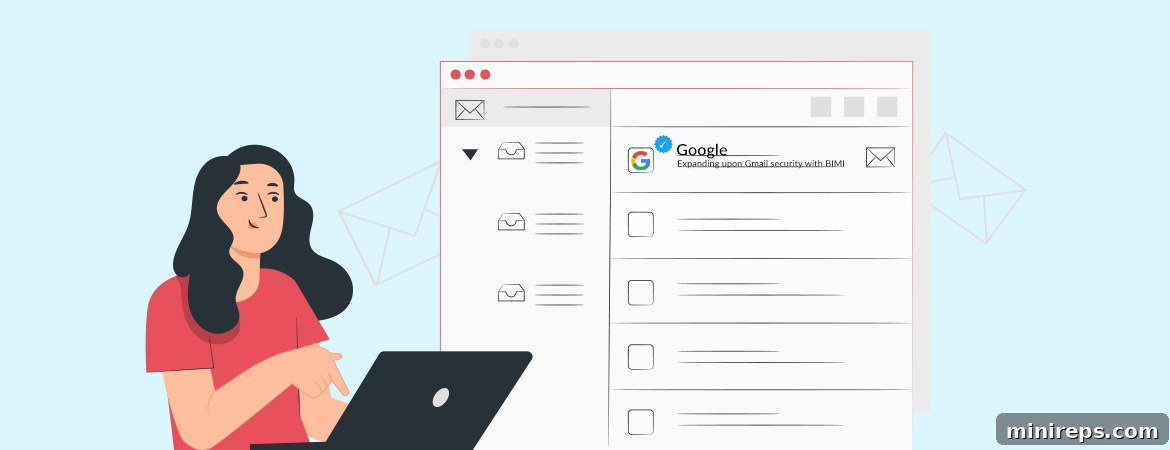
In our increasingly digital world, a blue checkmark has evolved from a simple badge into a powerful symbol of authenticity and trust. For years, we’ve instinctively sought this emblem when navigating social media, using it as a reliable indicator to distinguish legitimate public figures and brands from impersonators. This small but significant icon validates an account, assuring us that we are engaging with the true entity, not just a random user attempting to mislead. This universal understanding of the blue checkmark’s importance is now expanding beyond social platforms, making its way into the realm of email communication, where authenticity is perhaps even more critical.
Recognizing the vital role of sender verification, Google has announced the integration of the blue checkmark into Gmail. This crucial update aims to bolster email security by displaying the coveted symbol next to senders who rigorously adhere to strong email authentication standards. This initiative is a direct response to the escalating threats of phishing and impersonation attacks, which continue to plague inboxes worldwide. For businesses and individuals alike, this means a new layer of trust and security in their daily email interactions. Understanding how to earn this blue checkmark for your company’s emails is no longer just about status; it’s about safeguarding your brand reputation and enhancing user confidence. Continue reading to discover the journey to securing this essential verification for your digital communications.
The Genesis of the Blue Checkmark: A History of Digital Trust
The journey of the blue checkmark began on Twitter in 2009. Facing a growing challenge of impersonation accounts that caused confusion and eroded user trust, Twitter introduced its Account Verification process. The primary goal was to improve the user experience by providing a clear visual cue that an account belonged to the person or entity it claimed to represent. This initiative marked a pivotal moment in how digital identities were managed and perceived.
Initially, Twitter reserved the blue checkmark for high-profile individuals and organizations most susceptible to impersonation. This included public officials, government agencies, renowned artists, professional athletes, and other prominent figures. The exclusive nature of this verification program quickly established the blue checkmark as a symbol of prominence and authenticity. As social media grew, so did the need for broader verification, leading Twitter to eventually expand the program to include a wider array of notable public figures and organizations, cementing its status as a benchmark for online legitimacy.
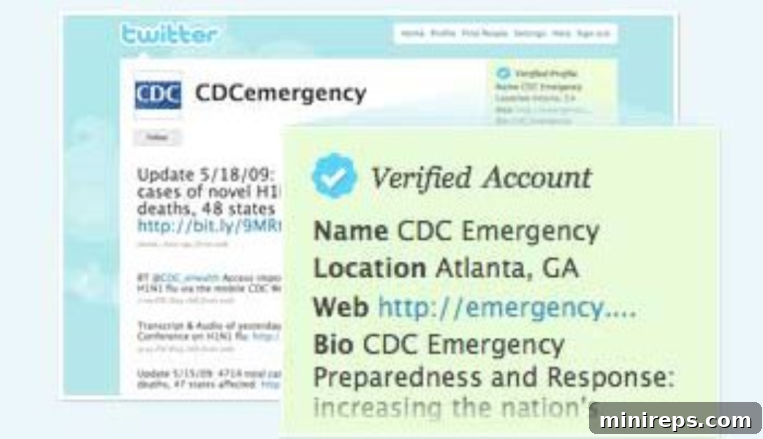
Following Twitter’s lead, other major social media platforms, such as Facebook and Instagram, soon adopted their own versions of the blue checkmark. This widespread adoption transformed the symbol into an internationally recognized mark of authenticity and, for many, an elite status symbol. It became an aspiration for brands, influencers, and public figures seeking to establish credibility and distinguish themselves in crowded digital spaces.
For a significant period, the criteria for obtaining a blue checkmark remained somewhat enigmatic, contributing to its mystique. Only established brands, widely recognized social media influencers, and reality television stars seemed to possess this coveted badge. However, the landscape of verification underwent a radical shift recently, particularly with the introduction of paid verification models by both Meta (Facebook, Instagram) and Twitter.
This shift sparked considerable debate and controversy. Elon Musk’s tenure at Twitter saw a dramatic overhaul of its verification system. Accounts previously verified under the legacy program were stripped of their blue checkmarks unless they subscribed to Twitter Blue or were deemed “notable” by the platform, with Musk himself humorously suggesting the alternative of being “buddies with Elon Musk.” This move was met with significant backlash, as many felt it devalued the symbol and blurred the lines between genuine notability and paid endorsement. Meta, while taking a more conservative approach, similarly introduced Meta Verified, allowing users who meet basic eligibility requirements and pay a subscription fee to display the blue checkmark. Unlike Twitter, Meta allowed existing “verified badge” holders to retain their checks, yet the fundamental principle of “pay-to-play” for verification became a new, defining characteristic across major social media networks. This development has profoundly impacted how users perceive the blue checkmark, sparking discussions about its evolving meaning and relevance in the digital sphere.
While some critics argue that the ability to “pay to play” has diminished the coolness or exclusivity of the blue checkmark, its fundamental purpose—brand protection against impersonation and enhanced user trust—remains as crucial as ever. In a world saturated with digital content, distinguishing authentic voices from deceptive ones is paramount for both consumers and businesses. The widespread reach of social media necessitates robust mechanisms to safeguard brand integrity and user experience.
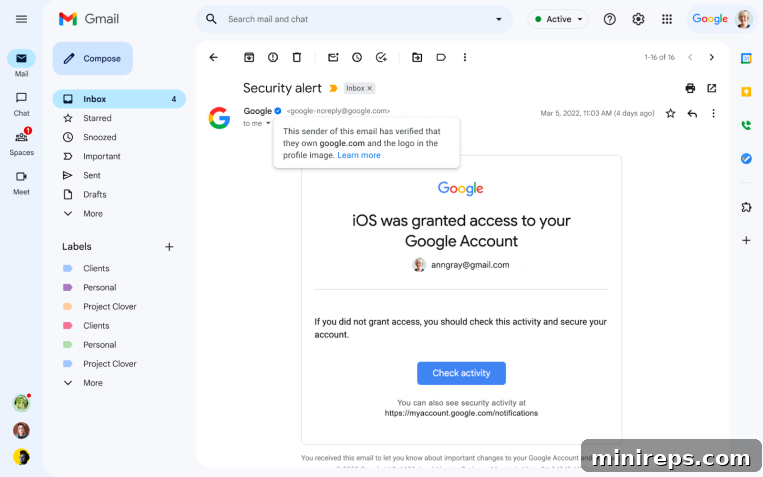
This enduring importance is precisely why Google is extending the concept of verification to email communication. By introducing a blue checkmark in Gmail, Google aims to empower users to easily identify legitimate senders and significantly enhance email security. This new initiative is powered by Brand Indicators for Message Identification (BIMI), a robust standard designed to combat phishing and spoofing by ensuring email authenticity. For businesses, adopting BIMI and achieving this verification will be a critical step in building trust and protecting their digital reputation in the inbox.
Decoding BIMI: Brand Indicators for Message Identification
Brand Indicators for Message Identification, or BIMI, represents a significant leap forward in email security and brand visibility. It is an emerging email specification that not only verifies the sender’s identity but also enables the display of their brand logo directly next to their emails within supporting email clients, most notably Gmail. In an inbox cluttered with messages, this visual distinction is invaluable. For brands that implement BIMI, their instantly recognizable logo serves as a beacon, helping their emails stand out and capture recipients’ attention.
The benefits of BIMI extend far beyond mere aesthetics. A strong visual connection to your brand through its logo significantly increases engagement, leading to higher open and click-through rates. More importantly, BIMI enhances the user experience by providing recipients with immediate peace of mind. Seeing a verified logo next to an email assures them that the message genuinely originates from your brand, not a malicious actor attempting to impersonate you. This bolstered confidence is crucial in combating the pervasive threat of phishing and email spoofing, protecting both your customers and your brand’s reputation. BIMI transforms the inbox into a more secure and trustworthy environment, allowing your legitimate messages to shine through.
Achieving BIMI Certification: Your Pathway to a Verified Email Presence
Securing a blue checkmark and displaying your brand’s logo in Gmail via BIMI is a strategic move that significantly enhances trust and security. However, it’s not a simple switch; it requires a foundational commitment to email authentication. The cornerstone of BIMI certification is achieving robust DMARC compliance. DMARC, or Domain-based Message Authentication, Reporting, and Conformance, is an email authentication protocol that builds upon SPF (Sender Policy Framework) and DKIM (DomainKeys Identified Mail) to protect your domain from unauthorized use, such as email spoofing and phishing.
For your brand’s logo to be proudly displayed in a recipient’s inbox, your email domain must not only pass DMARC compliance but also enforce a policy of either ‘quarantine’ or ‘reject’. This means that your domain is actively instructing recipient mail servers on how to handle emails that fail SPF or DKIM checks, ensuring that only authenticated messages reach their intended destination. This rigorous authentication requirement is a critical first step. It transforms BIMI from a mere cosmetic feature into a powerful security measure, offering brands an unparalleled opportunity to safeguard their email domain from abuse while simultaneously improving email deliverability by building sender reputation with internet service providers (ISPs).
The DMARC Journey: From Monitoring to Enforcement
Achieving DMARC compliance is a methodical process. It typically begins with a “p=none” policy, which allows you to monitor email activity from your domain without affecting deliverability. During this monitoring phase, you gather valuable insights into who is sending email on behalf of your domain, identifying legitimate senders and detecting any unauthorized activity. Once you have a clear understanding of your email ecosystem and have authenticated all legitimate senders with SPF and DKIM, you can then progressively move to a “p=quarantine” policy. This instructs recipient servers to move unauthenticated emails to the spam folder, further protecting your recipients. The final step for BIMI eligibility is to reach “p=reject,” which ensures that unauthenticated emails are outright blocked, providing the highest level of security.
Navigating this complex process can be challenging, but specialized services can streamline your journey. 101domain, for instance, provides Managed DMARC Compliance Services. These services guide you through every stage, from initial setup and monitoring to policy enforcement and ongoing management, ensuring you achieve full DMARC compliance efficiently and effectively.
Beyond DMARC: The Role of a Verified Mark Certificate (VMC)
Once DMARC is robustly enforced, the next critical component for BIMI is obtaining a Verified Mark Certificate (VMC). A VMC is a digital certificate issued by a trusted Certificate Authority (CA) that verifies the ownership of your brand logo and links it to your authenticated email domain. This certificate ensures that only legally registered and verified logos are displayed in email clients, preventing fraudulent use of your brand’s visual identity. The process involves validating your organization’s legal registration and your ownership rights over the specific logo you wish to display. Once obtained, the VMC, along with your DMARC enforcement, enables the creation of a BIMI DNS record, which tells email clients like Gmail to display your verified logo.
The Comprehensive Benefits of BIMI and DMARC
Implementing BIMI and achieving DMARC compliance offers a cascade of benefits beyond just the blue checkmark. You’ll experience a significant increase in your email deliverability, as fully DMARC-compliant domains are viewed more favorably by email providers. Our clients, for example, have reported a substantial 20-30% increase in their email deliverability after reaching full DMARC compliance. This translates to more of your legitimate emails reaching inboxes, improving the effectiveness of your marketing and communication efforts.
Furthermore, BIMI and DMARC provide unparalleled protection against email spoofing, phishing, and impersonation attacks. By making it nearly impossible for malicious actors to send emails pretending to be from your domain, you safeguard your customers from scams and protect your brand’s invaluable reputation. The blue checkmark and visible logo instill immediate trust, fostering stronger customer relationships and reinforcing your brand’s authenticity in every communication. Don’t underestimate the power of improved email security and brand trust in today’s competitive digital landscape.
Discover how enhancing your email security can transform your digital outreach. Visit our website or connect with an expert today to learn more about our comprehensive solutions. Call us now at +1.888.982.7940.