
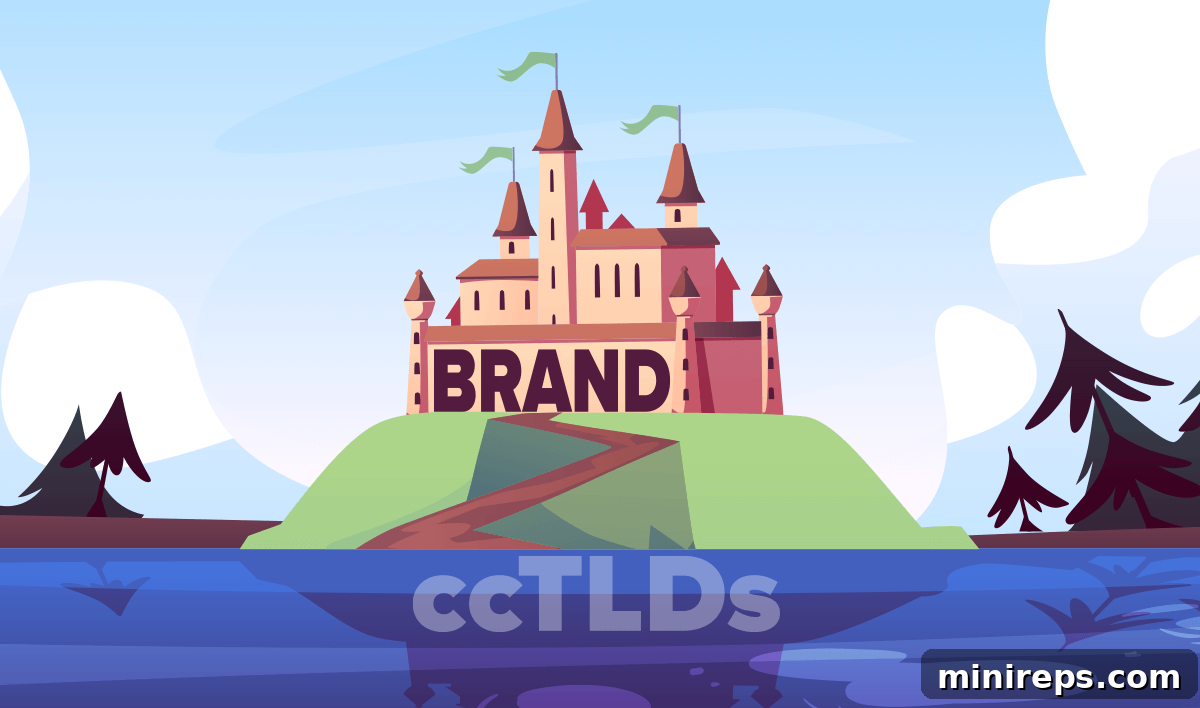

In the vast and competitive digital landscape, your brand isn’t just a logo or a name; it’s your most valuable asset, your digital castle. Protecting this fortress online is paramount for long-term success and sustained growth. Many businesses, however, make a critical oversight in their brand protection strategy: failing to properly set up a comprehensive domain portfolio. The conventional wisdom often dictates securing only the perfect .com domain, but this approach leaves significant vulnerabilities. To truly safeguard your brand and ensure its reach, a more strategic approach is required. By registering your business name across multiple relevant domains, particularly Country Code Top-Level Domains (ccTLDs), you can create an impenetrable “moat of protection” around your brand, shielding it from threats and paving the way for global expansion. This article delves into the critical reasons why investing in a diverse domain portfolio, specifically incorporating ccTLDs, is essential for every forward-thinking business in today’s interconnected world.
1. Building Local Trust and Enhancing Credibility
Country Code Top-Level Domains (ccTLDs) are distinct two-letter domain extensions (e.g., .uk for the United Kingdom, .de for Germany, .jp for Japan) that are specific to a particular country or geographical region. More than just an address, a ccTLD serves as a powerful signal to local consumers that your business is not only present but deeply committed and established within their market. This immediate visual cue fosters a sense of familiarity and trust, significantly boosting your brand’s credibility in local eyes. When users see a domain ending in their country’s specific extension, they are more likely to perceive the business as legitimate, locally focused, and attuned to their specific needs and regulations.
Beyond building consumer confidence, leveraging ccTLDs also offers tangible advantages in local search engine optimization (SEO). Search engines often prioritize local domains for local search queries, making it easier for potential customers in a specific region to discover your business. This local presence doesn’t just improve search rankings; it fundamentally expands the organic reach of your brand within a defined geographic market, effectively acting as a digital bridge to reach across international borders. For instance, consider an online retailer poised to expand its operations into the vibrant Canadian market. By securing a .ca extension, this retailer immediately communicates to potential Canadian customers that it understands their local preferences, adheres to Canadian business standards, and is dedicated to providing services tailored specifically to their needs. This commitment can manifest in localized pricing, customer support in French and English, region-specific product offerings, and compliance with Canadian consumer laws. Such a strategic move not only builds immediate trust but also lays the groundwork for stronger market penetration and a competitive edge against brands operating solely with generic top-level domains (gTLDs).
2. Robust Protection Against Impersonation Attacks
As brands grow and gain recognition, they inevitably become targets for various malicious activities, with impersonation attacks being a particularly insidious threat. An impersonation attack occurs when an unauthorized third party registers a domain name that closely mimics your brand’s official domain – for example, securing `.co` instead of your established `.com`, or a `.net` or even a relevant ccTLD that you haven’t claimed – and then falsely represents themselves as your company. The motives behind such attacks can vary widely, ranging from damaging your brand’s hard-earned reputation to outright scamming your loyal customers through phishing attempts, fraudulent sales, or deceptive communication.
The consequences of successful impersonation can be severe. Customers might fall victim to scams, leading to financial losses and a drastic erosion of trust in your brand. Your business could suffer significant reputational damage, lengthy and costly legal battles, and a loss of market share. This is where a proactive domain portfolio strategy, particularly the strategic acquisition of relevant ccTLDs, becomes an indispensable defensive measure. By registering your brand’s name with the most pertinent and high-risk ccTLDs, you can preemptively close off avenues for potential impersonators. This forward-thinking approach prevents malicious actors from hijacking your brand identity and leveraging it for their nefarious purposes. Think of it as securing all the potential entry points to your digital castle; by owning the variations, you ensure that no one else can set up a false front door under your name. This strategy not only safeguards your customers from fraud but also preserves your brand’s integrity, ensuring that all interactions under your name are genuinely yours.
3. Greater Control Over Brand Image and Messaging
In an increasingly globalized marketplace, a one-size-fits-all approach to branding is rarely effective. Owning multiple ccTLDs empowers your business with unprecedented control over how your brand is perceived and interacts within diverse geographical regions. This allows for a highly tailored approach, enabling you to offer localized content, launch region-specific promotions, and provide customer service that resonates deeply with specific cultural nuances and consumer expectations.
Consider a prominent fashion accessories company that operates globally. Instead of presenting a generic international website, this company can strategically use .fr to cater to the refined sensibilities of French fashion enthusiasts, showcasing collections that align with Parisian trends and communicating in eloquent French. Simultaneously, a .jp domain can be used to feature designs that resonate with Japanese aesthetic preferences, perhaps emphasizing minimalist elegance or innovative materials, accompanied by content in Japanese. Furthermore, a .in domain could highlight accessories popular in India, potentially incorporating traditional motifs or designs suitable for local festivals, all presented in a way that respects Indian cultural traditions. This level of customization extends beyond language and product displays; it can influence pricing strategies, marketing campaigns, customer support hours, and even payment methods, all designed to meet the unique demands of each market. By customizing your brand message to fit local traditions, societal values, and consumer behaviors, you significantly strengthen customer relationships. This thoughtful approach reinforces your brand image as considerate, culturally intelligent, and inclusively global, rather than just a foreign entity. Ultimately, this localized control safeguards and enhances your brand’s integrity at the most critical level: the local market, fostering deeper loyalty and greater engagement.
4. Mitigating Trademark Litigation and Cybersquatting Risks
One of the most insidious threats to a growing brand’s digital presence is cybersquatting – the act of registering, trafficking in, or using a domain name with bad-faith intent to profit from the goodwill of a trademark belonging to someone else. This often involves purchasing a brand name under a specific domain with the explicit intention to hold that domain hostage, subsequently attempting to sell it back to the legitimate trademark holder for an exorbitant profit. This type of malicious domain usage is particularly prevalent across multiple regions, leveraging ccTLDs that unsuspecting brands have failed to secure for themselves.
The financial and reputational costs associated with battling cybersquatters can be staggering. Legal fees, lost revenue due to customer confusion, and the diversion of valuable resources from core business activities can severely impact a company. Therefore, it is critically important to proactively reduce the risk of cybersquatting by taking control of the most relevant ccTLDs to your brand’s current and future markets. Such a strategy acts as a strong deterrent, making it far less attractive for cybersquatters to invest in domains they know are already secured or easily protectable by the legitimate brand owner.
Furthermore, in the complex landscape of international trademark disputes, it is crucial to understand that every country has its own distinct policies and legal frameworks for trademark rights. Some jurisdictions offer limited or no explicit domain protection policies, making their ccTLDs prime targets for cybersquatting due to the ease with which domains can be acquired and held. In these instances, having already secured the domain provides immediate leverage. Moreover, local authorities are often more inclined to favor trademark holders within their own jurisdiction. For example, if your company holds a registered trademark in Japan and has prudently secured the .jp domain, you possess a significantly more solid legal claim against any local entities attempting to infringe upon your brand identity, whether through direct imitation or cybersquatting. This proactive measure not only saves your business considerable legal expenses and time that would otherwise be spent on lengthy dispute resolution processes but also substantially eliminates the risk of significant reputational damage and dilution of your brand in vital international markets. Integrating your domain acquisition strategy with your intellectual property protection strategy is not just smart; it’s a fundamental requirement for global brand security.
5. Future-Proofing Your Brand for Sustainable Growth
The digital economy is constantly evolving, and for businesses with ambitions for sustained growth and global reach, a forward-looking strategy is imperative. As your business naturally grows and begins to expand its footprint into new international markets, having an established and comprehensive portfolio of ccTLDs can make this transition infinitely smoother and more efficient. This foresight allows you to hit the ground running, rather than facing unexpected hurdles that can derail expansion plans. Beyond the widely recognized potential SEO benefits – which include improved local search rankings, better geotargeting signals for search engines, and sometimes faster website loading times for local users due to closer server proximity – a healthy ccTLD portfolio proactively addresses critical concerns like domain availability and the potentially prohibitive costs associated with acquiring relevant domains later on.
Imagine the frustration and potential crisis of planning a strategic expansion into a promising new country, only to discover that the ccTLD for your cherished brand name has already been registered by another entity – perhaps a competitor, a reseller, or even a cybersquatter. The subsequent process of attempting to acquire that domain can be both extraordinarily expensive and incredibly time-consuming, often involving complex negotiations, legal battles, or even a forced rebranding in that specific market. Such delays and expenses can severely impact your market entry strategy and dilute your brand consistency. By contrast, securing key ccTLDs early in your brand’s lifecycle or as part of a thoughtful expansion roadmap ensures unwavering brand consistency and immediate online availability as you grow. This proactive investment is not merely about preventing problems; it’s about strategically safeguarding your long-term business trajectory, ensuring that your brand maintains its integrity, accessibility, and competitive edge across all global markets it aims to conquer. It’s a strategic investment in your brand’s future resilience and success.
Conclusion
In the dynamic realm of global commerce, investing in a robust domain portfolio that strategically incorporates Country Code Top-Level Domains (ccTLDs) is far more than a defensive measure; it is an intelligent and proactive move for any business committed to protecting its brand and fostering sustainable international growth. Just as a formidable castle requires a strong moat to deter intruders, crafting a comprehensive domain portfolio, enriched with relevant ccTLDs, forms an essential layer of protection for your digital brand. This strategic foresight effectively keeps potential threats like impersonators and cybersquatters at bay, while simultaneously ensuring safe, credible, and localized passage for your valued customers.
The benefits extend beyond mere security; incorporating ccTLDs into your domain strategy is about building a stronger, more credible, and ultimately more dynamic brand presence across the globe. It signifies local commitment, enhances consumer trust, provides unparalleled control over your brand image, mitigates legal risks, and future-proofs your business against the uncertainties of digital expansion. Embrace this vital aspect of digital strategy to ensure your brand’s enduring strength and widespread appeal. To explore how ccTLDs can uniquely benefit your specific business objectives, or for expert guidance in meticulously planning and managing your domain portfolio, we invite you to discover our dedicated Domain Portfolio Management Services.